The Complete Fire Pit Buying Guide: Materials, Fuel Types, and What Actually Matters
The short answer: For most homeowners with a medium to large patio, a 36–48 inch gas fire pit table in GFRC concrete or Corten steel is the best combination of durability, low maintenance, and visual impact. Propane if you want flexibility; natural gas if you have a line and never want to swap a tank. Budget $1,800–$4,500 for something you won't regret in three years.
That's the recommendation we give to about 60% of the customers who call us. But your situation might be different — maybe you have a small balcony, maybe you're outfitting a restaurant patio, maybe you want the crackle and smell of real wood. This guide covers all of it.
We sell fire pits from 13 brands across every material, fuel type, and price point. We've seen what holds up after two Portland winters and what starts falling apart after one season. This guide is what we'd tell a friend.
The First Decision: Fire Pit, Fire Table, or Fire Bowl?
Before you think about materials or fuel, figure out what form factor fits your space and how you use it.
Fire Pit Tables
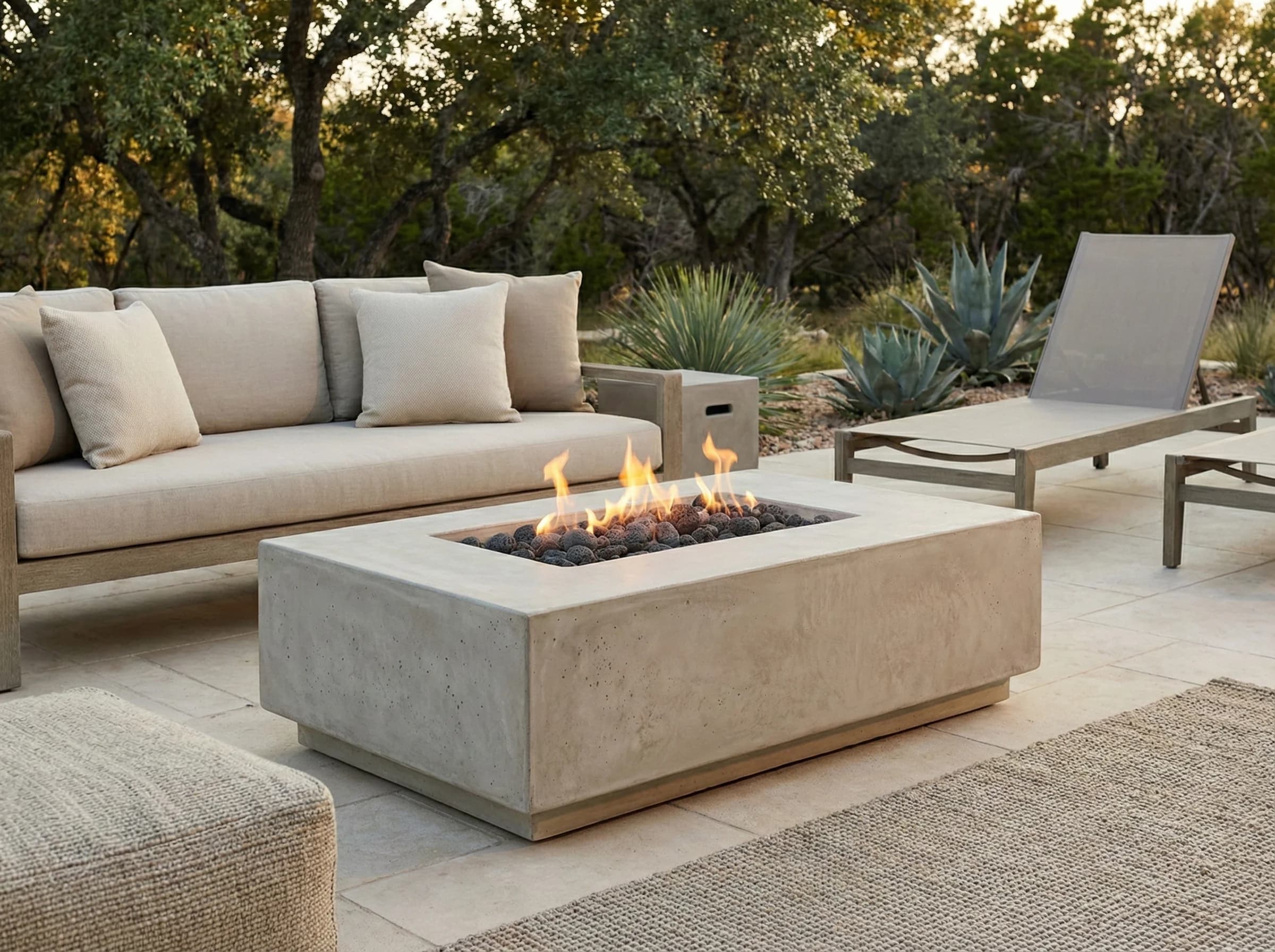
A fire pit table is a fire feature built into a table surface — a flat ledge surrounds the burner, giving you a place to set drinks, plates, or just rest your arms. This is the most popular category we sell, and for good reason.
Best for: Patios where you want a functional gathering surface. Outdoor dining areas. Spaces where the fire pit IS the table.
Our pick: The Prism Hardscapes Tavola series. Hand-finished GFRC concrete, available in 30+ colorways, and the proportions are genuinely beautiful.
Price range: $2,000–$5,500 depending on size and material.
Fire Bowls
A fire bowl is a standalone basin — no table surface, no legs, just a sculptural vessel with fire in it. These are more dramatic and design-forward than fire tables.
Best for: Making a statement. Landscape centerpieces. Spaces where you don't need a surface.
Our pick: The Outdoor Plus Sedona hammered copper bowl. The patina that develops over the first year is genuinely stunning.
Materials: The Most Important Decision You'll Make
The material determines how your fire pit looks, how it ages, how much maintenance it needs, and how long it lasts. This is where most buying guides get lazy and say 'it depends.' We'll be more specific.
GFRC Concrete
What it is: A lightweight, incredibly strong concrete reinforced with glass fibers. It's the dominant material in modern fire pit design.
GFRC is 75% lighter than traditional concrete but significantly stronger. It doesn't crack in freeze-thaw cycles. It comes in dozens of colors and finishes. Prism Hardscapes is the standard-bearer — their hand-applied patina finishing process means every table has subtle variation.
Maintenance: Seal once a year with a concrete sealer. Wipe down with mild soap. Lifespan: 20+ years outdoors. Price range: $2,000–$5,500 for a fire table.
Corten Steel (Weathering Steel)
What it is: A steel alloy that forms a protective rust layer when exposed to weather. Instead of corroding through, Corten develops a rich patina that PROTECTS the metal.
Corten is for people who want a fire pit that's alive — it changes color and texture over the first 6–12 months, then stabilizes. Ohio Flame builds some of the thickest Corten fire pits on the market — American-made from steel so heavy you need two people to move it.
Maintenance: None. Seriously. The rust IS the finish. Lifespan: 50+ years. Price range: $1,500–$4,500.
Read our full Corten steel guide for patina timelines, brand comparisons, and care details →
Copper
What it is: Solid copper fire features that develop a green patina (verdigris) over time — the same process that gives the Statue of Liberty its color.
Copper is for the customer who sees outdoor fire as art. The Outdoor Plus hammered copper bowls are exceptional — the hand-textured surface catches firelight in a way smooth metal can't.
Maintenance: Optional copper protectant every 6 months, or let it patina naturally. Lifespan: 30+ years. Price range: $2,000–$4,500.
Fuel Type: Propane vs Natural Gas
Natural gas: Choose if you have an existing gas line or are doing patio construction. Unlimited fuel, lower operating cost ($0.80–1.50/hr), but permanent location.
Propane: Choose if you want portability or don't have a gas line. No installation cost, but you'll swap tanks 4–8 times per season ($2.50–3.50/hr).
Our recommendation: If you're doing ANY patio construction, run the gas line now — even if you start with propane. The cost during construction is 50–70% less than retrofitting later.
Read our full propane vs natural gas comparison for the complete cost breakdown →
Size Guide
Small patio (8×10): 24–30" bowl or 30–36" table. Medium patio (12×16): 30–36" bowl or 36–48" table. Large patio (16×20+): 36–42" bowl or 48–60" table. The most common mistake: buying too small. The fire feature should be a proportional anchor, not an afterthought.
What We'd Buy If We Were You
Best overall fire pit table: Prism Hardscapes Tavola 4 (66" × 38") — $3,630. GFRC concrete, 65,000 BTU, seats 6–8.
Best fire bowl: The Outdoor Plus Sedona in hammered copper — $2,890.
Best American-made: Ohio Flame Patriot 30" — $1,295. 14-gauge steel, wood-burning, made in Ohio.
Best patio heater: Infratech W-Series 39" — $750. Infrared electric, silent, zero emissions.
Frequently Asked Questions
How far should a fire pit be from the house?
At minimum 10 feet, and many local codes require 15+ feet. Check your municipality's fire code. Also maintain at least 20 feet from overhanging branches.
Can I use a gas fire pit on a wood deck?
With a rated fire pit pad and manufacturer approval, yes for gas fire pits. Never for wood-burning. Check your deck warranty — many void coverage if you place a fire feature on it. Read our full fire pit safety guide →
Do I need a wind guard?
If your area gets regular wind above 10–15 mph, yes. A tempered glass wind guard protects the flame, reduces gas consumption by up to 30%, and prevents flame blow-out.
How long does a propane tank last?
A standard 20 lb tank lasts 8–10 hours at full burn on a 50,000 BTU fire pit, or 15–20 hours at medium. Most fire pit tables hide the tank completely inside the base.
What's the best fire pit material for cold climates?
Corten steel and GFRC concrete. Both are freeze-thaw resistant. Avoid natural stone or standard concrete — they can crack in hard freezes.
Is a fire pit a good investment for home value?
Yes. Outdoor fire features are among the top 5 outdoor improvements for ROI, typically returning 60–80% of their cost in added home value, and extending your usable outdoor season by 3–4 months.
Last updated: April 2026. We update this guide quarterly with new products, pricing, and recommendations.