Propane vs Natural Gas Fire Pits: Which Is Right for You?
Cost and Installation
Natural gas fire pits require a dedicated gas line, which typically means hiring a licensed plumber and pulling a permit. Installation can run from $500 to $2,000 depending on the distance from the meter to the pit location and local code requirements. Once installed, however, the fuel cost per hour is roughly 30–50% less than propane, and you never have to worry about running out mid-evening. Propane models, by contrast, require no permanent installation — just a flat, stable surface and a tank. That portability comes at a higher per-hour fuel cost and the minor inconvenience of monitoring tank levels.
Heat Output and Flame Quality
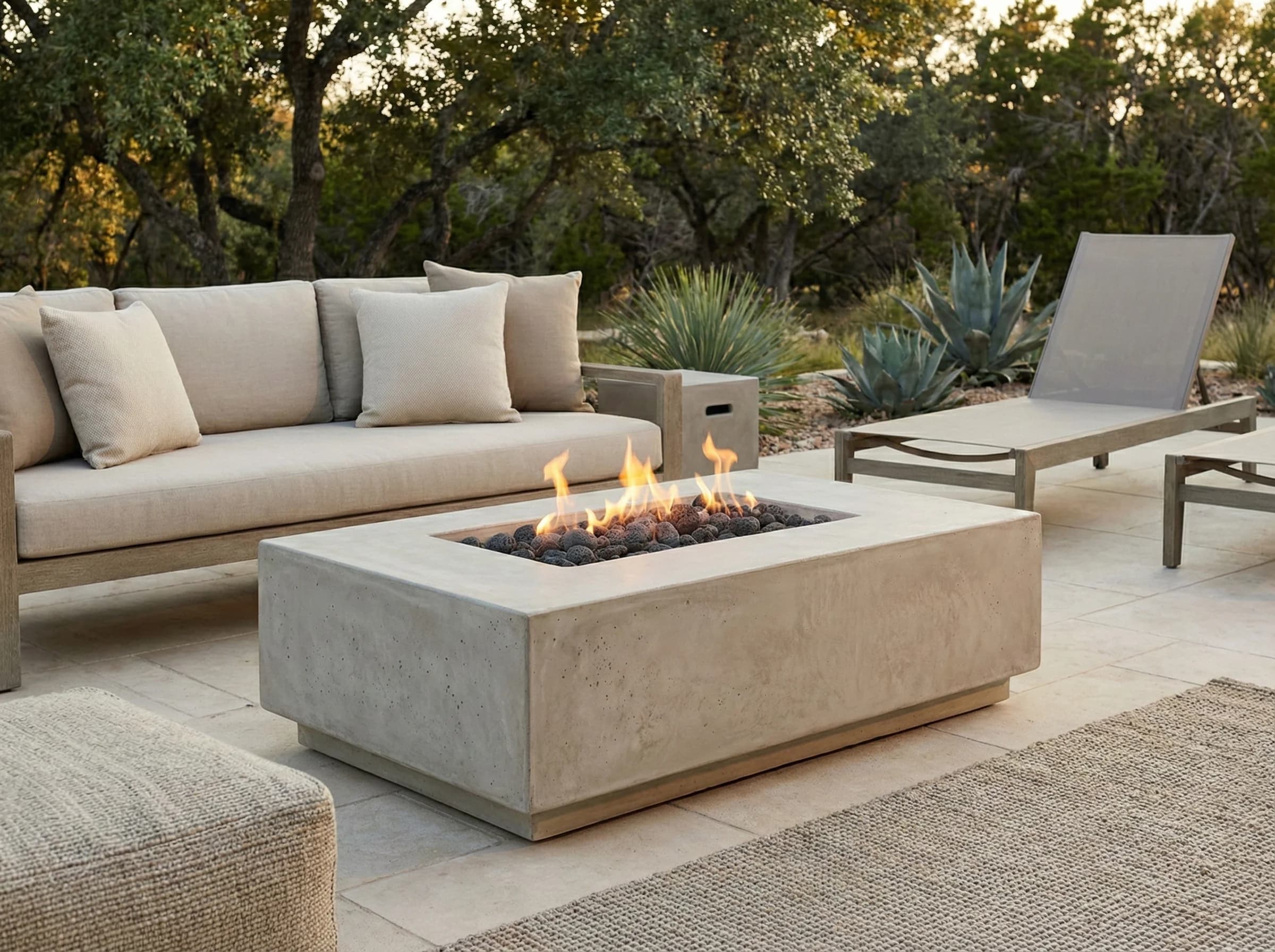
Both fuels produce a clean, soot-free flame, but there are subtle differences. Natural gas burns at a slightly lower BTU per cubic foot, so manufacturers size the burner orifices accordingly — in practice, a well-designed unit delivers the same effective heat on either fuel. Propane, being a denser gas, naturally produces a slightly taller, more visible flame at equivalent BTU ratings, which some homeowners prefer aesthetically. Either way, expect 40,000–60,000 BTUs from a standard residential unit — more than enough to take the edge off a cool evening for a circle of six to eight guests.
Convenience and Flexibility
If your priority is set-it-and-forget-it simplicity, natural gas is hard to beat: flip a switch, enjoy the flame, flip it off. There is no tank to refill, no connection to check, and no seasonal storage concern. Propane wins on flexibility — you can relocate the pit to a different part of the yard, take it to a vacation property, or tuck it into a corner of a rooftop terrace that has no gas service. Many of our clients start with propane while planning a permanent installation, then convert when the gas line is run.
The bottom line: choose natural gas if you have (or can easily add) a gas line and want long-term economy. Choose propane if portability, lower upfront cost, or the absence of a gas line makes it the practical choice. Both deliver the same warmth and ambiance — the difference is logistical, not experiential.