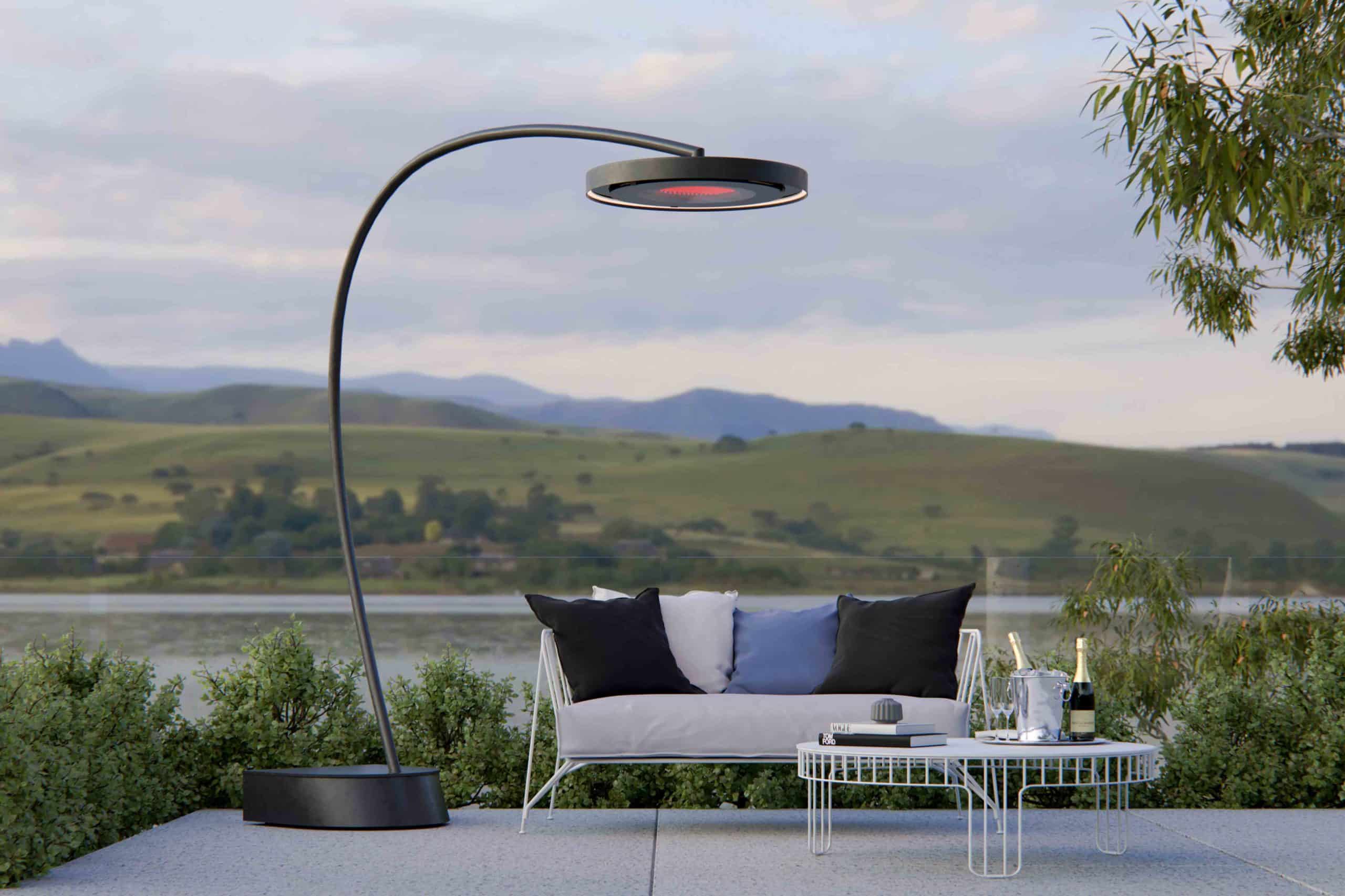
Infratech and Bromic are the two premium brands that dominate the US electric infrared patio-heater category, and most buyers end up comparing them head-to-head at the end of a decision they thought was going to be about price. Both brands make genuinely good hardware. Both will heat a patio reliably for 10 to 15 years. Neither publishes a direct comparison against the other, which leaves the buyer squinting at two spec sheets written in incompatible shorthand. This is the comparison neither brand publishes, written from the install side.
The short answer first: Infratech wins on warranty, flush-mount integration, architectural finish options, and country of manufacture. Bromic wins on smart-controls ergonomics, modern industrial aesthetics, marine-grade options for coastal installs, and a slightly cleaner single-heater install story when a wireless controller is not needed. Either brand is a real buy; the decision is about the patio and the buyer, not about which brand is better.
The side-by-side matrix
Everything that matters in one place, then we unpack each line below. The numbers reflect the current 2026 published specs from each manufacturer’s US-market materials.
Warranty on heating elements: Infratech 10 years, Bromic 1 to 2 years depending on model. This is the single largest gap between the two brands and it is the gap that most often decides a residential specification.
Wattage range: Infratech 1500W to 6000W per unit across W, WD, CD, and Motif platforms. Bromic 2300W to 4400W across Platinum, Cobalt, and Eclipse electric platforms. Both brands cover the useful residential range; Infratech offers a wider band on both ends.
Voltage options: Infratech 120V, 208V, 240V, 277V, 480V. Bromic 208V, 240V, 277V. For a residential install on a standard 240V dedicated circuit, both brands are a drop-in. For a lower-wattage 120V single-element install, Infratech is the only brand of the two with 120V options in the W-Series.
Mount styles: Infratech offers surface mount, ceiling flush mount, wall flush mount, pole mount, and the Motif Collection decorative framing in bronze, copper, stainless, and specifiable custom finishes. Bromic offers surface mount, ceiling recess, low-clearance recess, ceiling pole mount in multiple lengths, and pendant mount. Both platforms are fully residential-install capable.
Controls: Infratech sells manual 20A switches, solid-state dimmers, home-automation-compatible contactor panels, and the Dual INF Input regulator that wires a single unit for two independent power levels. Bromic sells manual 20A switches, dimmer controllers, Eclipse wireless remotes, and the Affinity Smart Heat wireless multi-zone platform.
Finish options: Infratech offers standard satin stainless on W/WD/CD, plus the Motif Collection with bronze, copper, stainless, and specifiable custom powder-coat colors. Bromic offers matte black, matte white, and stainless across the Platinum and Tungsten electric lines.
Country of manufacture: Infratech designed, engineered, and assembled in Signal Hill, California. Bromic designed and engineered in Sydney, Australia, with assembly for the US market handled in Asia.
Marine / coastal variant: Bromic publishes dedicated marine-grade Platinum models for installs within a few miles of salt water. Infratech does not publicize a dedicated coastal line.
Warranty is the single biggest gap
The warranty difference is where most specifications tip to Infratech. Infratech covers the heating elements for 10 years and the housing for 3 years. Bromic covers most of the electric Smart-Heat lineup for 2 years on parts and 1 year on labor. In a residential install with a 10-to-15-year expected service life, that difference compounds — a 10-year warranty gets you through the full first service cycle without an out-of-pocket element replacement, while a 2-year warranty typically ends before the first element shows any wear. The service experience in the field tells a slightly softer story: both brands’ parts pipelines are reliable past paper warranty, and Bromic’s post-warranty element pricing is reasonable for the category. But on paper and in a side-by-side spec review, 10 years beats 2 every time.
Mount options: flush is where Infratech pulls away
Surface mount is identical across both brands — the heater hangs from a ceiling or mounts on a wall bracket, the unit is visible, and the installation is a 30-minute job for a qualified electrician. Where the brands diverge is in architectural recessed installs. Infratech’s flush-mount kits are first-party plates designed to drop the heater into a drywall or soffit cutout so only the grille face is visible from below. Combined with the Motif Collection’s bronze and copper framing, this is the look you see in high-end custom outdoor kitchens where the heater is intentionally hidden inside the architecture.
Bromic offers a Ceiling Recess Kit for the Platinum and Tungsten lines and a Low Clearance Recess Kit for tight soffits. Both work. The finish is more industrial than architectural — the recessed unit looks like a piece of equipment deliberately exposed, not disappeared into the ceiling. For an exposed-rafter or industrial-aesthetic patio, that is a feature. For a traditional residential or hospitality finish, Infratech’s integration is the cleaner spec.
Pole mounts favor Bromic. The Bromic ceiling-pole kits in multiple lengths and the pendant mount for Eclipse give you off-ceiling installation options — hanging a heater down into a tall covered patio or pergola where the ceiling is too far above seated-head height for radiant heat to feel direct. Infratech makes pole-mount accessories, but Bromic’s pendant and pole ecosystem is more flexible if the patio demands it.
Controls: Smart-Heat vs Dual INF Input
Bromic’s Affinity Smart Heat is the cleaner multi-zone wireless control platform in the category. For an install with three or more heaters across two or more zones, Affinity gives the client a phone-based control surface with dimming and zoning that is both more capable and more buyer-friendly than wiring a parallel bank of Infratech solid-state dimmers behind a wall plate. If the client wants to dim the deck heaters from 40 percent to 80 percent from their phone without walking outside, Bromic is the straightforward answer.
Infratech’s counter is the Dual INF Input regulator — a single unit wired for two independent power inputs, so one switch runs it at low power for ambient supplemental heat and a second switch runs it at full power when the real cold comes in. For a single-heater or two-heater install where the client’s actual use pattern is warm background most of the time, full blast for 30 minutes before guests arrive, Dual INF Input is a cleaner, cheaper, longer-lasting solution than a smart dimmer. Infratech also makes contactor panels for home-automation integrations that avoid the need for a proprietary controller — if the house is already running Control4, Lutron, or Savant, Infratech integrates natively through standard contactor relays.
The honest cutoff: two or more zones with dimming required, go Bromic Affinity. Single zone, single or dual heater, and the client wants on-off plus occasional boost, go Infratech Dual INF Input. House is already running a home-automation system, go Infratech contactor integration.
Finishes: architectural vs industrial
Infratech’s Motif Collection is the reason designers specify the brand even when they are also considering Bromic. The Contemporary and Craftsman motif families come in bronze, copper, stainless, and specifiable custom powder-coat finishes — a bronze Motif heater disappears into a dark wood soffit, a copper one patinas with the patio’s copper gutters, a stainless one matches a modern outdoor kitchen. Nothing in Bromic’s lineup competes with the Motif framing for architectural integration; the Platinum and Tungsten lines are available in matte black, matte white, and stainless, and that is the full palette.
Bromic’s black-and-white lineup suits modern-minimal and industrial interiors cleanly, which is a real aesthetic choice, not a limitation. If the design intent is visible but intentional — an exposed heater that reads as considered equipment — a matte black Bromic Platinum is the cleaner spec than anything Infratech makes. The finish decision tracks the design language of the whole patio, not just the heater.
Country of manufacture and spec sensitivity
Infratech is designed, engineered, and assembled in Signal Hill, California. For a specification that lists country of origin — common in custom residential bids, hospitality bids, and any public-sector job — Infratech is a one-line answer. Bromic is Australian-designed with US-market assembly typically handled in Asia. Neither pattern is a build-quality problem; both brands ship units that work. But on a spec sheet where country of origin is a buyer filter, the preference tracks whichever brand is domestic to the buyer. In the US market, that is Infratech.
Coastal and marine installs favor Bromic
Bromic is the only brand of the two that publishes a dedicated marine-grade variant. The Platinum Smart-Heat marine-grade models at 2300W and 3400W on 208V and 240V use upgraded stainless and corrosion-resistant hardware for installs within a few miles of salt water. For a coastal home — Southern California beach, Florida Gulf, Carolina Outer Banks — the marine-grade Bromic is the right spec and Infratech does not have a direct competitor. If the install is coastal, Bromic wins by default on this variant alone.
Price positioning
Both brands sit at the premium end of the electric infrared patio-heater category, which means both are priced significantly above the budget mushroom-heater and chinese-import electric-heater options that dominate Amazon search results. Head to head, Infratech is generally higher at equivalent wattage, especially once you spec into the Motif Collection with architectural finishes. Bromic is generally a little less expensive at the standard Platinum tier and climbs when you add the Affinity Smart-Heat controller and accessory pendants. Both brands are protected by minimum advertised price policies, so the shelf price is comparable across authorized dealers; the real financial comparison is lifecycle cost, where Infratech’s 10-year warranty pulls the calculation back in its favor for installations expected to last a decade or more.
Who should buy which
Go Infratech if: the install is a permanent residential outdoor kitchen or covered patio where the heater should disappear into the architecture, the spec cares about country of manufacture, the warranty needs to cover the first service cycle out to 10 years, or the client wants an architectural finish like bronze or copper that integrates with the materials palette of the patio. Infratech is also the right pick for any install where native home-automation integration matters — Control4, Lutron, Savant.
Go Bromic if: the install is multi-zone with dimming required and the client wants a phone-based control surface, the design intent is modern-minimal or industrial and a visible matte-black or matte-white heater fits the aesthetic, the install is within a few miles of salt water and requires a marine-grade variant, or the project calls for pendant or ceiling-pole mounting where Bromic’s accessory ecosystem is more flexible.
If it is a 12-by-16 covered patio with open sides, residential, 240V available: an Infratech WD-Series 61-1/4-inch 6000W dual-element flush-mounted into the soffit, wired to a Dual INF Input regulator, is the cleanest install. One unit, hidden, two-stage output, 10-year element warranty.
If it is a 20-by-20 open-side patio with a tall pergola, modern aesthetic, and the client wants phone control: a pair of Bromic Platinum Smart-Heat 3400W 240V units on ceiling poles, controlled by Affinity, is the cleanest install. Two zones, dimming, visible-but-intentional matte-black finish.
If it is a coastal beach house within sight of the surf: Bromic Platinum Smart-Heat 3400W marine-grade at 208V is the only right answer — Infratech does not publicize a comparable coastal-rated unit.
If it is an outdoor kitchen integrated into a custom residence with an architect on the plans: Infratech Motif Collection in bronze or copper, flush-mounted, wired to the home’s existing automation contactor panel, is the specification a designer will defend to the owner.
The call
Neither brand makes a bad heater. The decision almost always tracks the install, not the brand. If you spec more residential outdoor kitchens where the heater needs to disappear and the warranty needs to clear a decade, Infratech is the house pick. If you spec more modern commercial-feel installs with phone control and multi-zone dimming, Bromic is the house pick. If you are near the coast, you do not get to choose — Bromic has the marine variant and Infratech does not.
Products & brands in this guide
This Season
Shop the season
Black Friday 2026
Black Friday Fire Pits
Markdowns on Corten, hand-forged, and concrete. Lifetime structural warranty.
Shop Black Friday →Holiday Gift Guide
Fire Pit Gift Guide
Gift-ready pieces curated by style, size, and lead time.
Browse Gifts →Thanksgiving 2026
Thanksgiving Outside
Ideas to keep family outside instead of piled in the kitchen.
Read the Guide →Winter 2026 Guide
Winter-Rated Fire Pits
Buyer's guide to Corten, concrete, and hand-forged pieces built for the cold.
Read the Buying Guide →Ash — Ash writes the buying guides at FirePits.com — years of specifying fire features on residential installs, from urban patios to mountain properties.