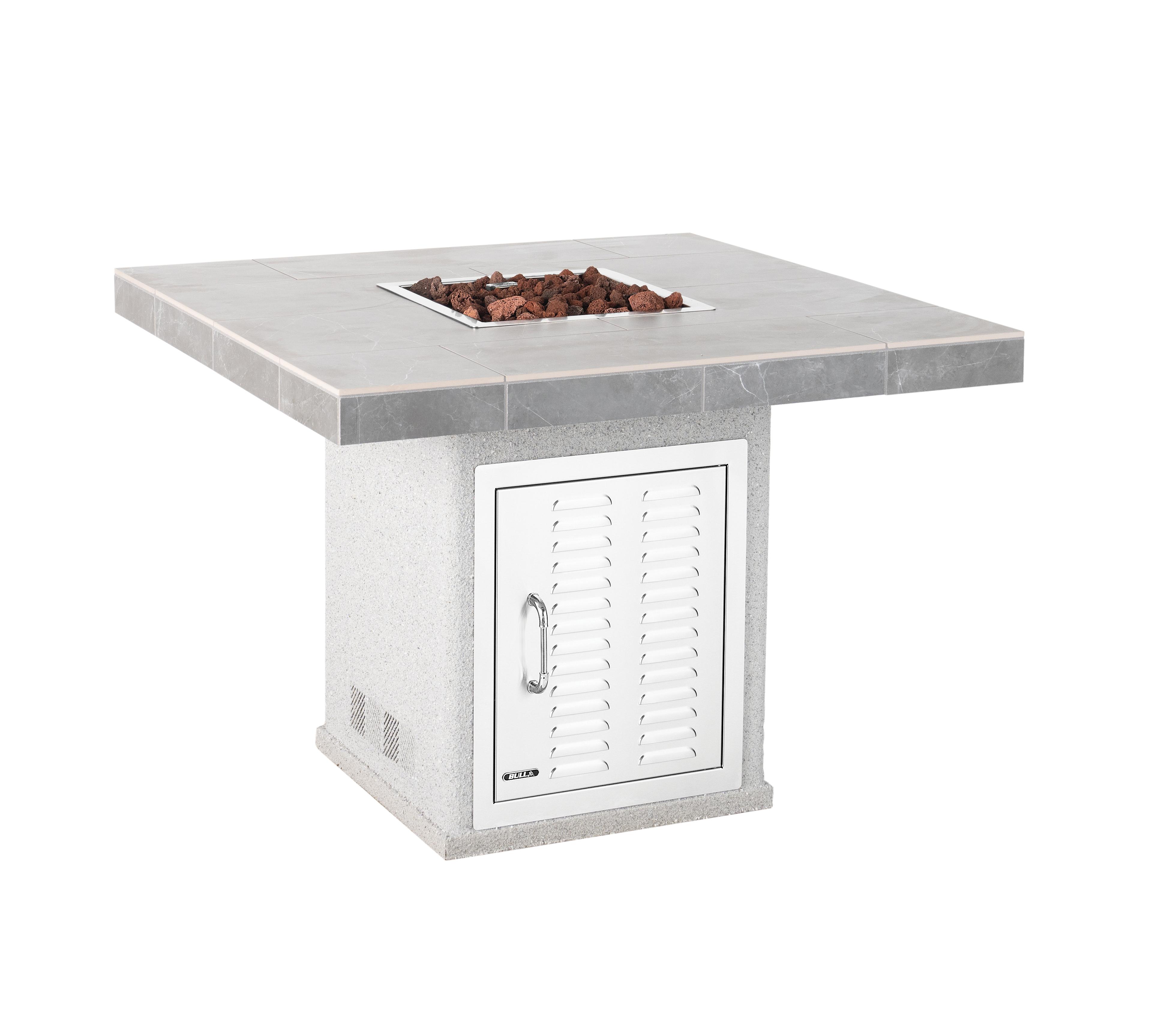
Bull BBQ’s Red Stick line covers the three main gas fire pit shapes — Small Square, Slim High Profile Rectangle (with LP or NG fuel), and Square Fire Table. Pricing runs $1,859 to $3,699. Here’s which shape fits which patio, how the fuel choice changes the install, and the fire media + accessory decisions that matter.
Updated November 2026. Bull’s Red Stick line is the fire pit and fire table set that sits apart from Bull’s main grill lineup. Three main shapes in the 2026 roster — Small Square, Slim High Profile Rectangle, and Square Fire Table — plus a matching set of media accessories, covers, and pan upgrades. Built in the same Bull BBQ facility that produces the Angus and Brahma grill series.
We carry the Red Stick line dual-channel — the fullBull BBQ catalogwith all three fire pit shapes plus matching accessories ships from the same warehouse whether the order lands through BBQs.com or FirePits.com.
The three Red Stick shapes at a glance
Model
Price
Fuel
Shape
Best for
Small Square Fire Pit
$1,859
LP or NG
Compact square
Small patios, intimate seating
Slim High Profile Rectangle
$2,999
LP or NG variant
Low-profile rectangle
Longer sectional seating, modern patios
Square Fire Table
$3,699
LP or NG
Square with usable edge
Standalone furniture piece, drinks + heat
Bull Red Stick fire pit lineup (2026)
Small Square — the starter pick
The Small Square is Bull’s compact Red Stick — the right shape when the patio footprint is tight (under 200 sq ft) and the fire pit is going between four chairs rather than along a sectional. Square burner geometry, 16-inch cook surface, LP or NG fuel configurations shipping from stock. $1,859 is the easiest entry point into the Red Stick line.
Who it wins for: townhome patios, small courtyards, balcony-adjacent setups where a rectangular or full-table footprint wouldn’t fit. Four chairs around it with enough clearance to walk between. Not the right pick for patios over 300 sq ft — on a bigger patio the Small Square feels undersized.
Slim High Profile Rectangle — the modern-patio pick
The Slim HP Rectangle is the Bull Red Stick model that contemporary outdoor designers specify most often. Low-profile burner geometry (the pan sits closer to the ground), wider rectangular footprint, and the taller “high profile” surround that catches wind and keeps the flame visible from seating further away. Available with either liquid propane or natural gas burner — the shopper picks fuel at order.
Who it wins for: patios with a sectional couch or long bench where a round or square shape wouldn’t fill the visual axis. Modern-designed yards where the rectangle matches the rectilinear hardscape. $2,999 for the full build.
The Slim HP ships with a pre-installed H-burner kit on the burner-kit variant — Bull’s H-geometry puts flame along the full long axis of the rectangle instead of a single center point. Visually that reads as one continuous ribbon of fire rather than a flame stack. Worth the upgrade on this shape.
Square Fire Table — the standalone furniture pick
The Square Fire Table is the biggest spend in the Red Stick line — $3,699 — and the right pick when the shopper wants the fire pit to also serve as patio furniture. Table-height build (roughly 24 inches tall), usable counter edge around the burner for drinks and plates, square burner in the center under lava rock or fire glass.
Who it wins for: patios without a dedicated dining table where the fire table replaces one. Entertaining setups where the shopper wants heat and surface in one piece of furniture. Not the right pick for patios that already have a dining table — in that case the Slim HP Rectangle at the floor is the better placement.
Fire media — glass vs lava rock vs ceramic stones
Every Red Stick pit ships burner-only. Media is a separate line item. Bull’s own Black and Chestnut recycled fire glass (12-lb bags) is tempered for high heat and the cleanest visual look — the flame reflects off the glass and the pit reads as pure fire. Lava rock is the cheapest option and produces more ambient radiant heat (good for shoulder-season warmth), but looks more rustic.
Honest dealer take on fire media: buy Bull’s own glass for the first fill. Aftermarket fire glass from big box stores can crack and pop when rain hits cold glass and the pit then reheats quickly. Bull’s glass is kiln-tempered and sized to match the burner’s flame distribution. Costs more per bag but doesn’t produce the pop-and-shatter failure mode that kills most cheap fire-glass installs within 18 months.
Red Stick accessories worth buying
Covers. Bull’s SS lid for the Rectangle Fire Pit Pan ($149) is cheap insurance against rain filling the burner tray. Water in the burner geometry corrodes the orifice over 2–3 seasons. The cover takes 10 seconds to put on.
Rock Base Upgrade. The Rock Base ($639) is a Quartzsite-finish riser that elevates the Red Stick pit on stone or concrete and changes the visual profile — reads as a more permanent piece of hardscape. Worth the spend on higher-end patios where the pit is meant to look built-in.
H-burner kit. For the Rectangle Fire Pit Pan, the H-burner kit ($509) adds the full-length flame geometry described above. Converts a point-flame pit into a ribbon-of- fire pit.
What we’d actually buy
First Red Stick pit, under $2,000: Small Square. $1,859 covers the pit itself; add Bull’s fire glass for another $179 and a cover for $149 and the setup lands under $2,200 total.
Modern patio with a sectional: Slim High Profile Rectangle with the H-burner kit variant. The ribbon of flame on the long axis is what makes this pit photograph well and what the sectional geometry is designed to pull around.
No dining table yet: Square Fire Table. The counter edge solves the drink-and-heat problem in one piece. Don’t buy this if the patio already has a dining setup — it’ll over-furnish the space.
Frequently Asked Questions
What’s the difference between Bull’s Red Stick line and the rest of Bull’s grill lineup?+
Red Stick is Bull BBQ’s dedicated fire pit and fire table line — gas-fired outdoor pits made for lifestyle heat, not cooking. Bull’s main grill lineup (Angus, Brahma, Steer, Lonestar) is built around stainless cooking grates, infrared burners, and rotisserie. Red Stick swaps all of that for a wide burner geometry under a bed of lava rock or fire glass, designed for ambient flame on a patio rather than cooking surface temperatures.
Fire pit vs fire table — which should I buy?+
Fire pit sits closer to the ground (16–18 inches tall) and is designed to pull patio seating around it — like a campfire, but gas. Fire table sits at coffee-table or dining-table height (24–42 inches) with usable counter edge around the burner. Pick a fire pit if the shopper already has dining furniture and wants a conversation anchor. Pick a fire table if the shopper wants a standalone surface that serves drinks and acts as the heat source. See the full breakdown in the related article below.
Is natural gas or propane better for a gas fire pit?+
Natural gas if the patio already has a gas line stub and the shopper doesn’t want to swap tanks. Propane if the install is portable or the patio doesn’t have a gas line. BTU output is roughly equivalent — Bull’s Red Stick Slim High Profile Rectangle runs the same burner on either fuel. The 20-lb propane tank concealed in the base runs the Slim HP for about 11 hours at full flame. Natural gas is fuel-cost cheaper long-run; propane is install-cost cheaper upfront.
What fire media should I use in a Bull Red Stick?+
Bull Red Stick pits ship compatible with lava rock, recycled fire glass, or ceramic fire stones. Bull sells their own Red Stick-branded Black or Chestnut recycled fire glass (12 lb bags) that’s tempered for high heat and won’t shatter — cheaper aftermarket fire glass can pop when it gets wet from rain and reheats. For the Slim HP Rectangle, one 12-lb bag covers the burner evenly. Lava rock is the cheapest option but produces more ambient radiant heat; glass is the cleanest look.
Can I use a Bull Red Stick fire pit on a wooden deck?+
Yes with a heat shield or stone pad underneath. Bull’s Red Stick line is rated for use on combustible surfaces (wood deck, composite deck) when paired with a non-combustible pad — Bull sells a matching deck pad. Without the pad the 16-inch burner geometry on the Small Square runs hot enough underneath the pit housing to scorch cedar or pressure-treated lumber over time. The Square Fire Table and Slim HP Rectangle ship with elevated bases that reduce the need for a pad on stone or concrete surfaces.
What’s the warranty on a Bull Red Stick fire pit?+
Three years on the burner components and valve assembly, lifetime on the stainless steel housing against rust-through (not cosmetic corrosion). Warranty is handled through authorized Bull dealers. Bull BBQ has been manufacturing since the 1970s and still supports older Red Stick models with spare parts — unusual in the outdoor hearth category where many brands churn models every 3–4 years.
Ash — Ash writes the buying guides at FirePits.com — years of specifying fire features on residential installs, from urban patios to mountain properties.