Fire Pit vs Fire Table: The Honest Difference (With a Compare Chart)
By Ash · Published October 2026
Updated October 2026. The short version: a fire pit is a flame-first vessel at 6 to 15 inches tall, a fire table is the same combustion hardware wrapped in a 16-to-20-inch coffee-table surface so you can set a drink down. Height drives everything else — use case, aesthetics, price, and which one fits the way you actually sit outside.
The Short Answer
Buy a fire pit if the flame is the point — a sculptural vessel in front of Adirondack chairs, a bowl on a pedestal at the end of a pool, a ring set into a hardscape patio. Heights run 6 to 15 inches. Think the Prism Hardscapes Moderno 1 39-inch concrete bowl at about 10 inches tall.
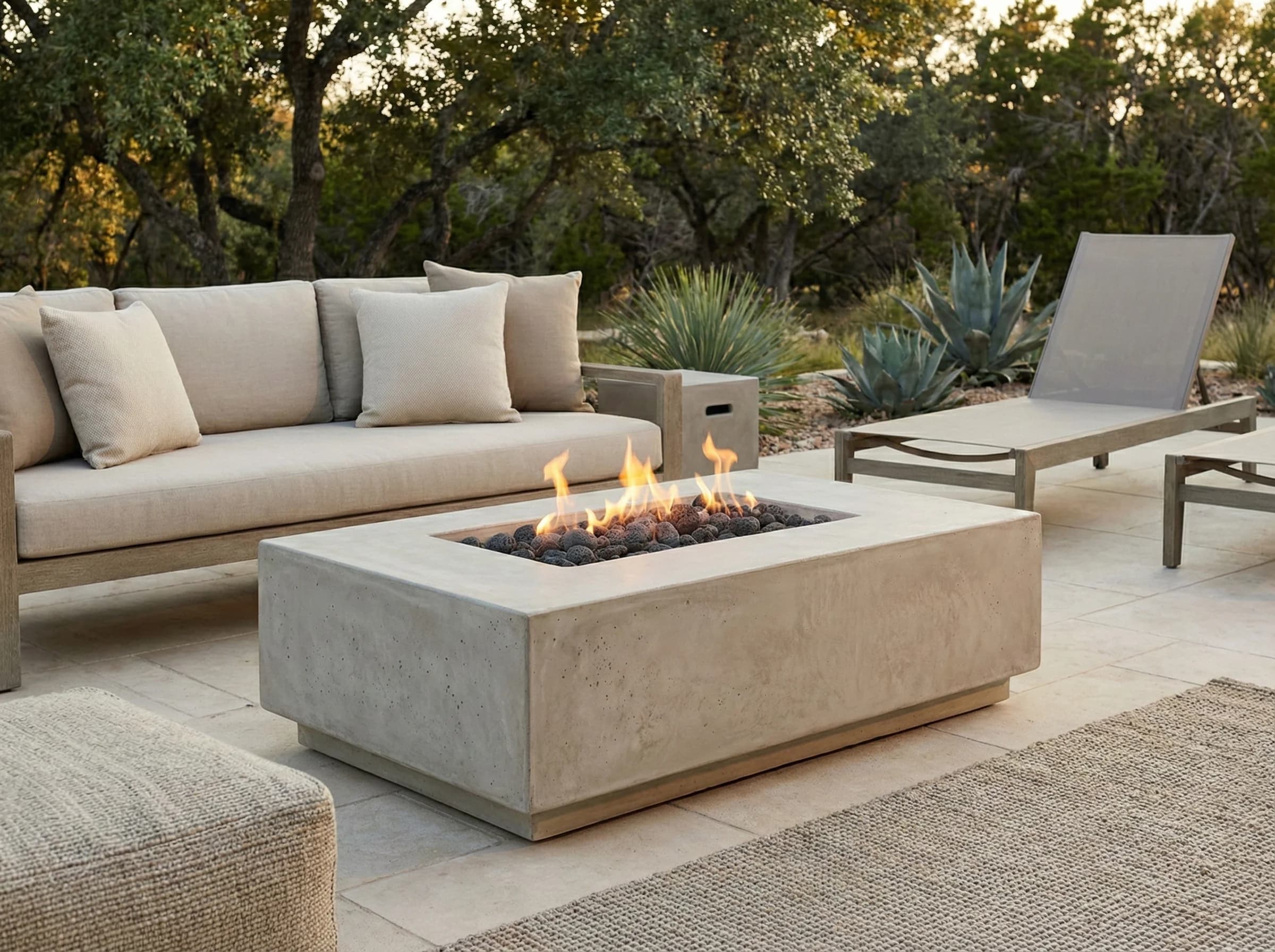
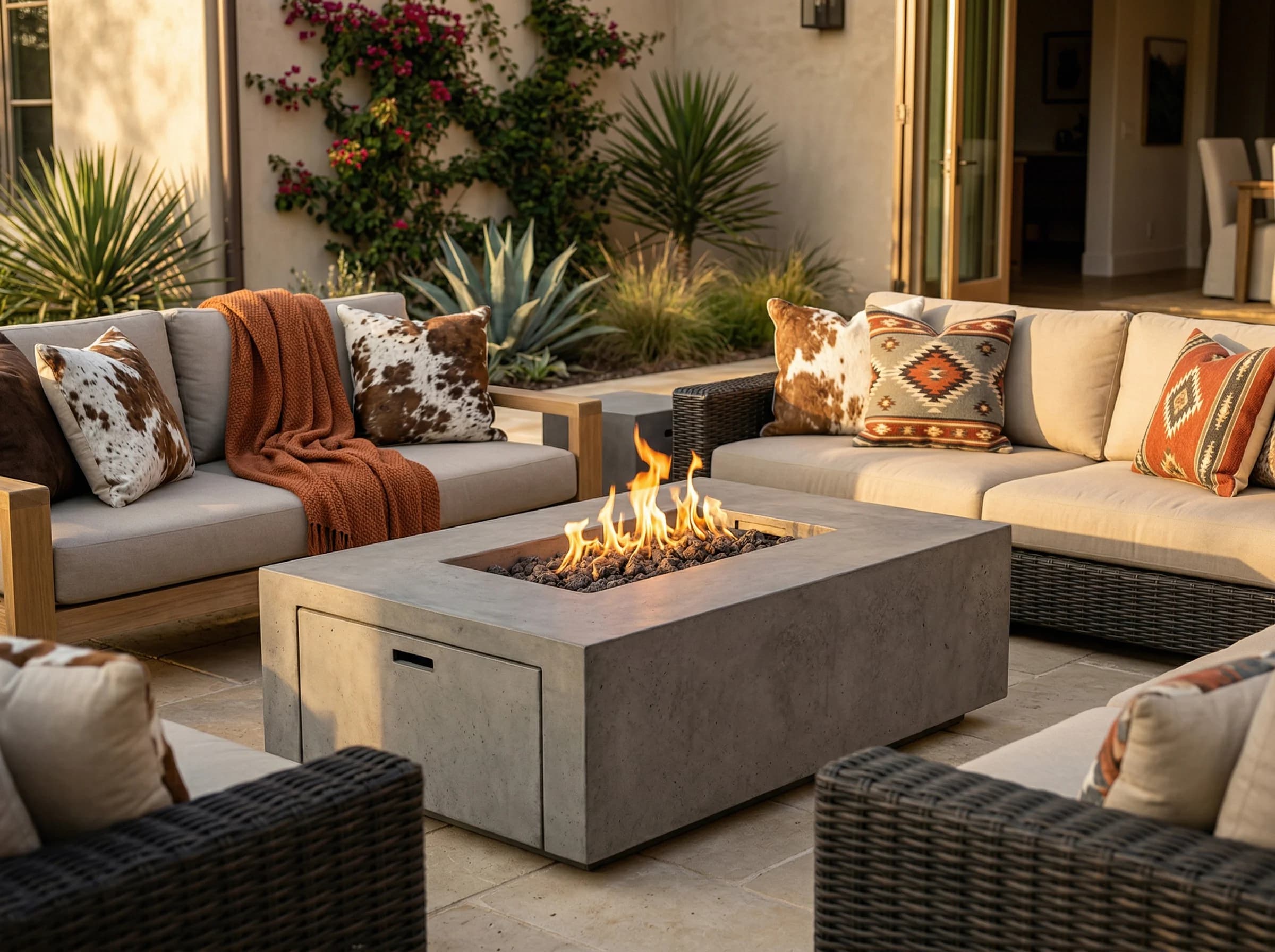
Buy a fire table if the fire is the center of a seating group — a usable surface at coffee-table height so four people can drink, snack, and talk around the flame without their hands in the air. Heights run 16 to 20 inches. Think the Prism Hardscapes Tavola 4 66-inch concrete table at 16.5 inches tall, or the The Outdoor Plus Regal 60 Corten rectangular at 16 inches.
Same combustion hardware underneath either one. Different furniture on top.
Fire Pit vs Fire Table at a Glance
Here is the honest side-by-side. Figures are real residential-size numbers from the Prism Hardscapes and The Outdoor Plus 2026 catalogs — the two serious manufacturers in this space.
| Spec | Fire Pit | Fire Table |
|---|---|---|
| Height | 6 to 15 inches | 16 to 20 inches |
| Vessel shape | Bowl, box, pedestal, or in-ground ring | Rectangular or round with usable surface rim |
| Primary use case | Ambiance, visual focal point | Seating-group surface for drinks and conversation |
| BTU (gas) | 40,000 to 160,000 | 65,000 to 190,000 |
| Heat you actually feel | Radiant down and out at ground height | Radiant at seated chest and face height |
| Media surface | 6 to 20 inches of exposed flame area | 16 to 40 inches of exposed flame area |
| Fuel options | Natural gas, propane, wood, bio-ethanol | Natural gas, propane (gas only in table format) |
| Typical 2026 price (residential) | $900 to $4,000 | $3,400 to $6,500 |
| Install weight (48–60 in) | 60 to 300 lb | 180 to 700 lb |
| Fits in front of a sofa | Only if seats have arms as surfaces | Yes — it IS the coffee table |
| Fits in front of Adirondack | Yes — classic pairing | Awkward — chair arms are below surface |
| Best for | Looking at | Entertaining around |
Why Height Changes Everything
The 15-to-16-inch line is where this stops being a vocabulary question and starts being an interior-design question.
Below 15 inches, the vessel reads as a sculptural object. The flame is the subject, the vessel is the frame, and the seating around it is arranged so people can see the fire. A 10-inch concrete bowl like the Moderno 1 or a 12-inch hammered copper Cazo from The Outdoor Plus sits in front of chairs the way a sculpture sits in front of a bench. You pull a chair up to it. You don’t put anything on it.
At 16 inches and above, the vessel becomes furniture. Coffee-table height is a design standard — the Pottery Barn, Restoration Hardware, Design Within Reach cocktail-table range is 16 to 18 inches. A fire table at that height disappears into the seating group as the natural central surface. Everyone’s hands go to it. Drinks land on it. A charcuterie board sits on it an inch from the flame opening. The fire is no longer the whole subject; it is one feature of a usable table.
In my experience specifying fire features on residential installs, the single question that decides the whole purchase is: “Where are you going to put your drink?” If the answer involves balancing it on a chair arm, you want a fire table. If every seat has its own side table or wide arm, a fire pit is cleaner and reads more intentional.
Use Case: Ambiance vs Food Service
Neither of these is a cooking appliance. The 2026 question is not “can I grill on this” (no, you cannot, see the FAQ) but “how do I entertain around it.”
Fire pit, ambiance-first: a four-seat Adirondack arrangement around a 30-inch copper bowl on a flagstone patio. The flame throws warmth outward and up, people lean back, conversation happens in the standard outdoor-fire-circle format. Nobody needs a table because the Adirondack arms are 7 inches wide — enough for a drink. The fire pit is a focal point and heat source.
Fire table, food-service entertaining: a six-seat sectional arrangement around a 66-inch rectangular concrete table like the Prism Hardscapes Tavola 4. The 50-inch surround surface is where the cheese board, the wine bottles, the kids’ hot chocolate, the Scrabble board live. The flame is central but the surface is the thing you use. The 16.5-inch height means the sectional cushions are at the right level to lean forward and reach anything on the table.
A quiet observation after years of specifying both: 70 percent of residential buyers who think they want a fire pit actually want a fire table. The 30 percent who want a true fire pit know it — they have the Adirondack chairs already, they want the sculptural vessel, and they are not shopping on surface area.
Heat Output: Who Actually Gets Warmer
Both categories run on the same BTU range at residential sizes — 65,000 BTU is the common denominator for a 30-to-66-inch gas vessel in either format. What changes is where the heat goes.
A fire pit at 10 inches tall radiates downward and outward. Seated adults 4 feet away feel the warmth from the knees down to the ankles. Standing adults feel it on the shins. Great for a chilly fall evening when the ground air is cold. Marginal for freezing-cold deep winter when you want upper-body warmth.
A fire table at 16 to 20 inches radiates at seated chest and face height. Seated adults 4 feet away feel the warmth across their torso and hands. Standing adults get it at the hips. This is a meaningfully warmer feel for the same BTU rating because the flame is physically closer to the parts of you that register temperature. A 65,000-BTU fire table “feels warmer” than a 65,000-BTU fire pit in the same conditions, even though the gas meter says they are identical.
If radiant warmth matters more than aesthetics — Minnesota, Colorado, Northeast — a fire table at 18 inches is the practical choice. If you are in the southern tier and the fire is 90 percent decoration, a lower pit silhouette is design-cleaner.
Fuel Options
Fire pits offer the widest fuel menu because the simpler vessel accommodates more combustion types: natural gas, propane, wood, bio-ethanol, and even gel fuel at the low end. A classic wood-burning cast-iron fire pit is in the fire-pit category. A propane bowl kit is in the fire-pit category. A natural-gas-plumbed concrete fire bowl is in the fire-pit category.
Fire tables are gas-only in practical terms. Wood-burning fire tables exist but are rare — the ash cleanup and firebox depth required for logs don’t fit the coffee-table-height form factor. Every fire table from Prism Hardscapes and The Outdoor Plus is natural-gas or propane. The two gas types are field-convertible either direction with a $45–$120 kit; order the fuel you have plumbed to save the conversion step.
The Outdoor Plus Regal 60 and the Tavola 4 both ship in NG or LP with factory-set orifices. A licensed gas fitter should always run the final hookup — IFGC rules on flex-line sizing and drip legs matter more at 65,000 BTU than most DIY installers realize.
Price Range: What You Pay in 2026
Honest residential pricing for the two categories, from the current Prism Hardscapes and The Outdoor Plus catalogs:
Fire pits (residential, 24 to 48 inches): $900 (budget commodity propane bowl) to $4,000 (Prism Moderno concrete, The Outdoor Plus Cazo hammered copper). The sweet spot for a serious fire pit is $2,200–$3,100: the Moderno 1 39-inch at ~$2,200, the TOP Cazo 36-inch hammered copper at ~$3,100. Below $1,500 you are typically buying imported stainless or coated steel that will corrode in 3–5 years.
Fire tables (residential, 48 to 66 inches): $3,400 (entry concrete, mid-size) to $6,500 (large concrete or stainless rectangular). The sweet spot is $3,600–$5,100: the Prism Tavola 4 66-inch at ~$3,630, the TOP Regal 60 Corten at ~$3,402, and the Fuego 54 round at ~$4,100. Below $2,500 for a “fire table” is a warning sign — real coffee-table-height fire features need more material and labor than a bowl, and the price reflects it.
The 20-to-40 percent fire-table premium over an equivalent-category fire pit is real. You are paying for the surface — more vessel material, more hand-finishing on the top slab, more weight to ship, more labor to install. The premium is not a markup; it is a different product.
Which Should You Buy
Buy a fire pit if your seating is Adirondack or heavy wood-arm patio chairs with built-in surfaces, if the fire is a visual focal point rather than an entertaining anchor, if you want the widest aesthetic range (bowls, pedestals, hammered copper, ground-level stone surrounds), or if you are considering wood-burning rather than gas. Budget $900–$4,000.
Buy a fire table if your seating is a sectional or sofa-and-chair arrangement where you need a central coffee-table surface, if you entertain groups of four or more and want everyone to have somewhere to set a drink, if you want upper-body radiant warmth for cold-weather use, or if the fire feature is the center of a finished outdoor room rather than a backyard accent. Budget $3,400–$6,500.
Buy a fire pit table (the hybrid category) — like the The Outdoor Plus Regal 60 at exactly 16 inches, or the Prism Hardscapes Fuego 54 at 18 inches — if you want some surface for a drink but not a full dining-table-adjacent slab. The hybrid category is the fastest-growing part of the catalog in 2026 because it threads the design and practical needs for most patios.
Frequently Asked Questions
What is the difference between a fire pit and a fire table?+
What height is a fire table vs a fire pit?+
Can you cook on a fire table?+
Which is more expensive, a fire pit or a fire table?+
Fire pit or fire table — which should I buy for entertaining?+
Can a fire table be converted from propane to natural gas?+
Products & brands in this guide
Related reading
Ash — Ash writes the buying guides at FirePits.com — years of specifying fire features on residential installs, from urban patios to mountain properties.