HOA-Approved Fire Pits by State: What Boards Actually Allow
By Ash · Published November 2026
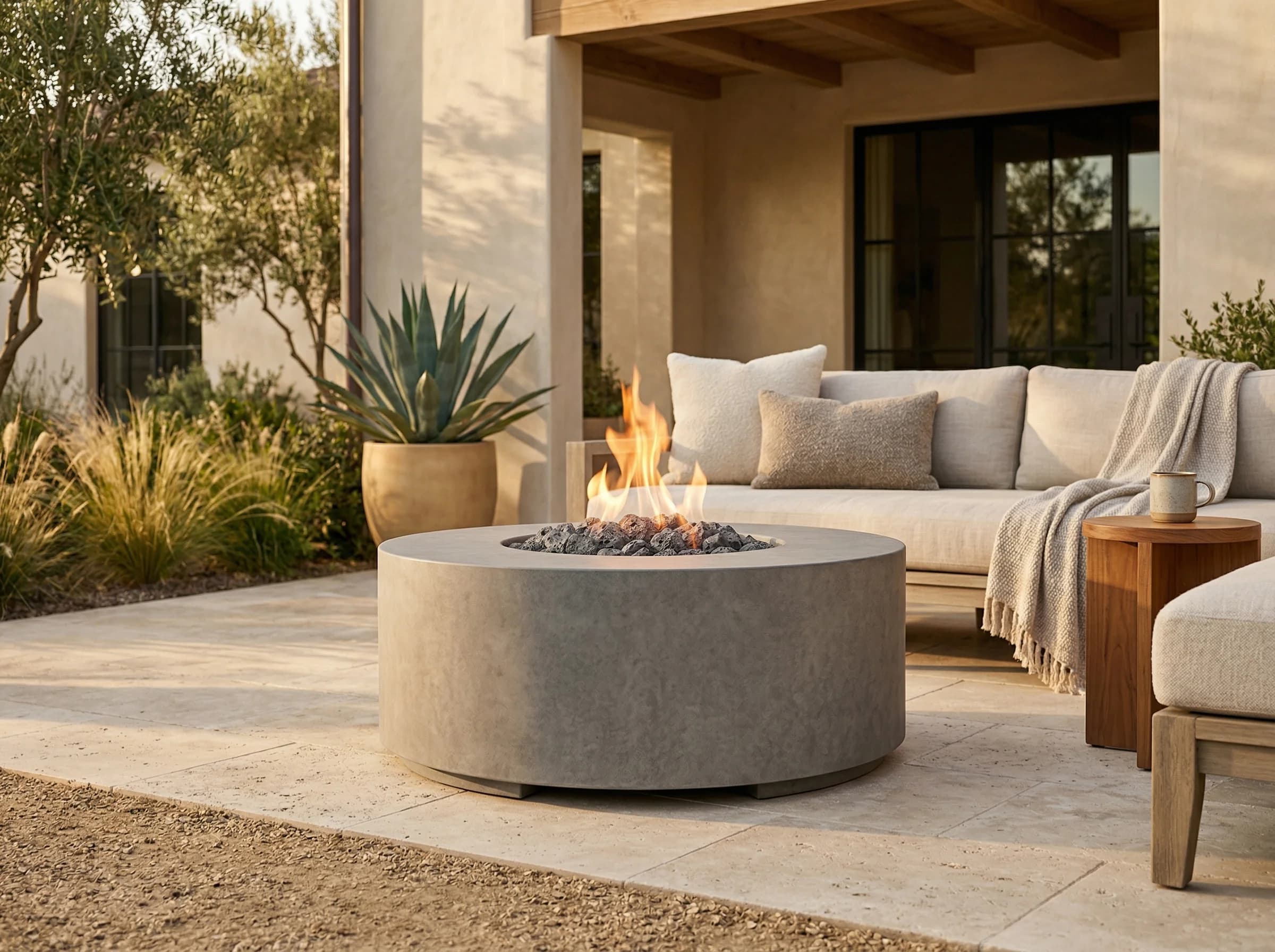
Plenty of homeowners have bought a fire pit on Saturday and received a cease-and-desist letter from the HOA the following Tuesday. The fix is not to skip the fire pit — it is to pick one that fits the three rules most boards actually enforce. This is a plain-English, state-by-state read on what HOAs typically allow in 2026, which fuel types pass without a fight, and which fire pits from our showroom are built for residential compliance.
If you are reading this, you are probably a few clicks away from buying a fire pit and you got a feeling in the back of your head that the HOA might have thoughts. Good instinct. We have shipped to enough gated communities to know how this story plays out either way. The customers who check their CC'Rs first keep their pit. The ones who do not, roughly half the time, end up selling it on Facebook Marketplace six weeks later.
The good news: most HOAs allow fire pits in 2026. The rules they actually enforce fall into a tight pattern — fuel type, flame height, distance to structures, and sometimes time-of-use. Once you pick a piece that lines up with those four rules, the board rarely looks twice.
What HOAs actually restrict (the four patterns)
We have read hundreds of CC'R documents sent in by customers over the last few years. The restrictions almost always come back to the same four things, usually some combination of two of them rather than all four.
1. Fuel type — the single biggest filter
The split most boards care about is wood vs gas. Wood-burning fire pits produce visible smoke, embers, and complaint-worthy odor drift across property lines. Gas pieces — natural gas and propane both — produce clean combustion, no ember throw, and a smoke signature that neighbors do not notice. Roughly half of the HOAs we hear from either ban wood-burning fire pits outright or restrict them so tightly that a gas piece is the only practical option. Propane is the most portable path to compliance because it does not require a gas line permit from the city.
2. Flame height cap
24 inches and 36 inches are the two caps we see most often. Measured from the top of the burner or the lava rock bed to the highest sustained flame tip. Every gas fire pit in our showroom ships under both caps at factory regulator setting, but your installer can dial the regulator lower if your covenant specifies 18 or 20 inches — it is a quick spec change at install time.
3. Distance to structures
10 feet from the house and 10 feet from any combustible overhang (eaves, pergola, awning) is the typical minimum. Some HOAs push this to 15 feet for wood-burning pieces and 8 feet for gas. If your patio is a tight 12 by 12, measure before you buy — a 48-inch table with a 10-foot setback needs a 20-foot clear diameter around it, which rules a lot of suburban patios out of the big pieces and into 27 to 36 inch bowls.
4. Time-of-use and ignition rules
A smaller number of HOAs add time-of-use restrictions — no fires after 10pm, none during red-flag warnings, mandatory shutoff on community pool shutdown. Gas pieces win here too because they shut off in a second with a key valve or a wall switch, while a wood fire has to burn down before you can leave it. UL-listed ignition systems — standard on every gas piece we carry — also tick the HOA box that requires a “mechanical means of immediate extinguishment.”
State-by-state read on fire pit rules
These are typical patterns, not legal advice. State-level fire codes layer on top of HOA covenants — a state may allow what your HOA bans. Always check your CC'Rs and your county fire marshal's current burn-permit status before you light up.
Arizona
Strictest in the top-10 fire-pit states. State fire code enforces wildfire-urban-interface rules in Maricopa, Pima, and Yavapai counties — most HOAs mirror the state language. Wood fire pits are effectively banned during fire season (April to November). Propane and natural gas allowed year-round at most HOAs with 10-foot setback and a 36-inch flame cap. Scottsdale and Fountain Hills HOAs run tighter.
Texas
More permissive than Arizona, but HUGE variation between suburban HOAs. Gas pieces pass almost universally. Wood fire pits typically require a 15-foot setback from the house and a covered screen. Burn bans fire during dry summers in central Texas and lift in fall. Austin, DFW, and Houston suburbs generally allow gas fire tables on patios with no special approval.
California
Air-quality overlay on top of fire code — the Bay Area Air Quality Management District issues Spare the Air days that can ban wood burning entirely. Coastal and foothill HOAs usually require gas-only. Propane fire pits with a UL-listed ignition pass most covenants statewide. Los Angeles county and San Diego county HOAs often require a flame height cap of 24 inches.
Florida
Generally permissive on gas fire pits. Many HOAs allow both wood and gas with reasonable setback. Hurricane-shutter rules sometimes require the pit to be either in-ground or weighted — portable propane bowls that can airborne in a storm are occasionally restricted on waterfront properties.
North Carolina, South Carolina, Georgia
Wide variation. Suburbs around Charlotte, Raleigh, Atlanta, and Greenville typically allow gas without approval and require advance notice for wood. Older established neighborhoods often ban all open flame on wood decks regardless of fuel type — see our wood deck safety and HOA read for the deck-specific angle.
Colorado
Wildfire-urban-interface rules at the state level. Boulder, Jefferson, and Douglas county HOAs mirror the state language — propane and natural gas allowed year-round, wood banned during fire season. Flame-height caps of 36 inches are nearly universal. Snow-country HOAs sometimes add a clearance rule for pit covers so the pit does not disappear under drifts.
Nevada
Clark County (Las Vegas) and Washoe County (Reno) run a tight state fire code. Most HOAs we see allow propane and natural gas, prohibit wood outright in dry months. Short setback rules — often 8 feet to the house — because most lots are tight.
Tennessee
Nashville, Knoxville, and Memphis suburbs generally allow both fuel types with 10-foot setback and no flame cap. Burn permits required in unincorporated areas during fire season. HOAs tend to defer to county fire-marshal language.
Fire pit categories that pass HOA scrutiny
Three categories cover roughly 95% of what our showroom ships to customers in HOA-governed communities. Each shares the three traits a board actually cares about — enclosed vessel, gas or propane fuel, and a UL-listed ignition with a clear mechanical shutoff.
Enclosed propane fire pit bowls
Bowls are the easiest category to get HOA approval on. Compact footprint, enclosed vessel, portable on a 20-pound tank, and no gas line permit required. The Maya 24-inch square and the Sedona 27-inch round are the two we ship most often into Arizona and California patio installs because the footprint stays well inside common setback rules and the flame tucks under 24 inches at factory setting.
Gas burner systems in custom enclosures
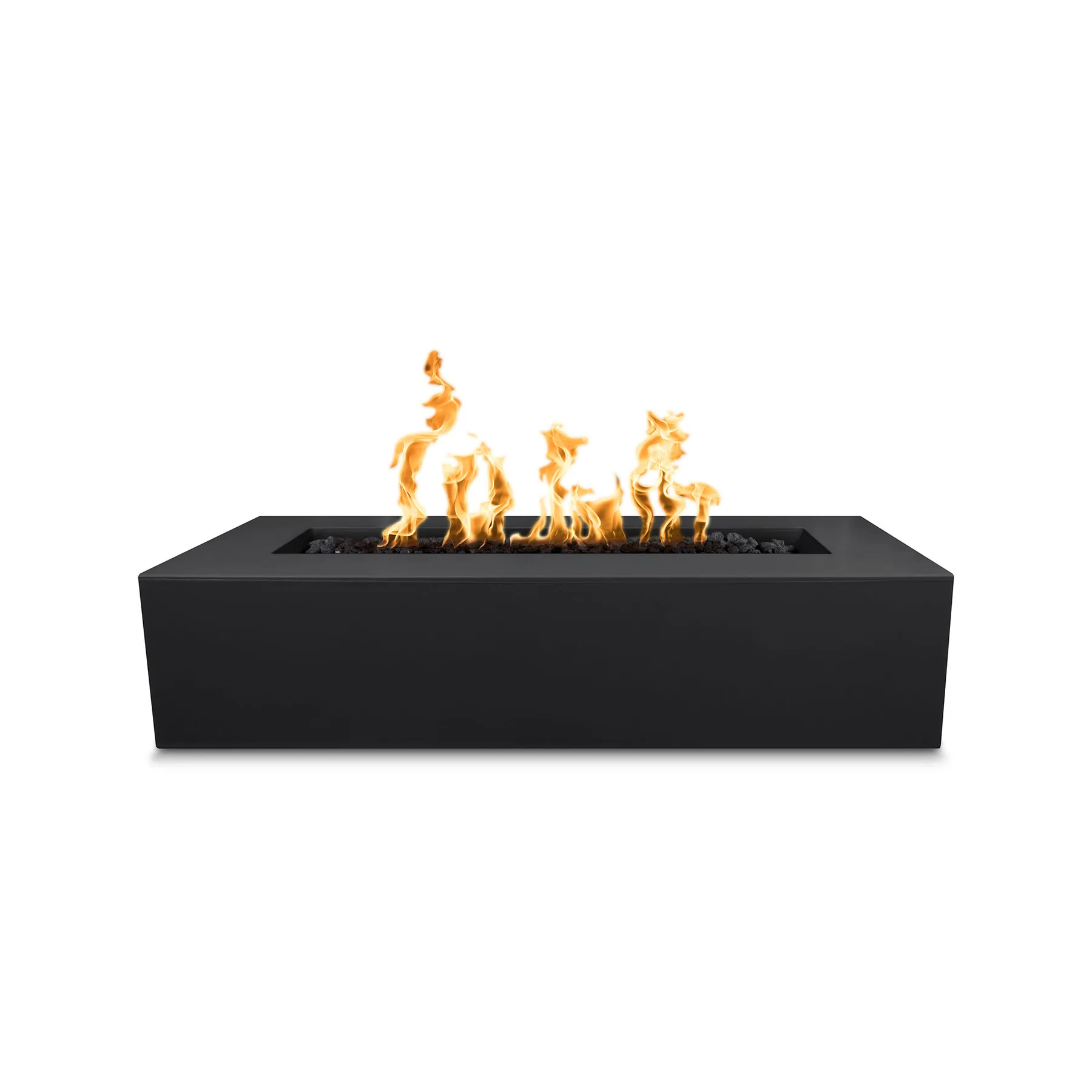
For homeowners building a masonry surround, a pro-grade burner from Firegear Outdoors drops into a custom enclosure with the HOA-compliant pieces already engineered — UL ignition, piezo ignition, electronic shutoff. The Firegear 34-inch Pro Series brass burner is the one we spec most often for masonry-surround builds in gated communities. Pair with a GFRC or stone enclosure and you have a piece that reads permanent and residential — the look boards tend to approve on sight.
GFRC or concrete fire tables
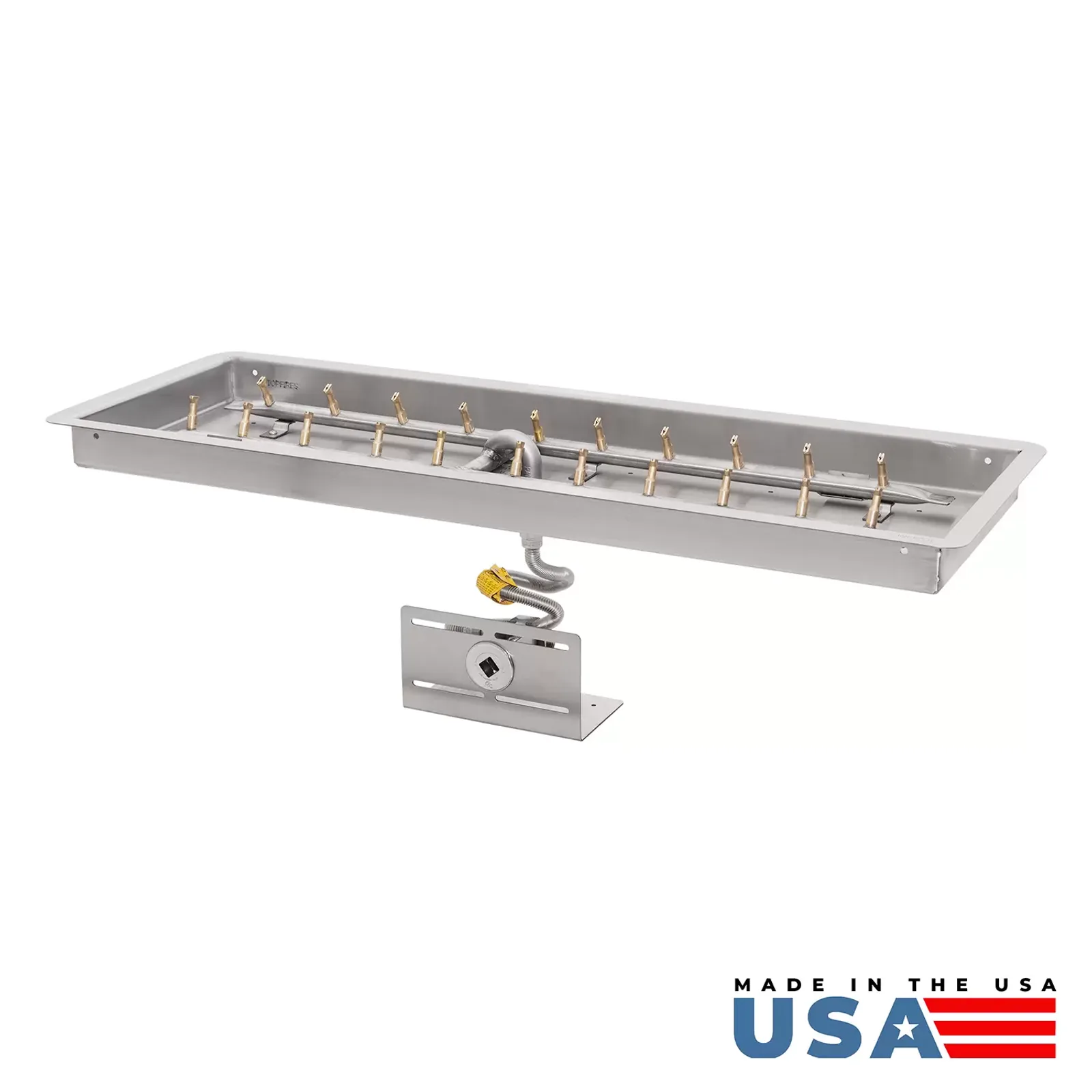
If the HOA allows a permanent fixture and you want seating around the flame, step to a gas fire table. The Cazo 31-inch round is the 65,000-BTU version of the same concrete aesthetic. For larger patios with room to clear the setback rules, the Coronado 72-inch rectangular reads as permanent patio furniture and almost never draws board objection in communities where gas is allowed. For a broader selection of table formats, see our 2026 gas fire table roundup.
What to check in your CC'Rs before you buy
Search for each of these terms in the CC'R PDF:
- Fire — the primary word. Covers fire pit, firepit, fireplace, and open flame rules.
- Flame — catches flame-height caps and open-flame prohibitions on balconies.
- Gas appliance — covers permanent gas-line installations and BTU caps.
- Combustible — covers deck and overhang setback rules.
- Nuisance — the catch-all section most boards invoke when there is a complaint.
If the CC'Rs are silent on all five, you almost certainly can install a gas or propane fire pit with no approval. If there is language on any of them, read the specific section carefully and send a short note to the board with the make, model, BTU rating, and fuel type before you buy. Written approval in hand beats a verbal yes from one neighbor.
The honest HOA playbook we give customers
In our showroom conversations, the advice we give every HOA-governed customer comes down to four steps. The customers who do all four never have a problem.
- Pick a gas or propane piece with an enclosed vessel and a UL-listed ignition. Our The Outdoor Plus range covers 90% of HOA-compliant residential installs.
- Measure the setback. Minimum 10 feet to the house, 10 feet to any overhanging combustible. If your patio is tight, step to a 24 or 27 inch bowl instead of a 48 inch table.
- Email the HOA board the make, model, BTU, and fuel type with a photo of the install location. Ask for written approval. Two-week delay, zero surprise down the road.
- Install with a licensed contractor if you are tapping a natural-gas line. Portable propane bowls do not require a permit in most jurisdictions, but a permanent gas line does — and the HOA may require a copy of the permit.
Do those four things and the fire pit becomes the easy part of the outdoor living build. Skip them and you are the person on the Facebook neighborhood group that nobody wants to be.
Products & brands in this guide
This Season
Shop the season
Black Friday 2026
Black Friday Fire Pits
Markdowns on Corten, hand-forged, and concrete. Lifetime structural warranty.
Shop Black Friday →Holiday Gift Guide
Fire Pit Gift Guide
Gift-ready pieces curated by style, size, and lead time.
Browse Gifts →Thanksgiving 2026
Thanksgiving Outside
Ideas to keep family outside instead of piled in the kitchen.
Read the Guide →Winter 2026 Guide
Winter-Rated Fire Pits
Buyer's guide to Corten, concrete, and hand-forged pieces built for the cold.
Read the Buying Guide →Related reading
Ash — Ash writes the buying guides at FirePits.com — years of specifying fire features on residential installs, from urban patios to mountain properties.