Best Built-In Ice Bins & Outdoor Coolers of 2026: Cold Beer, No Cord Required
By Ash · Published August 2026

An outdoor ice bin is the single most-used piece of an outdoor kitchen that nobody thinks about before the build. You spend six months choosing a grill, another six weeks on the vent hood, and then the first party rolls up and there is nowhere to put the beer. This guide is what we tell people at the counter after 200-plus of these have gone into islands we sold or built. It covers when to buy an ice bin versus an outdoor fridge, how to size the bin, why the drain decision matters more than the brand, and honest picks from Coyote, Hestan, Bull, and Summerset.
Ice Bin vs Outdoor Fridge: When Each One Wins
The mistake people make on this category is treating an ice bin and an outdoor fridge as interchangeable. They are not. An ice bin is a passive stainless well — no compressor, no power, no cord. You fill it with ice an hour before guests arrive, drop bottles and cans in, and it stays cold for four to six hours. An outdoor fridge is a powered appliance that holds fewer drinks but keeps them cold every day of the week.
If you host in bursts — a Saturday cookout, a holiday, a birthday — the ice bin wins by a mile. A 40-lb bin will hold roughly 60 long-neck beers plus their ice. A comparably sized outdoor fridge holds maybe 24. The bin also does not care if it is 105 degrees outside or if the power flickers. If you and your partner grab one beer after work each night, the fridge is what you actually want. Nobody wants to buy a bag of ice for two beers on a Tuesday.
Most of the outdoor kitchens we sell end up with both. The ice bin lives on the entertaining side of the island near the seating; the outdoor fridge lives near the grill for the cook. If you are only going to buy one on the first pass, buy the ice bin. It scales better for the way real people use an outdoor kitchen.
“Nobody ever regretted the ice bin. Every third customer regretted skipping it.”
Sizing an Ice Bin: 10, 20, or 40 Pounds
Ice bins are sold by ice capacity, roughly. A 10-lb bin is a beverage caddy for a couple or a small deck — think eight or ten beers on ice at a time. A 20-lb bin is the sweet spot for most families and covers a small party of six to ten. A 40-lb bin is the entertaining-forward pick and comfortably runs a party of 20 without needing a mid-party refill.
Rule of thumb: 1.5 pounds of ice per person for a four-hour event, and a beer or bottle displaces about half a pound of ice from the working capacity. So a 40-lb bin actually holds around 60 bottles plus enough ice to keep them submerged for the duration. Below is the number we quote at the counter.
A 40-lb built-in ice bin comfortably runs a party of 20 without a mid-party refill, even at 85°F ambient. A 20-lb bin needs a top-off at the two-hour mark.
Drop-In vs Freestanding vs Slide-In
Three install formats and they are not interchangeable. A drop-in bin sits inside a cutout in your island counter, flush with the top, and drains through the bottom. This is what most people picture when they think of a built-in ice bin and it is what Coyote, Hestan, Bull, and Summerset all sell. A slide-in bin has an insulated cabinet body and slides into a rough opening in the front of the island, like an outdoor fridge but without the compressor. A freestanding cooler is a rolling ice chest — a Yeti or an RTIC — and lives outside the island entirely.
If your island is already framed, get the drop-in. It is the cleanest look, the easiest install, and every brand in this guide sells the countertop template so your fabricator can cut the hole once. If you are still designing the island, the slide-in gives you a matched front-face aesthetic with your outdoor fridge and drawers but costs 30 to 50 percent more. Freestanding is fine for a deck without a built island — do not bolt one to a masonry countertop.
The Drain Decision — Hard-Plumbed vs Pop-Out
This is the single most important spec on an ice bin and it is the one people skip. Every bin drains meltwater somewhere. A pop-out plug drain lets the water spill straight down through the bottom of the island and onto whatever is under it. On a decomposed granite base, that is fine and it evaporates. On a paver patio it stains. On a wood deck it rots the joists inside two seasons. Under a covered patio with finished flooring, it will pond and mildew.
Hard-plumbing the drain means running a half-inch drain line from the bottom of the ice bin to a landscape drain, an irrigation drain, or your gutter downspout. It is a 30-minute plumbing job at rough-in and it is nearly impossible to add after the island is finished. If your island sits on a wood deck, under a roof, or on top of finished stone, hard-plumb the drain from day one. If your island sits on gravel or bare dirt in open air, the pop-out plug is fine.
Coyote Outdoor Ice Bins
The Coyote drop-in ice bin is the one we sell most often, for a real reason. Full 304 stainless top and body, gasketed lid that stays sealed when it rains, hard-plumbable drain, and the dimensions line up cleanly with the Coyote grill cabinet cutouts so a fabricator can template the whole island once. The 21-inch model is the 20-lb capacity pick and drops into a 20-inch cutout. Coyote also does a matching 30-inch bin that pushes into the 40-lb range for people building an entertaining-forward island.
What we like at the counter: the lid stays closed. The Coyote hinge has a positive stop and does not flop backward and dent a stone countertop, which happens on cheaper bins. What to know: the drain fitting is on the bottom-center of the bin, so plan your island framing around it — a joist directly under the bin means you are drilling.
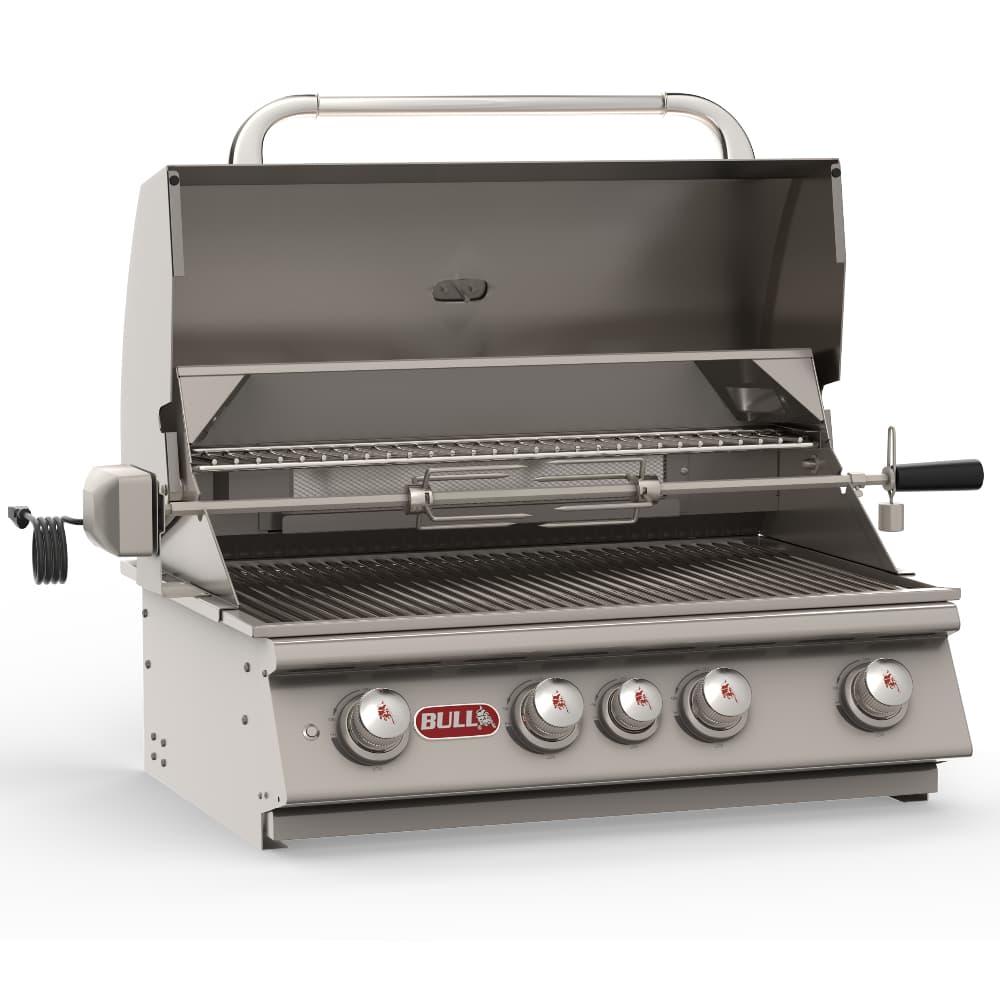
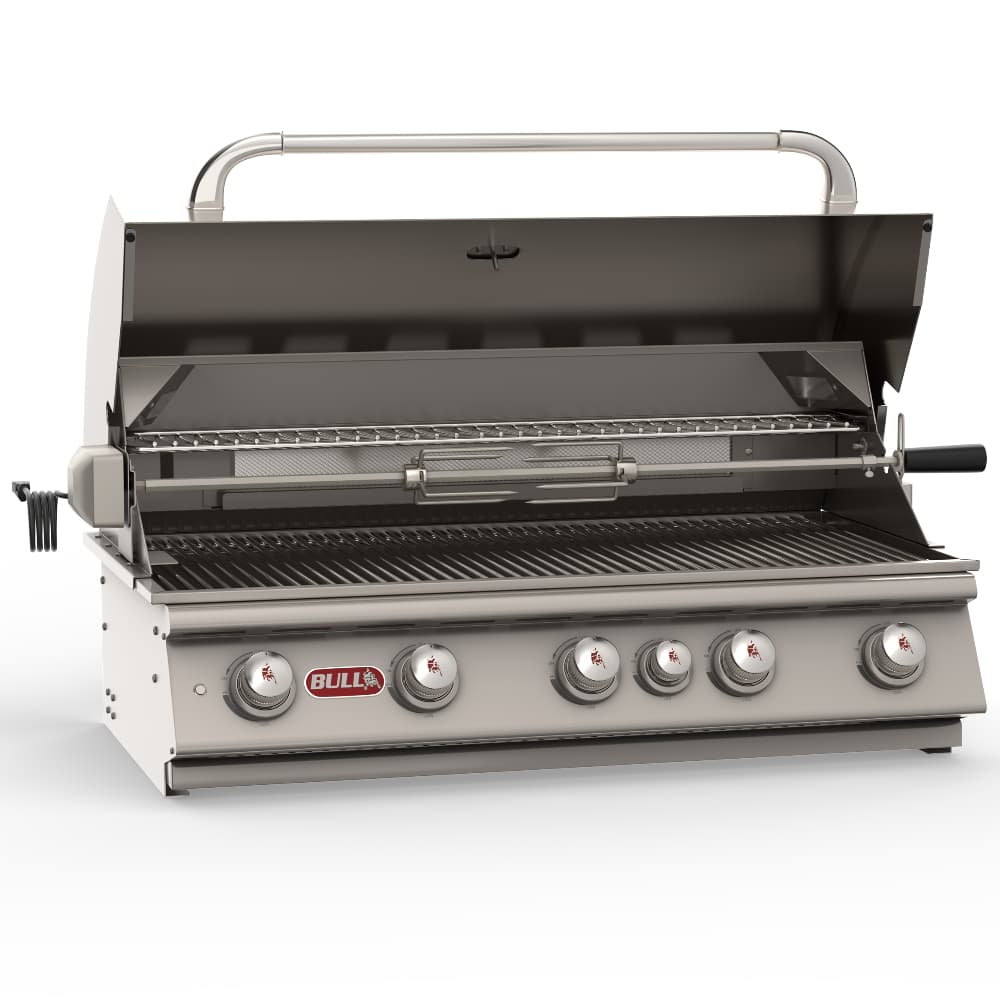
An ice bin is one piece of a full outdoor kitchen — pair it with a Bull built-in grill and you have the working core of the island. Both fit the same standard 30- and 38-inch cutouts.
Hestan and Bull BBQ Picks
Hestan is the premium play. Heavier-gauge 304 stainless, a soft-close hydraulic lid, and the color-panel program that lets you match the ice bin front to the same enamel color as a Hestan grill or fridge. If you are already committed to a Hestan outdoor kitchen, the matching ice bin is a no-brainer. If you are not, the price premium is real and the Coyote does the same job for less.
Bull BBQ makes the value pick in the category. Their drop-in ice bin is 304 stainless, hard-plumbable, and priced roughly 30 percent below the Coyote at the same capacity. The lid gasket is less refined and the hinge is not as tight, but the bin itself is honest and it will last. If your island is Bull framed and you are watching the budget, the Bull ice bin is the right call. Summerset also plays in this space with a well-built 30-inch drop-in that is worth comparing on price when they run a promo.
Install Specs — Cutout Dimensions Matter
Every brand publishes a cutout template. Follow it exactly. A quarter-inch of extra clearance around the flange is intentional — it lets the bin expand and contract with temperature swings without cracking your countertop. A tighter cutout looks better on install day and cracks the stone by the second winter.
Two other specs worth pulling before you cut: the flange depth (how far the lip of the bin sits into the countertop, usually three-quarters of an inch) and the bin body depth (how far it hangs below the countertop, typically 10 to 14 inches). Your island framing has to accommodate the body depth or the bin will not seat. If you are retrofitting into an existing island, measure the internal cavity depth before you buy — this is the most common return we see.
Common Misconceptions
Three myths cost people money on ice bins. First: any old cooler will do the job. Not if it lives in the island. A cheap rotomolded cooler dropped into a stone cutout will bow, warp, and leak within a season. Get a bin designed for permanent install.
Second: you can add the drain later. You cannot, or at least not without ripping out the island. Plumb it at rough-in or accept that the meltwater goes wherever gravity takes it.
Third: 40 pounds of ice is overkill. It is not. A 40-lb bin at half-fill still works fine for a small night. A 20-lb bin at a real party runs dry at hour two and someone is making an ice run. Bigger is almost always the right call on this category.
The Verdict
If you are building a new outdoor kitchen, put in a 40-lb drop-in ice bin with a hard-plumbed drain and never think about it again. Coyote is the default recommendation for most builds. Bull is the value pick if the budget is tight. Hestan is the right call if the rest of the island is already Hestan. Summerset is worth checking on price. Freestanding coolers are fine for a deck with no island — do not bolt one to a stone counter and call it built-in.
Whatever you pick, spend more time on the drain and the cutout than on the brand. A bin plumbed properly into a correctly sized cutout will outlive the grill next to it. A bin dropped into a sloppy cutout with a pop-out drain over a wood deck will be the reason you replace the deck in three years. That is the honest math after 200 of these installs.
Frequently Asked Questions
Ice bin or outdoor fridge — which one do I actually want?+
How much ice do I need for a party of 20?+
Do outdoor ice bins need a drain?+
Can I fill an outdoor ice bin with pool water or the garden hose?+
How do I winterize an outdoor ice bin?+
Coyote versus Hestan ice bin — which one wins?+
Are stainless steel ice bins food-safe for loose ice?+
Products & brands in this guide
Related reading
Ash — Ash writes the buying guides at FirePits.com — years of specifying fire features on residential installs, from urban patios to mountain properties.