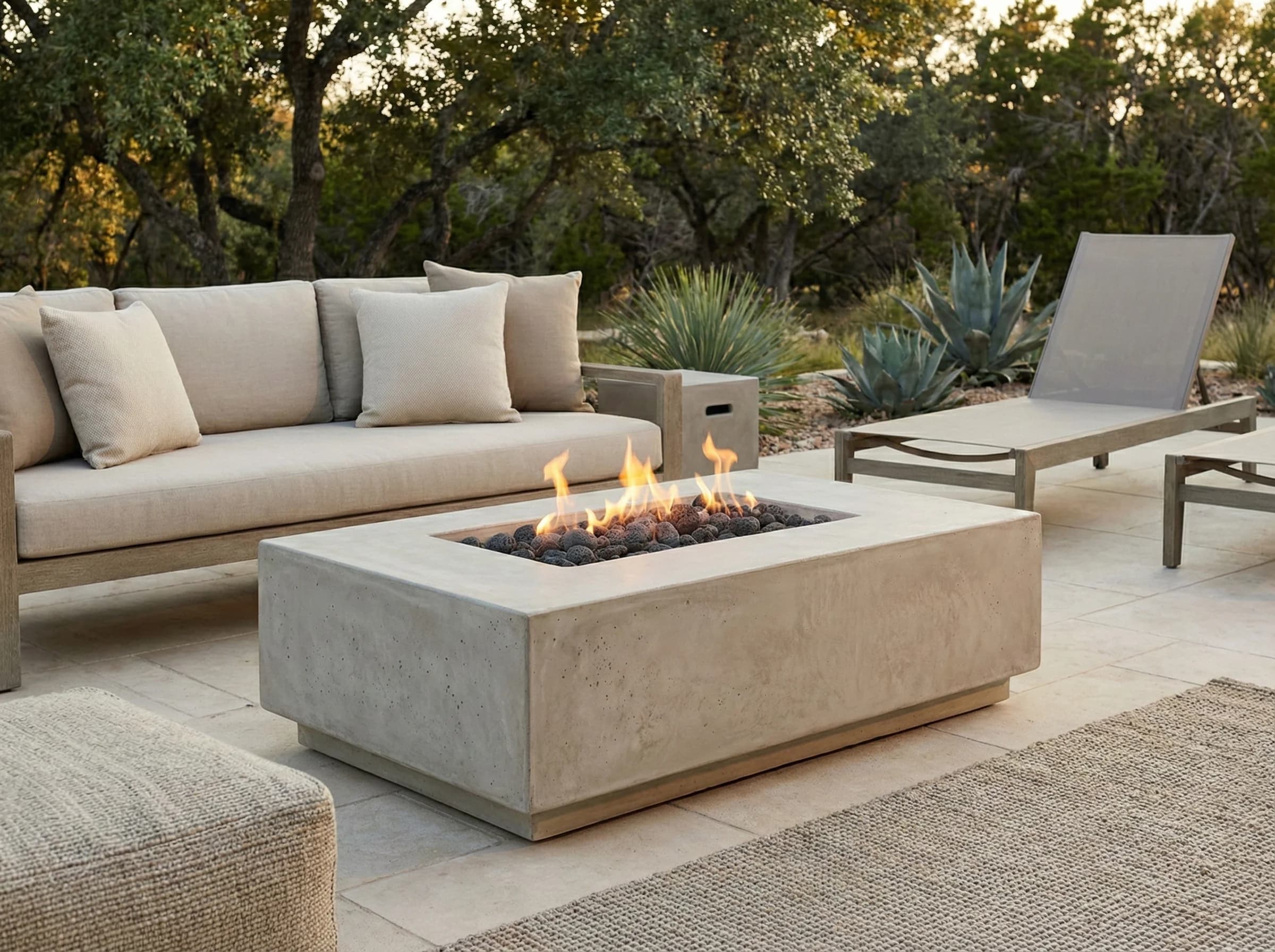
Bull BBQ Angus 4-Burner Built-In Grill: Dealer Review
By Ash · Published August 2026
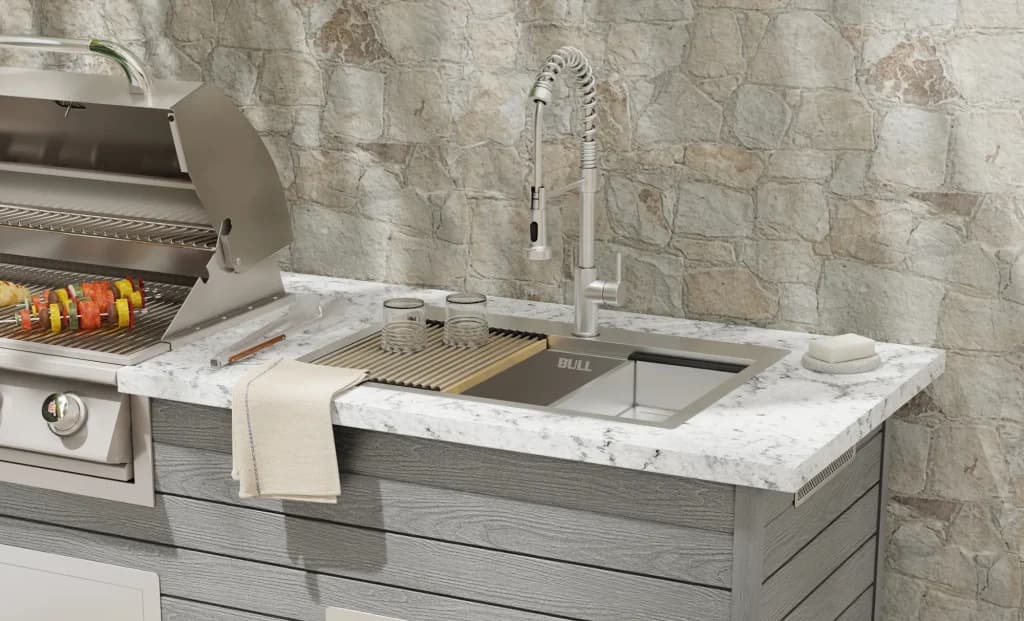
I've been selling the Bull BBQ Angus for years, installing them into stone islands from coastal patios to inland Idaho backyards, and running warranty claims when something breaks. That's the vantage point this review comes from — not a spec-sheet writeup and not a manufacturer press release. The Angus is the grill I recommend more often than any other single model in the $2,500 to $3,500 range, and it's also the grill I've told buyers to skip when their use case pointed elsewhere. This is the honest read: what the Angus is excellent at, what it isn't, and who should actually spend $2,839 on one.
What the Angus Is Built For
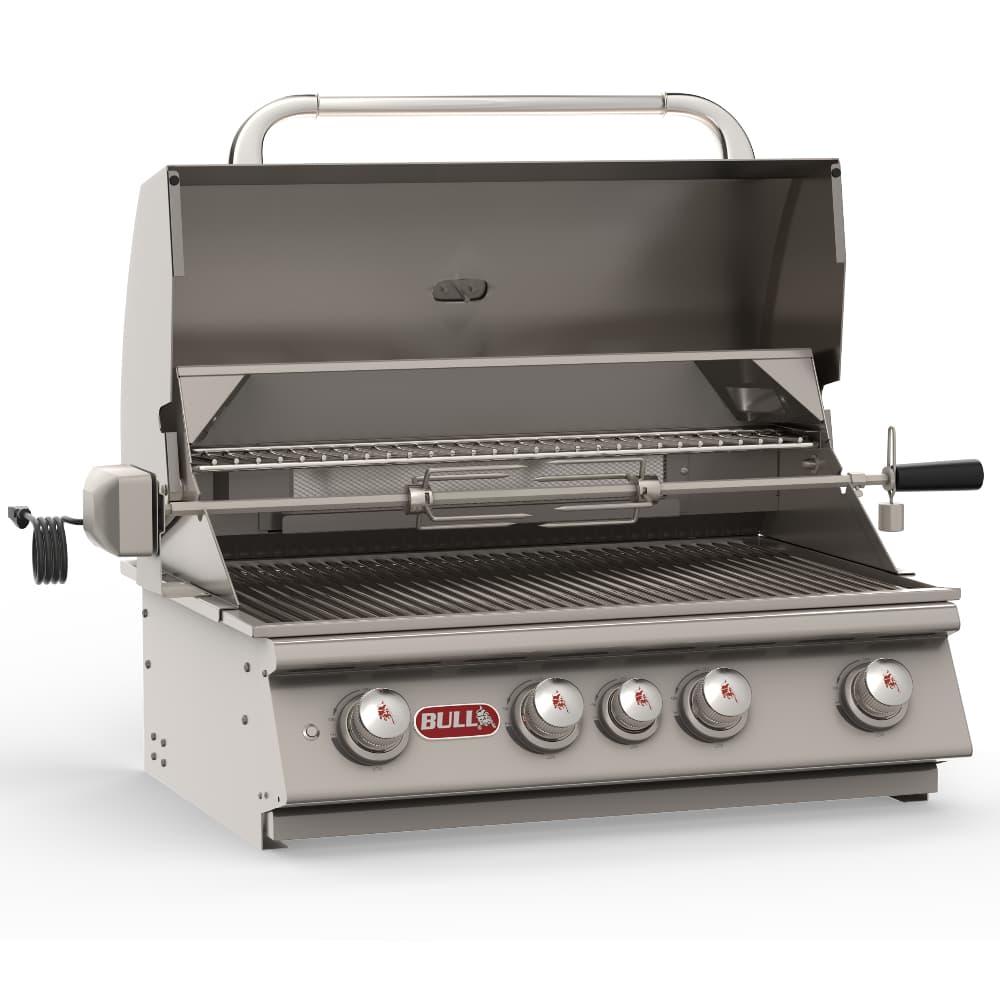
- 60,000 BTU main across 4 burners
- 10K rear infrared rotisserie burner + cast kit
- 304 stainless, 8mm grates, halogen interior
- Lifetime warranty — made in Chatsworth, CA
Bull’s outdoor grill lineup ladders in a clear order: Lonestar Select at the entry tier (around $1,900 for a 30-inch built-in), Angus in the mid-premium tier at $2,839, Outlaw and Brahma above it, and specialty units like the Bison charcoal and the Steer Premium topping out the range. The Angus sits at the exact spot where Bull moves from ‘good gas grill’ to ‘serious dealer-tier product’ — it’s the smallest configuration in the line that gets the full warranty structure, the rotisserie hardware, and the halogen interior lighting.
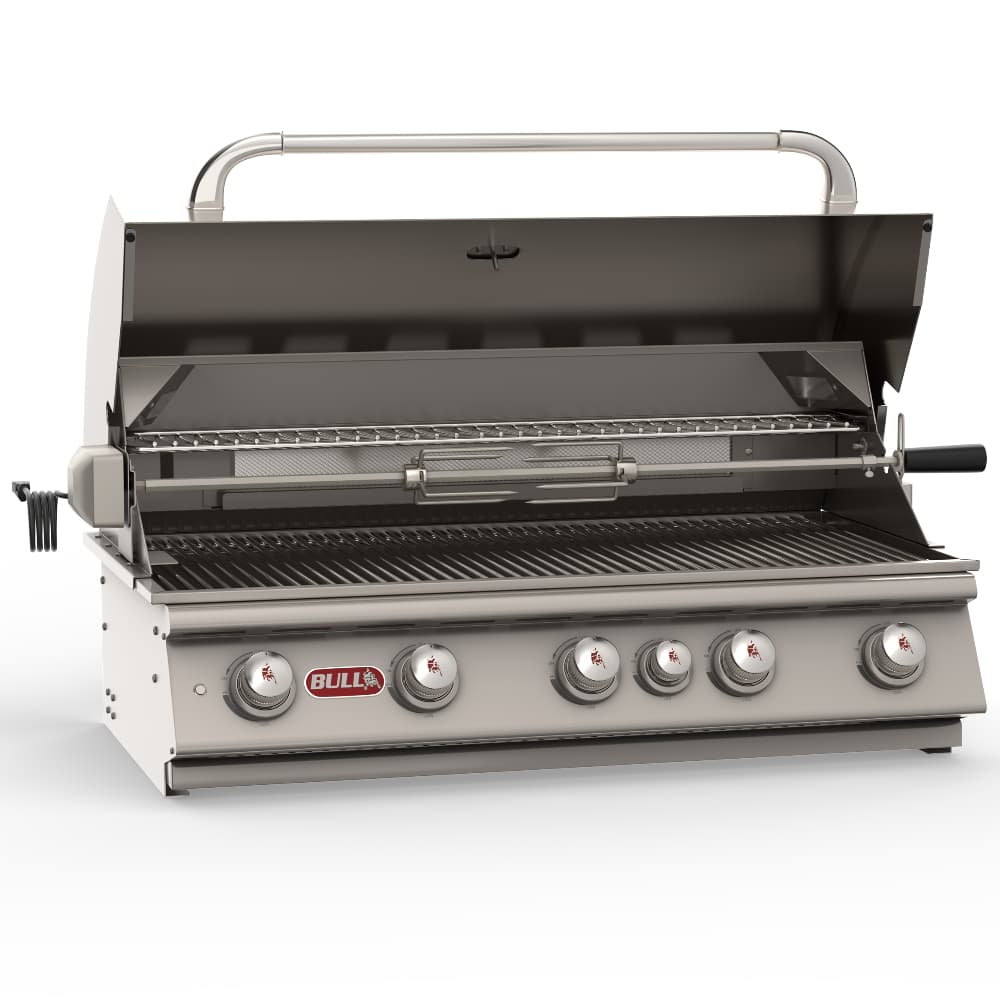
Positioning-wise, the Angus is aimed at the buyer building a proper outdoor kitchen who doesn’t need the 5-burner Brahma footprint. 60,000 BTU across four main burners is enough grill for a family of four cooking regularly plus occasional weekend crowds of eight to ten. The rear infrared rotisserie plus cast rotisserie kit gives you real whole-bird and roast capability that the Lonestar Select can’t match. And the warranty tier — lifetime on burners, cast bases, and housing — is the coverage structure that keeps this grill viable at year 12.
If you’re shopping in the $2,500 to $3,500 window and specifically buying a 30-inch built-in with rotisserie capability, the Angus is the default recommendation. Most of the alternatives at this price point are stepping down on warranty coverage (Coyote CL at 2 years on ignition), stepping down on rotisserie hardware (Summerset Sizzler doesn’t include the cast kit), or stepping up on price into Hestan Aspire territory.
Build Quality — What 304 Stainless + 8mm Grates Actually Get You
The Angus is 304-grade stainless throughout — hood, burner box, grates, structural. The distinction between 304 and 430 stainless matters more than most buyers realize: 304 contains roughly 8 percent nickel where 430 has almost none, and that nickel is what gives 304 its rust resistance in salt air. On a coastal install, a 430 grill starts pitting in year two. A 304 grill like the Angus doesn’t. I’ve pulled Angus grills out of oceanfront installs 8 years in with only minor surface oxidation on the exterior panels — the burners and structural components look factory-fresh.
“In eight years of coastal installs I’ve yet to pull a rusted-through Angus. Put a 430-grade competitor on the same salt-air deck and we’d already have replaced the whole head twice.”
The 8mm diameter round cooking grates are the spec that separates a real built-in grill from a promotional-tier unit. Thinner grates (5mm to 6mm) deflect under a rack of ribs or a full brisket, transfer heat unevenly, and warp within 3 to 5 years of use. The 8mm round grates on the Angus hold their shape under load — I’ve seen them still perfectly true 10 years in. They also mass up enough to deliver visible sear marks without the burner needing to over-fire, which is where the ’more BTU is better’ myth breaks down.
Where the Angus doesn’t match Hestan-tier build: the stainless gauge on the hood is lighter than a Deluxe hood, the pivots are fastened rather than welded, and the interior finishing has occasional visible weld beads that a $7,000 grill wouldn’t. Bull is not restaurant-grade construction — it’s serious residential construction. That’s the honest distinction and it’s reflected in the price gap.
Performance — 60,000 BTU Across 4 Burners
Angus primary zone — above the 100 BTU/sq-in threshold that separates real gas grills from big-box specials.
Four rust-resistant stainless steel main burners at 15,000 BTU each. Total main output is 60,000 BTU across roughly 540 square inches of primary grate — that math lands at 111 BTU per square inch, which sits above the 100 BTU per square inch threshold I use as the ‘good gas grill’ floor on our BTU guide. Below 90 BTU/sq-in and the grill struggles to recover heat when the lid opens on a cool evening. Above 130 and you’re over-firing the hood cavity. The Angus lands cleanly in the sweet spot.
Real cooking numbers: primary-zone temperature hits 500 to 650F on high with the lid closed within about 8 minutes of light. That’s enough for a proper crust on ribeyes without the surface temperature dropping catastrophically when you open the lid. Two-zone cooking works well on the 4-burner layout — light the outer two, leave the inner two off, and you have a genuine indirect zone big enough for two racks of baby-backs at 275F for 4 hours. This is a grill that actually cooks both hot and low, which is not something you can say about every 30-inch built-in in this price range.
Where the Angus underperforms: the burner spacing is even but not exceptional, so you’ll get slightly hotter spots directly over each burner tube compared to a Hestan trellis layout that spreads heat more uniformly. In practice this means learning where your grill runs 25 to 50 degrees hotter and using that map — not a defect, just a characteristic of tube-burner construction that no gas grill under $5,000 fully escapes.
The Infrared Rotisserie — Real or Gimmick?
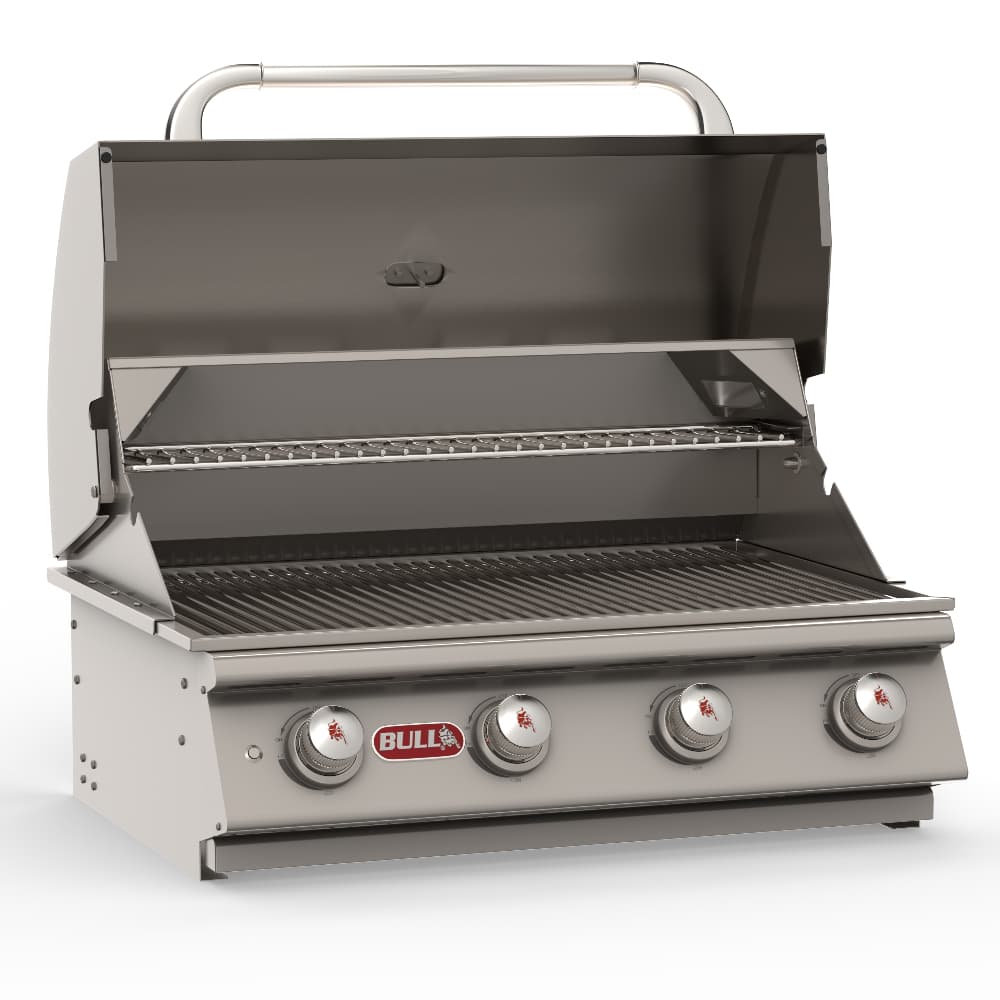
Real. The 10,000 BTU rear infrared rotisserie burner is the Angus-specific feature (this is the ‘with rear infrared burner’ variant, not the base 4-burner without) and it’s the biggest single reason to buy this configuration over the cheaper Lonestar Select. The infrared burner sits behind the grate at hood height, radiating heat forward onto whatever’s spinning on the rotisserie rod. Because it’s radiant rather than convective, it cooks skin and exterior crust evenly across a whole bird in a way that a top-burner setup can’t match.
Real numbers from cooking on it: a 5 to 6 pound whole chicken finishes in 45 to 60 minutes at IR-medium with beautifully crisp skin all the way around. A 4-bone prime rib takes about 90 minutes to hit 125F internal for medium-rare, needs a rest, and comes off with an even mahogany crust. Overnight prime rib (low IR setting, roughly 225F cavity, 8 hours) produces the best beef I’ve cooked on any residential grill. The included cast rotisserie kit — motor, rod, forks — is heavy enough to handle up to a 20-pound turkey without wobble.
Honest downsides: it’s a single-speed rotisserie motor, no digital thermometer or probe integration, and no forward-facing infrared for searing (the burner points backward, not down at the grate). If you want probe-driven cooking automation, you’re in Hestan territory at triple the price. If you want an infrared sear zone under the food, look at Coyote C-Series or step up to the Bull Brahma. For rotisserie work specifically, the Angus setup is legitimately excellent.
What the Angus Is NOT
It’s not the largest built-in Bull makes. 30 inches means one whole packer brisket at a time, not two side-by-side. If you regularly cook for 12 or more, the Brahma at 38 inches with 5 burners is the correct spec. Trying to force a 30-inch grill to feed a bigger crowd works occasionally and disappoints reliably.
It’s not the fanciest. No color finish options (Hestan offers 12; Coyote offers a handful of accent colors), no integrated smoker box (you’re running a smoker tube on the grate), no forward-firing infrared main burners like the Brahma’s all-IR configuration. The interior lighting is halogen rather than LED — brighter than nothing but not the color-adjustable LED you’ll find on premium tier grills.
It’s not the cheapest, either. Starting at $2,839, the Angus sits meaningfully above Summerset Sizzler (around $2,100), Coyote CL (around $2,300), and Bull’s own Lonestar Select (around $1,900). Buyers focused primarily on cost-per-square-inch can find equivalent BTU-per-square-inch numbers in the entry tier — what they lose is the rotisserie hardware, the warranty coverage, and the interior lighting. Not always the right tradeoff, but a real one.
Compared to Bull Brahma
| Spec | Lonestar Select | Angus | Brahma |
|---|---|---|---|
| Burners | 4 | 4 | 5 |
| Main BTU | 60,000 | 60,000 | 75,000 |
| IR Rotisserie | No | Yes — 10K | Yes — 10K |
| Grate material | Stainless rod | 8mm 304 rod | 8mm 304 rod |
| Cook surface | ~810 sq in | ~810 sq in | ~1,020 sq in |
| Warranty | Limited lifetime | Lifetime | Lifetime |
| From | $1,899 | $2,839 | $3,789 |
The Brahma steps up to 38 inches, 5 burners, roughly 90,000 BTU main, and adds all-infrared main burners rather than conventional tube burners. It runs approximately $1,000 more than the Angus. Worth the upcharge if you’re regularly cooking for 6-plus people or specifically want infrared searing under the food rather than just on the rotisserie. Not worth it for a family of four with occasional guests — the Angus footprint is more efficient for smaller cooks and the Brahma’s all-IR mains are overkill unless you’re truly running a steak-heavy program.
The other honest read: the Brahma’s all-infrared main burners are excellent for searing but require slightly more attention on lower-temp cooks — infrared runs hotter at the same knob position than conventional tube burners, so the learning curve on temperature management is real. If you’re coming from a standard gas grill, the Angus is the smoother transition. If you already run infrared regularly and want a full IR grill, the Brahma is the correct step up.
Installation Notes — Cutout, Gas Line, Vent
Standard 30-inch built-in cutout — check the current model-year manual for exact millimeter dimensions but the general spec (30.25″ wide by 22″ deep) has been consistent for years. The head drops in from above and rests on the cutout lip. Weight is roughly 150 pounds, so a light stucco-over-metal-stud island needs to be checked for load capacity before install; a masonry or concrete island handles it without concern.
Gas line requirement: 3/4-inch minimum for the full 60,000 BTU main plus 10,000 BTU rotisserie load, natural gas or LP. A 1/2-inch line will starve the burners at full-tilt, particularly with the rotisserie running simultaneously — I’ve been called to more than one install where the grill was underperforming and the root cause was undersized supply line. Budget $200 to $800 for a new gas line install if you’re running fresh from the meter.
Vent hood: only needed if the grill is enclosed under a roof or awning. Uncovered patio installs don’t need one. Covered installs need a 36-inch minimum outdoor-rated hood at roughly 900 CFM extraction, mounted at proper standoff distance above the cooking surface. See our vent hoods guide for sizing math and install specifics — this is the single most-skipped install detail on covered outdoor kitchens and it becomes an insurance and fire-code problem, not just a smoke nuisance.
What It Costs (Really) — From $2,839 + Delivery + Cutout Modification
Grill price starts at $2,839. Freight to most of the country runs $150 to $350 curbside; inside delivery and placement into the island adds another $200 to $400 depending on the installer. If the mason built the cutout to spec, drop-in is essentially free. If the cutout needs modification (a concrete or stone cut to true it up), budget roughly $100 for concrete-cut labor.
Halogen interior lighting requires 120V power at the grill location — if you don’t have a receptacle in the island already, that’s a $300 to $500 electrician call to run a dedicated line with a weatherproof receptacle. Some installs skip the electrical entirely and simply don’t use the halogen lights; that’s a valid choice, particularly if the grill is under adequate ambient lighting.
Gas line install if you’re starting fresh: $200 to $800 depending on run length and whether the meter needs upgrading. Fitted Bull cover: $180 to $220 and non-negotiable in my recommendation — the freeze-thaw damage a cover prevents pays for the cover within two winters. Realistic all-in cost with cover, delivery, install, and any minor electrical: $3,200 to $3,800. That’s the honest number to budget for a Bull Angus in a new outdoor kitchen, and it’s the number worth quoting up front rather than discovering later.
Frequently Asked Questions
Is the Bull Angus worth it vs the Lonestar Select?+
How long does the Bull Angus last?+
Do you need a vent hood for a Bull Angus?+
Is the Angus infrared rotisserie any good?+
Can you use the Angus in the rain?+
What size cutout does the Bull Angus need?+
Where is the Bull Angus made?+
Products & brands in this guide
Related reading
Ash — Ash writes the buying guides at FirePits.com — years of specifying fire features on residential installs, from urban patios to mountain properties.