Grill Open or Closed: When Each One Wins (The Actual Rules)
By Ash · Published August 2026
Every grilling question I get on the floor eventually loops back to the lid. Open or closed for steak. Closed or open for ribs. Half-open when the grate is crowded. Buyers repeat rules they picked up from a neighbor twenty years ago and apply them regardless of the cut on the grate. The actual answer is short, but nobody explains the physics — lid open gives you radiant heat, lid closed gives you convection heat, and every cut on the grill wants one or the other. Nail that distinction and the rest of the rules stop being rules and start being obvious. A six-pound pork shoulder and a quarter-inch skirt steak want opposite lid positions for the same reason a slow oven roast and a stovetop steak cook completely differently.
The Actual Rule: Radiant vs Convection Heat
Two heat modes, one grill. Lid open is radiant heat — the flame and the grate throw energy straight up at whatever is sitting on the bars, the same way a fire pit warms a face or a restaurant broiler cooks the top of a steak. Fast surface sear, minimal cook-through, all the action at the food’s exterior.
Lid closed is convection. The hood traps hot air and it circulates around the food, cooking it from all sides at once, exactly the way an oven does. Slower surface browning because the ambient air is cooler than the naked radiant intensity of an open burner, but the interior heats evenly and cuts you couldn’t cook through with a broiler suddenly become possible.
Every rule people repeat about when to open and when to close is just an application of that distinction. Thick cuts need convection to cook through without the outside turning to leather. Thin cuts want raw radiant heat because there’s nothing to cook through and every second on the grate matters. Fatty cuts that need to render want the lid down so the fat has time to melt. Delicate cuts that overcook in ninety seconds want the lid up so you can watch them.
“Closing the lid isn’t cooking; it’s roasting. Two different techniques on the same appliance.”
When Lid Open Wins
Lid open when the cut is under an inch thick, when it cooks in under five minutes total, when the priority is a hard surface sear rather than pushing internal doneness. That covers steaks under an inch, quarter-pound burgers, hot dogs, boneless chicken thighs, skirt and flank steak, most vegetables, shrimp, scallops, and thin fish fillets.
The heat under the grate is radiant, direct, and hotter than the ambient air of a closed hood. A gas grill on high with the lid up can put 700F to 900F of surface heat at the grate while the ambient air a few inches above stays a couple hundred degrees cooler. That gap is what gives you real crust without pushing the interior past medium-rare — the meat itself never has time to equilibrate to the surface temperature.
Lid open also gives you eyes on the food. Flare-ups from rendering fat on burgers and skin-on chicken thighs are fine at ten seconds and disaster at forty. With the lid up you catch them and move the food. With the lid down you find charcoal. Same rule applies to any cut that’s going to spend under two minutes per side — if the timer is that tight, you don’t need the convection assist.
When Lid Closed Wins
Lid closed when the cut is over an inch thick, over a pound and a half in weight, or contains bones. That covers whole chicken, chicken quarters, spatchcocked poultry, pork shoulder, brisket, ribs, tri-tip, prime rib, bone-in pork chops thicker than an inch, whole fish, whole sweet potatoes, and anything on a rotisserie spit.
Convection is doing the work here. The interior of a two-pound bone-in ribeye can’t reach 130 degrees from radiant heat alone without the exterior turning to leather first. You need hot air moving over the top of the meat while direct heat works the bottom, and that only happens with the lid closed.
Same math applies to any low-and-slow cook — ribs at 250 for four hours, pork shoulder at 225 for eight hours, brisket at 225 for twelve. Every one of those windows requires the lid down because the whole point is the grill behaving like an oven, not a broiler. The general rule I give buyers on the floor: if the recipe uses the word “roast,” “smoke,” or “slow-cook,” the lid stays closed except to flip or spritz.
The Half-Open Trick
Not every situation is binary. When we cater an event or when a client fills a 42-inch grill with mixed food for the first time, half-open is the pragmatic answer. Prop the lid four to six inches open on the vent bar — most premium hoods have a natural resting position built into the hinge — and you get partial convection with a heat escape route.
This matters when thick and thin cuts share the grate. Whole chicken and burgers on the same 36-inch head is the classic case. Lid fully closed cooks the chicken correctly but incinerates the burgers. Lid fully open sears the burgers but leaves the chicken interior pink. Half-open splits the difference — enough hot-air circulation to move the chicken forward, enough vent for the burgers to stay out of the char zone.
The other use for half-open is pulling a flare-up. Grease igniting under the grate on a fully closed hood turns the whole cavity into a fireball that can flash-cook the whole load past done in thirty seconds. Crack the lid, drop the flame, wait ten seconds, and the fire is out.
Grill-Type Adjustments
Gas grills are what the standard rules are written for. Radiant open, convection closed, half-open for mixed loads. Nothing tricky, and the numbers behave the way you’d expect.
Charcoal grills flip one variable. Because the fuel source sits under the grate rather than in the walls, closing the lid on a Kamado or a kettle changes airflow through the coals and directly changes fuel burn rate. Close the top vent and the coals damp down. Open it and they climb. Charcoal cooks want the lid down almost always, with vent position doing the temperature control that a gas grill does with a burner knob. Learn the vents before you touch the lid.
Pellet grills only cook one way — lid closed. The auger meters fuel to hold a target temperature and that math assumes convection. Opening the lid on a pellet grill for more than a flip dumps ambient temperature and the controller then over-fires trying to recover, which produces temperature swings and a bitter creosote on the food. Treat pellet grills like an oven.
Infrared burners on premium gas grills flip the rules back the other way. Lid up on an infrared sear station is completely fine because the ceramic is radiating at surface temperatures over 1,500F directly at the food — you don’t need convection assist. The Hestan trellis and the Coyote ceramic sear both play by these rules.
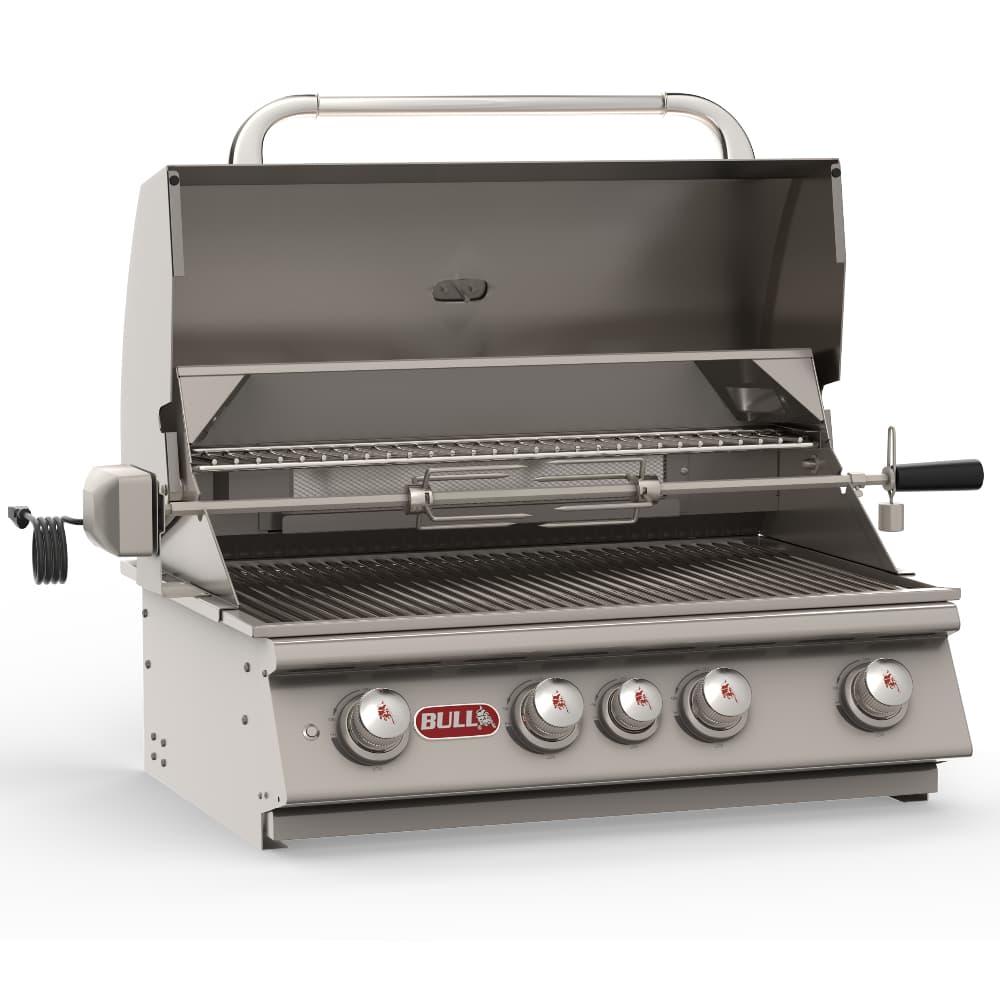
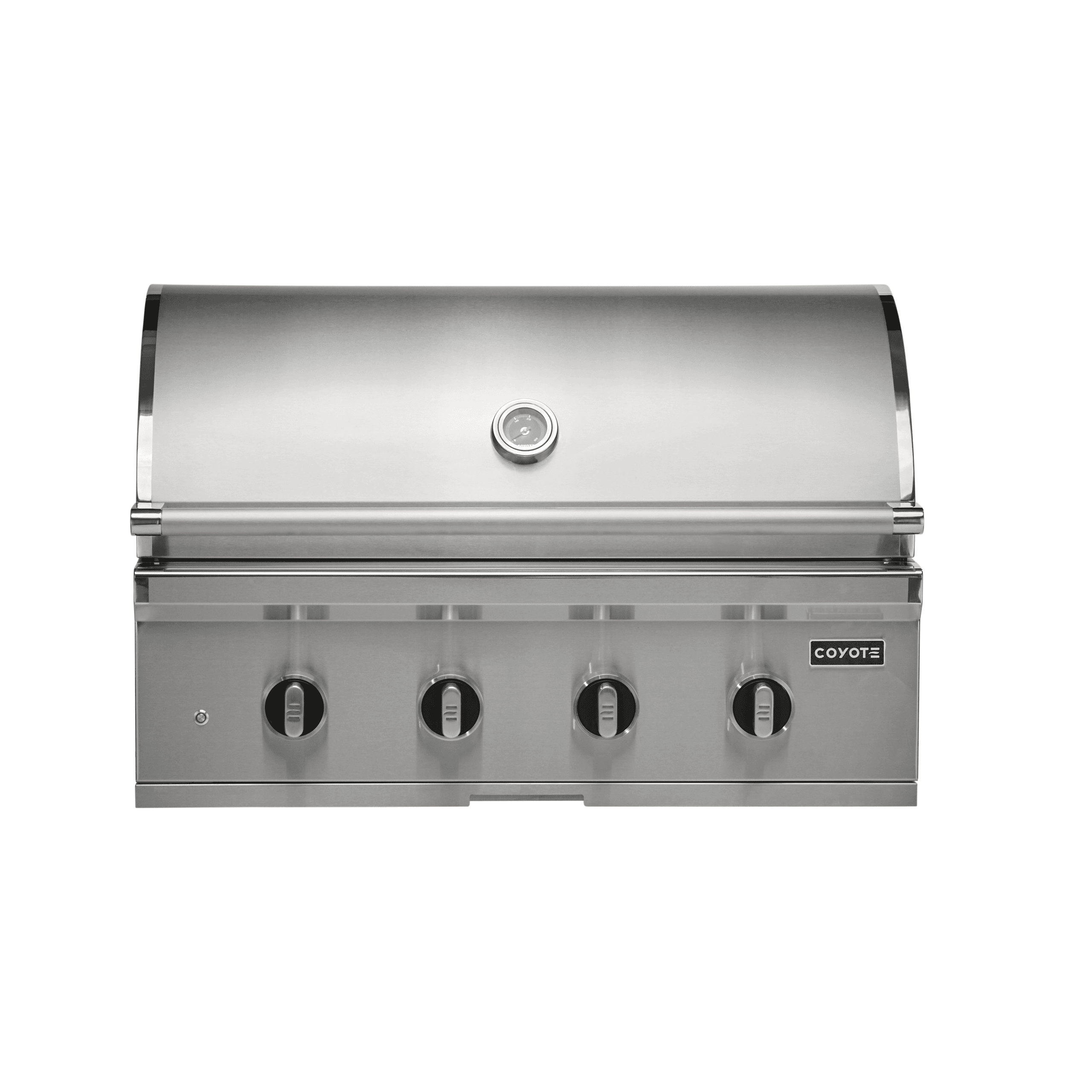
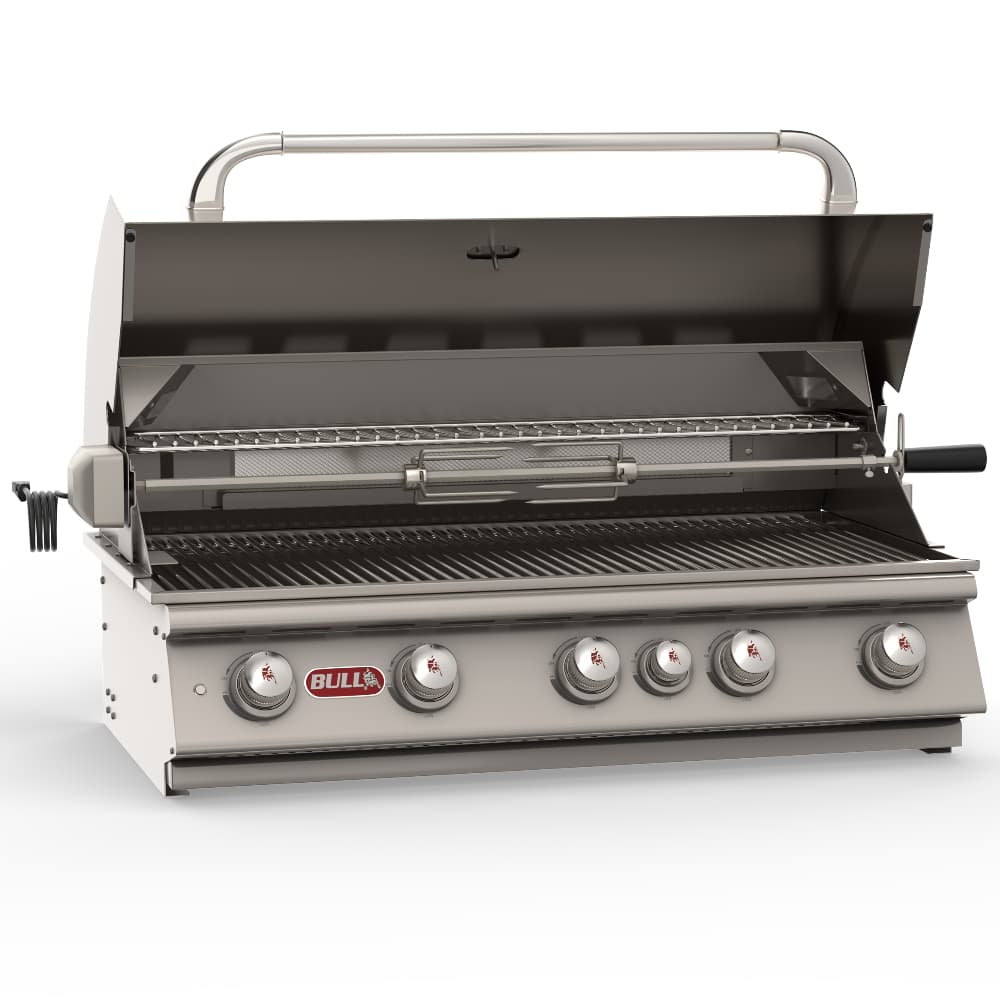
Both techniques — searing lid-open and roasting lid-closed — need enough BTU per square inch to actually deliver. These three do.
Temperature Numbers You Can Actually Use
Approximate numbers from thousands of hours behind a grill, both ours and clients’:
Radiant sear temperature on a real gas grill's primary zone — same grill at 350°F closed convection with the lid down.
A 500F surface temperature with the lid open translates to roughly 350F ambient cavity temperature when you close the lid — because closing the hood swaps radiant intensity for stable convection air. A 700F surface temp with the lid open is roughly 500F ambient closed. That’s your steak sear window. Low-and-slow at 225 to 275 ambient (lid closed, one or two burners on low, the rest off) is where ribs, pork shoulder, and brisket live.
Rotisserie chicken and whole poultry want 350 to 400 ambient, lid closed, indirect setup. Pizza on a stone wants 550 to 650 ambient, lid closed, with the stone preheated a full 20 minutes. Reverse sear on a thick steak wants 275 ambient closed, then hard sear at 700-plus lid open.
The other number worth knowing is BTU per square inch on your primary grate — 90 to 100 is the sweet spot for a well-balanced head. Below that and closed-lid recovery after each flip is slow enough to add real time to the cook. Above that and you over-fire the hood. Grill size and lid behavior are linked directly, which is why we spend so much time on burner load when we spec a head.
The Reverse Sear: Closed Then Open
The restaurant technique for thick steaks — anything over 1.25 inches — is reverse sear, and it’s the cleanest example of using both lid positions on the same cook.
Lid closed, indirect zone, 275 ambient, until the internal temperature reads 115 for medium-rare. Roughly 25 to 40 minutes depending on thickness. Then pull the steak, crank all the burners to high, and let the grill hit 700-plus with the lid open. Drop the steak onto the direct zone, 60 seconds a side, and pull. Rest three minutes.
Result: perfectly even pink from edge to edge, with a hard crust that has zero grey band between the crust and the pink interior. The lid-closed phase cooks the interior evenly at low temperature. The lid-open phase does the sear at high temperature without cooking any additional interior. Neither step alone can produce that result — and it’s the trick that gets home cooks steakhouse steaks off a $3,000 grill instead of a $30,000 broiler.
Same technique works for tri-tip, bone-in pork chops, thick-cut ribeye, and prime rib slices. It’s the highest-value lid trick most home cooks never learn.
Common Mistakes We See
Opening the lid on a low-and-slow cook to check the ribs. Every peek dumps 75 degrees of cavity heat and adds 10 to 15 minutes of cook time to recover. Two peeks an hour is what turns a four-hour rib cook into six. Trust the thermometer, not your eyes — if you have to open the lid, know what you’re looking for and close it inside ten seconds.
Closing the lid on shrimp, scallops, or thin fish. These cook in 90 seconds and don’t need convection. Lid closed cooks the top of a scallop before the bottom’s browned — you end up with rubber. Lid stays up on anything under half an inch thick.
Preheating with the lid open. Ambient cavity temp is what you want at preheat, not surface grate temp. Ten minutes lid closed on high pushes ambient past 500. Ten minutes lid open barely heats the hood. Preheat closed, then adjust lid position by cut once the food is on.
Assuming charcoal rules and gas rules are the same. Airflow controls charcoal fuel burn. Lid position on charcoal changes fuel rate, not just cavity temperature. Learn one control system before applying rules from the other, or you’ll fight the grill every cook.
Frequently Asked Questions
Do you close the grill when cooking steak?+
Why does my chicken burn on top with the lid closed?+
Does closing the lid make the grill hotter?+
Should I close the grill for burgers?+
How long should I preheat with the lid closed?+
Does opening the lid lose heat?+
Is it better to grill chicken with the lid open or closed?+
Products & brands in this guide
Related reading
Ash — Ash writes the buying guides at FirePits.com — years of specifying fire features on residential installs, from urban patios to mountain properties.