Best Electric Patio Heaters of 2026: Bromic, Heatstrip, and Infratech Compared
By Ash · Published November 2026
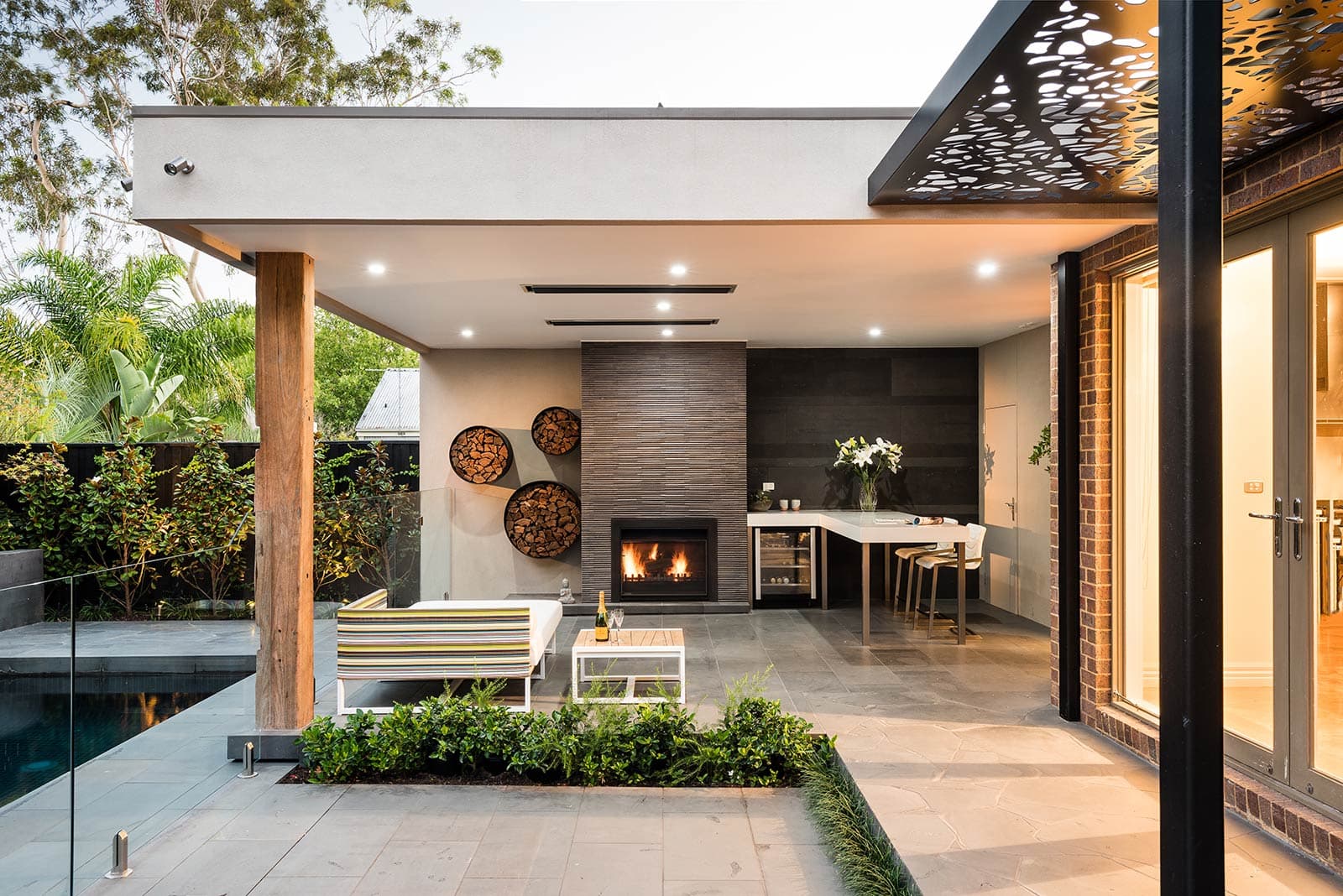
The best electric patio heater depends on your ceiling height, your wind, and your breaker panel, not on a BTU number. For a covered patio that needs real output, the Bromic Platinum 4500W leads. Heatstrip Classic wins on smart controls. Infratech Slimline wins on a clean install. Eight real models, with the math listings skip. Updated November 2026.
What is the best electric patio heater in 2026?
There is no single winner, because ceiling height, wind, and electrical capacity decide the answer. For a large covered patio, the Bromic Platinum 4500W is the strongest performer. For smart controls, the Heatstrip Classic 2400W. For the most discreet install, the Infratech Slimline.
We sell all three brands, so this list covers what we would actually spec for a customer, not what a spec sheet flatters. Eight models sit in the table below, from a $585 Bromic Cobalt entry unit to the $2,761 Bromic Platinum. Prices are the current listed prices at FirePits.com, and all three brands hold their pricing across authorized dealers, so you will see the same numbers elsewhere.
| Model | Watts | Real BTU/hr | Coverage | Listed price | Best for |
|---|---|---|---|---|---|
| Bromic Platinum Smart-Heat 53" | 4,500 | 15,354 (Bromic lists 15,300) | 143 sq ft | $2,761 black, $2,936 white | Large covered patios, wind |
| Bromic Tungsten Smart-Heat 44" | 4,000 | 13,648 | 130 sq ft | $798 to $1,246 by configuration | Mid-size covered patios |
| Bromic Cobalt Smart-Heat 44" | 4,000 | 13,648 | 120 sq ft | $585 to $756 by configuration | Entry-level output |
| Heatstrip Classic 54" | 2,400 | 8,189 | 43 to 54 sq ft | $1,229 | App and voice control |
| Heatstrip Intense 35" | 2,200 | 7,506 | 39 to 49 sq ft (our estimate) | $799 | Small seating groups |
| Heatstrip Enhance 40" | 3,200 | 10,918 | 57 to 72 sq ft (our estimate) | $1,449 | Glass-front design pieces |
| Infratech Slimline SL2424SV 42-1/2" | 2,400 | 8,189 | 49 sq ft (7 x 7 ft) | $954 | Flush soffit installs |
| Infratech Slimline SL3024SV 63-1/2" | 3,000 | 10,236 | 64 sq ft (8 x 8 ft) | $1,090 | Long beams, wider zones |
In my experience, shoppers start this decision by comparing the headline number on each listing, and that is where the trouble starts. The next section explains why.
Why is BTU the wrong number for electric patio heaters?
Electric heaters are rated in watts, and one watt equals 3.412 BTU per hour. A 2,400-watt Heatstrip is 8,189 BTU. Setting that beside a 40,000 BTU propane mushroom heater makes electric look five times weaker, but the two numbers measure different things.
A gas heater’s BTU rating is fuel burned per hour. A good share of that energy leaves as hot air rising straight up, which a breeze carries away before it reaches anyone’s shoulders. An electric infrared heater turns electrical input into radiant energy aimed at the seating area. Infratech states its heaters are over 90 percent energy efficient, and the radiant beam is not diluted by a column of hot air. The rating on the box describes input. What you feel at the table is delivered heat.
Here is the conversion every listing should print and almost none do.
| Rated watts | Equivalent BTU/hr | Amps at 240V | Models at this rating |
|---|---|---|---|
| 2,200 W | 7,506 | 9.2 A | Heatstrip Intense |
| 2,400 W | 8,189 | 10.0 A | Heatstrip Classic, Infratech SL2424SV |
| 3,000 W | 10,236 | 12.5 A | Infratech SL3024SV |
| 3,200 W | 10,918 | 13.3 A | Heatstrip Enhance |
| 4,000 W | 13,648 | 16.7 A | Bromic Tungsten, Bromic Cobalt |
| 4,500 W | 15,354 | 18.8 A | Bromic Platinum |
What should you compare instead of BTU?
Four numbers. Published coverage in square feet, mounting height, how the heater behaves in wind, and the circuit it needs. Everything else is noise. Coverage is the one buyers skip, so look at the ratio in the next section.
How much area does each watt actually cover?
Bromic’s published coverage works out to about 30 square feet per 1,000 watts. Heatstrip and Infratech publish figures near 20 square feet per 1,000 watts. Same electricity, different claimed footprint. The gap is real on paper and partly a measurement difference.
| Model | Published coverage | Watts | Sq ft per 1,000 W |
|---|---|---|---|
| Bromic Platinum | 143 sq ft | 4,500 | 31.8 |
| Bromic Tungsten | 130 sq ft | 4,000 | 32.5 |
| Bromic Cobalt | 120 sq ft | 4,000 | 30.0 |
| Heatstrip Classic | 43 to 54 sq ft at 7 to 8 ft mount | 2,400 | 17.9 to 22.5 |
| Infratech SL2424SV | 7 x 7 ft = 49 sq ft | 2,400 | 20.4 |
| Infratech SL3024SV | 8 x 8 ft = 64 sq ft | 3,000 | 21.3 |
Do not read that table as “Bromic is 50 percent more efficient.” Physics says a resistance heater converts essentially every watt to heat, so a watt is a watt. The spread comes from design and from how each brand defines its coverage zone. Bromic uses a spectral reflector and a glass-ceramic or frosted element screen that spreads the beam evenly across the floor. Heatstrip and Infratech use slim housings that trade some throw for a low profile. The three brands also publish their figures at different mounting heights, and we have not seen them tested to one shared method.
Treat the ratio as a hint, not a verdict. It tells you the Bromic Platinum is built to cover a dining area from one wall or ceiling mount, while a slimline strip is built to disappear and warm a smaller zone directly beneath it. If you need a big footprint from one heater, that favors Bromic. If you are putting two or three strips along a beam, the math favors Heatstrip or Infratech.
Which Bromic Smart-Heat model is right for you?
Bromic’s Smart-Heat electric line comes in three tiers, all rated 4,000 to 4,500 watts. Platinum is the performance flagship, Tungsten is the mid-tier, and Cobalt is the entry model. Pick Platinum if the patio is big or breezy. Pick Tungsten for a similar zone at a lower listed price.
Bromic is an Australian company built around one problem: wind. Its directed-infrared platform keeps working in winds up to 12 mph, according to the company, which is exactly when standard patio heaters give up. For the full brand story, see our Bromic brand page.
Bromic Platinum Smart-Heat 4500W: the flagship
The Bromic Platinum Smart-Heat 53-inch (BH3622000, black, $2,761; white BH3622001, $2,936) pushes 4,500 watts, which Bromic lists as 15,300 BTU and a 143 square foot zone. The housing is only 2 inches thick, with a sealed stainless case and a tinted glass cover that produces a soft red glow instead of the harsh orange of basic infrared elements. The included bracket tilts through 60 degrees, so you aim the heat at the chairs, not the sky. It mounts to a wall or ceiling, or recesses with a separately sold ceiling kit. A wall switch controls it, and Bromic sells wireless controllers and dimmers as add-ons.
Who is it for? A covered patio of 12 by 12 feet or larger, a pergola-framed dining area, or a windy rooftop. It also draws the most current in this guide, about 18.8 amps at 240V, which matters for the circuit discussion below.
Bromic Tungsten Smart-Heat 4000W: the mid-tier
The Bromic Tungsten Smart-Heat 44-inch (listed $798 to $1,246 by configuration) delivers 4,000 watts, 13,648 BTU, and a spectral reflector that spreads the heat across about 130 square feet. The element tubes are frosted to cut glare, so you get a warm amber glow. It mounts to a wall or ceiling and needs a recess kit for flush mounting. It gives up some of Platinum’s refinement and 500 watts of output. Its 130 square foot rating covers a 10 by 12 patio.
Bromic Cobalt Smart-Heat 4000W: the entry point
The Bromic Cobalt Smart-Heat dual element (listed $585 to $756 by configuration) strips the premium extras and keeps the heating power. A fused quartz tube houses a thick steel coil that emits a soft red glow, and an anodized rear reflector sends stray infrared back toward the target. The tradeoff is evenness: Cobalt gives up the element screens that make Platinum and Tungsten diffuse the heat, so you feel more of a hot spot under the beam and less of a blanket. It is built from corrosion-resistant 304 stainless steel. Bromic lists about 120 square feet.
Which Heatstrip model should you buy?
Heatstrip makes slim, 240V infrared heaters in three residential tiers: Intense at 2,200W, Classic at 2,400W, and Enhance at 3,200W with a glass front. All three include remote and app control. Choose by finish and wattage, not by name.
All three share a 3-year residential and 2-year commercial warranty, Bluetooth and Wi-Fi control, and compatibility with Google and Amazon smart-home platforms. The standard bracket handles wall or ceiling mounting, and it can also hang the heater from chains or wires. Browse the full line on our Heatstrip brand page.
Heatstrip Intense 35-inch 2200W: compact and quick
The Heatstrip Intense 35-inch ($799) is the shortest of the three and suits a two-to-four-person conversation group or a balcony. At 2,200 watts it draws about 9.2 amps, which means it fits on smaller circuits than its siblings. Heatstrip describes it as delivering rapid, radiant warmth for small to medium areas, and available in black and white.
Heatstrip Classic 54-inch 2400W: the do-it-all
The Heatstrip Classic 54-inch ($1,229, in black or white) is the sweet spot of the range. Published guidance puts the 2,400-watt Classic at 43 to 54 square feet when mounted 7 to 8 feet up. That is a tight dining table plus a few chairs, nothing larger. Where it earns the price is control: remote, app, Bluetooth, Wi-Fi, and voice through Google or Amazon. You can warm the patio from the couch before anyone steps outside.
Heatstrip Enhance 40-inch 3200W: the glass-front statement
The Heatstrip Enhance 40-inch ($1,449) swaps the usual housing for a glossy black tempered glass front, made with German Schott glass. It adds a 0 to 24 hour timer and three heating levels, and at 3,200 watts it has the most output of any Heatstrip here. If the heater will be visible from the living room, this is the one that looks designed rather than installed. Because 3,200 watts is 13.3 amps, check the circuit first.
Why do designers specify Infratech Slimline heaters?
Infratech Slimline heaters are American-made, UL listed for indoor and outdoor use, and built to sit flush against a soffit or beam. The SL2424SV covers about 7 by 7 feet at 2,400 watts. The SL3024SV covers about 8 by 8 feet at 3,000 watts.
Infratech has built electric infrared heaters in California since 1958, and the Slimline series is what architects reach for when the heater has to vanish. Both models use medium-wave infrared, which gives a gentle glow without glare, and the quartz elements are designed for up to 5,000 hours of use. They mount to a wall or ceiling with a T-slot bracket, and Infratech recommends surface mounting at heights up to 11 feet. The warranty is 3 years. Our Infratech brand guide goes deeper on the zone-control panels.
The SL2424SV 42-1/2-inch ($954) is the default for a loggia or a screened porch. The SL3024SV 63-1/2-inch ($1,090) is longer and warms a wider strip, which suits a long beam over a bar or a banquette. Both ship in silver, and the catalog also offers bronze and black shadow finishes plus 208V and 277V versions for commercial supply.
Will your electrical panel handle an electric patio heater?
Every heater in this guide is 240V and hard-wired. A 2,400-watt unit draws 10 amps, and a 4,500-watt Bromic Platinum draws 18.8 amps. Size the breaker for 125 percent of a continuous load, and let a licensed electrician confirm the circuit.
The common shortcut, that electric heaters top out around 1,500 watts because that is what a wall outlet can give you, describes plug-in space heaters. It does not describe hard-wired 240V heaters, which is a different class of product. That is the whole reason electric works for a seating area at all.
| Heater | Watts | Amps at 240V | Amps x 1.25 | Typical minimum breaker |
|---|---|---|---|---|
| Heatstrip Intense | 2,200 | 9.2 | 11.5 | 15 A |
| Heatstrip Classic | 2,400 | 10.0 | 12.5 | 15 A |
| Infratech SL3024SV | 3,000 | 12.5 | 15.6 | 20 A |
| Heatstrip Enhance | 3,200 | 13.3 | 16.7 | 20 A |
| Bromic Tungsten | 4,000 | 16.7 | 20.8 | 25 A |
| Bromic Platinum | 4,500 | 18.8 | 23.4 | 25 A |
Here is the gotcha most people miss. Two Heatstrip Classic heaters on one circuit total 20 amps of load, and 25 amps with the continuous-load margin. That means a 30-amp circuit, not the 15-amp one the first heater suggested. Decide how many heaters you want before the electrician runs the wire, because adding a second heater later can mean pulling a new circuit. In my experience, that one conversation prevents the most expensive surprise in the whole project.
How much does an electric patio heater cost to run?
At an illustrative 17 cents per kilowatt-hour, running cost ranges from about 37 cents an hour for a 2,200-watt Heatstrip Intense to about 77 cents an hour for a 4,500-watt Bromic Platinum, both at full power. Dimming and timers cut those numbers.
| Heater | kW | Cost per hour | Cost for a 4-hour evening |
|---|---|---|---|
| Heatstrip Intense | 2.2 | $0.37 | $1.50 |
| Heatstrip Classic | 2.4 | $0.41 | $1.63 |
| Infratech SL3024SV | 3.0 | $0.51 | $2.04 |
| Heatstrip Enhance | 3.2 | $0.54 | $2.18 |
| Bromic Cobalt | 4.0 | $0.68 | $2.72 |
| Bromic Platinum | 4.5 | $0.77 | $3.06 |
For comparison, a standard 20-pound propane tank holds roughly 430,000 BTU. Feed that to a 40,000 BTU heater and you get about 10 hours before the swap. Electric has no tank to run dry in the middle of dinner, which is why hosts who entertain often tend to come around to it.
How high should you mount an electric patio heater?
Mount most slimline electric heaters 7 to 9 feet above the floor. Lower puts too much intensity on one spot and risks clearance problems. Higher dilutes the heat before it reaches the seating area. Follow the manufacturer’s minimum clearances for every model.
Radiant intensity falls off quickly with distance. For a compact source it follows the inverse-square rule, so dropping a heater from 10 feet to 7 feet can roughly double the intensity at head height. A long strip loses less, but the direction holds. Heatstrip’s coverage figures assume a 7 to 8 foot mount. Infratech recommends surface mounting at heights up to 11 feet. Bromic’s clearance requirements vary by model, so check the installation manual for the unit you buy.
Aim matters as much as height. The Bromic Platinum’s bracket swings 60 degrees, so you point the beam at the chairs. Slimline strips generally shine straight down, which is why spacing multiple units along a beam works so well.
When does gas beat electric?
Gas wins on a large, fully open patio with no ceiling, and on any site where a 240V circuit cannot reach. Electric wins on covered patios, screened porches, windy sites, and anywhere you want no flame, no fumes, and no tank swaps.
Freestanding gas patio heaters heat air and people in an open radius, which works in still conditions at 5 to 8 feet. We covered that tradeoff in our flame tower vs mushroom guide, and the full category sits in the best outdoor patio heaters of 2026. If you are weighing output for a big open yard, the patio heater BTU sizing guide has the gas math. For everything with a roof, electric is usually the better answer.
There is also a no-combustion advantage. Without a flame there is no venting requirement, so electric infrared heaters tuck under pergolas, inside screened porches, and beneath loggias where gas heaters run into clearance rules. That is the install envelope that makes Infratech and Bromic popular with architects.
What goes wrong on a typical install?
The four common mistakes are undersizing the circuit, mounting too high, forgetting the recess kit, and expecting a plug-and-play product. Each is easy to prevent before the ceiling is closed up.
Undersized circuit. Covered above. Decide on the total number of heaters first.
Wrong mount height. A heater at 11 feet over a 9-foot dining table delivers a fraction of its rated warmth. Mount lower, and angle it.
Missing recess kit. The Bromic Platinum and Tungsten need a separately sold ceiling recess kit for flush mounting. Heatstrip sells flush mount kits for the Classic, Intense, and Enhance, and they are a separate line item too. Add them to the budget at the start.
Plug-and-play expectations. These are hard-wired. Bromic, Heatstrip, and Infratech all expect a licensed electrician. That is a permit and a labor cost, and it is worth pricing before you fall for a model.
One more note on looks. Bromic Platinum and Tungsten diffuse their glow through a screen, so you see a soft amber or red band. Cobalt and Infratech show a more visible element. The Heatstrip Enhance hides everything behind glass. If you sit looking up at the heater, that difference matters more than a few watts.
How do you choose the right one?
Start with the room, then the circuit, then the look. Here is the short version of what we recommend.
Large covered patio, windy site, or rooftop: the Bromic Platinum 4500W. If the budget is tighter and you can live with slightly less refinement, the Tungsten covers a similar zone.
Entry-level output with a Bromic nameplate: the Cobalt, with the understanding that the heat feels more concentrated.
Smart controls, mid-size dining area: the Heatstrip Classic 2400W. For a small seating group, the Intense 2200W. For a design-forward glass look, the Enhance 3200W.
Architectural, flush install, American-made: the Infratech SL2424SV for a standard zone, or the SL3024SV for a wider strip.
Not sure how many heaters your layout needs? Send us the patio dimensions, the ceiling height, and a photo of the electrical panel, and we will tell you what we would spec. Hard-wired heaters are a place where five minutes of planning saves a day of rework.
Frequently Asked Questions
What is the best electric patio heater?+
How many watts do I need for a patio heater?+
Do electric patio heaters work in cold and windy weather?+
Can I plug an electric patio heater into a regular outlet?+
How much does it cost to run an electric patio heater?+
Are electric patio heaters better than propane?+
Can electric patio heaters be used under a covered patio or pergola?+
Products & brands in this guide
Related reading
Ash — Ash writes the buying guides at FirePits.com — years of specifying fire features on residential installs, from urban patios to mountain properties.