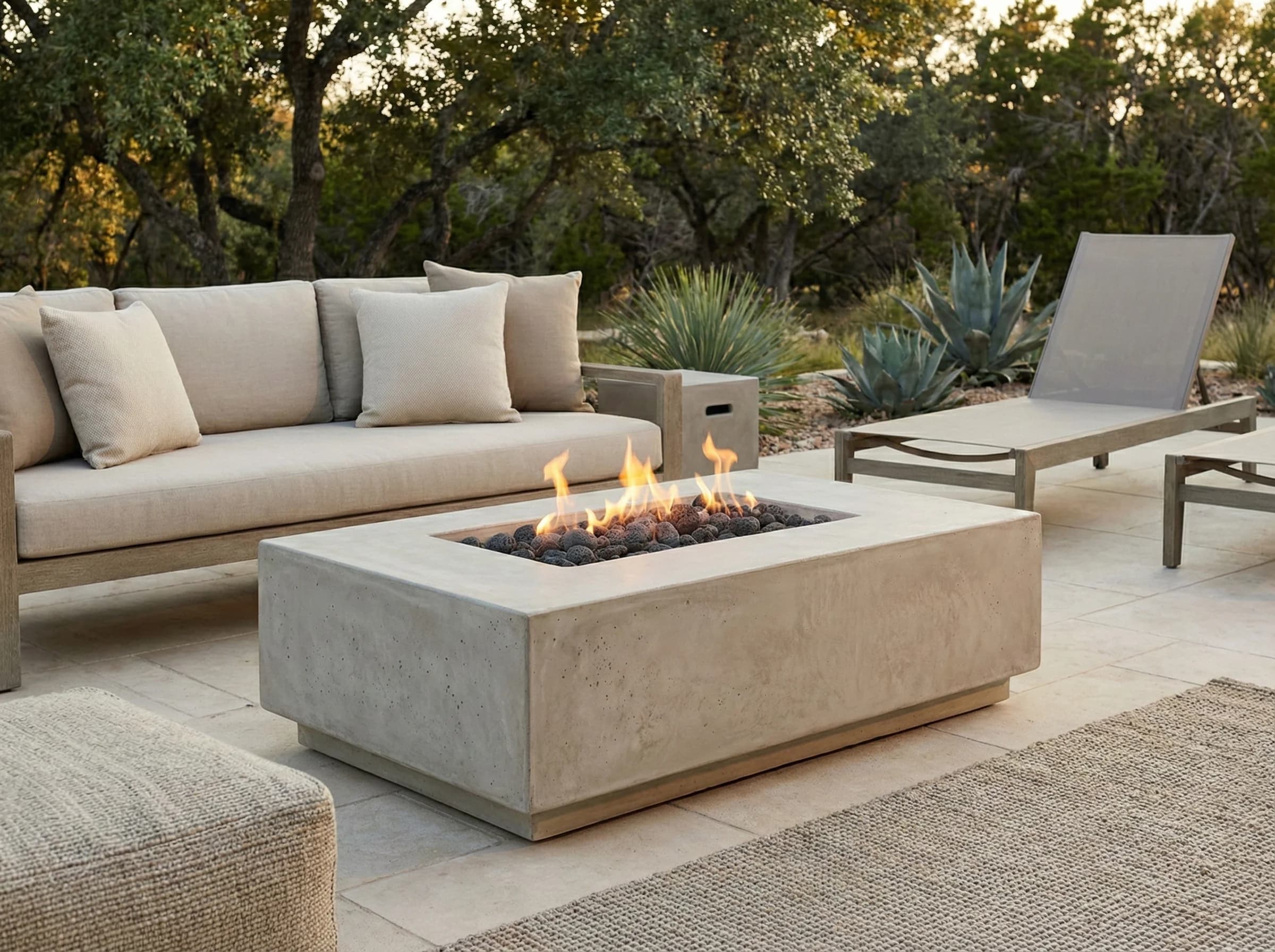
Bull BBQ Brahma 5-Burner Built-In Grill: Dealer Review
By Ash · Published August 2026
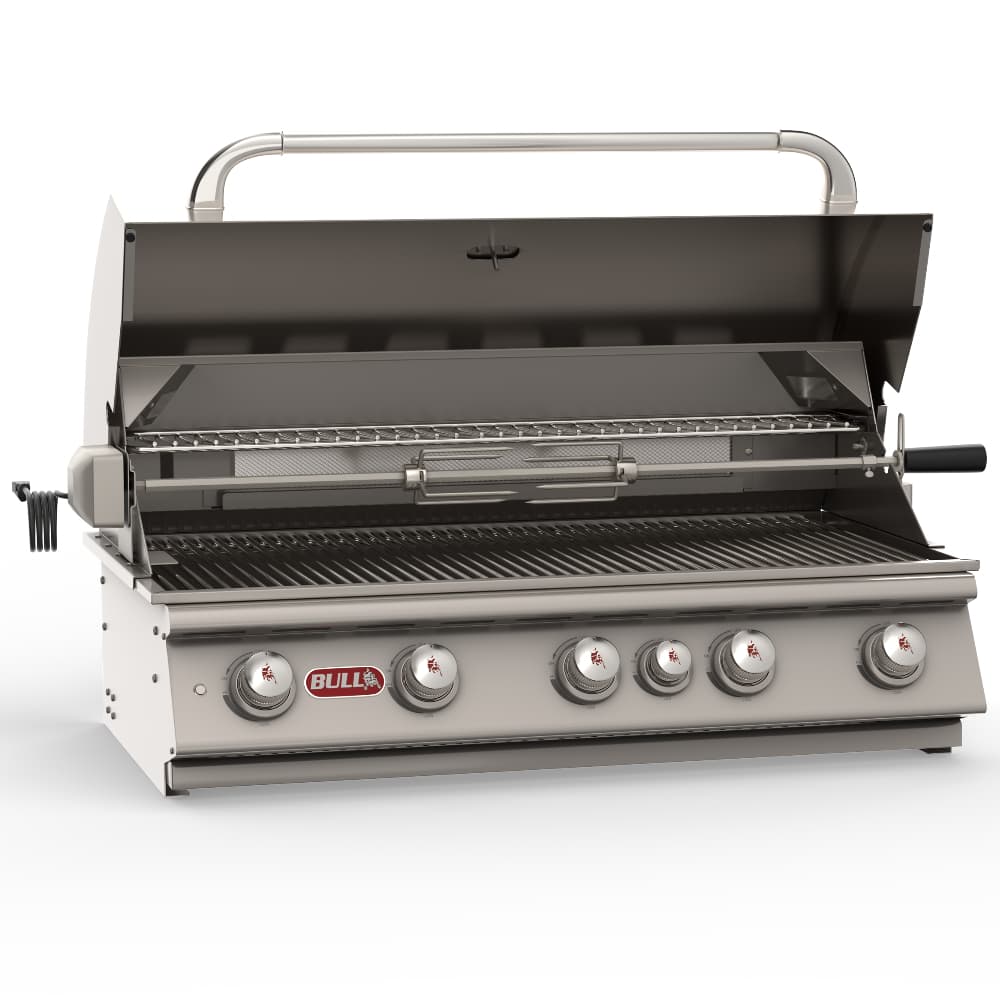
The Bull Brahma is Bull's flagship residential built-in — a 38-inch, five-burner, 304-stainless head made in Chatsworth, California, and priced around $3,789 in natural gas. I've sold and installed a lot of them, and I get asked the same two questions every week: is it worth $950 more than the Angus, and is it a real step-up from a 30-inch four-burner, or just a bigger grill with a bigger sticker. This is the honest dealer take on both — what the Brahma is genuinely built for, where it earns the premium, and where it's the wrong buy.
What the Brahma Is Built For
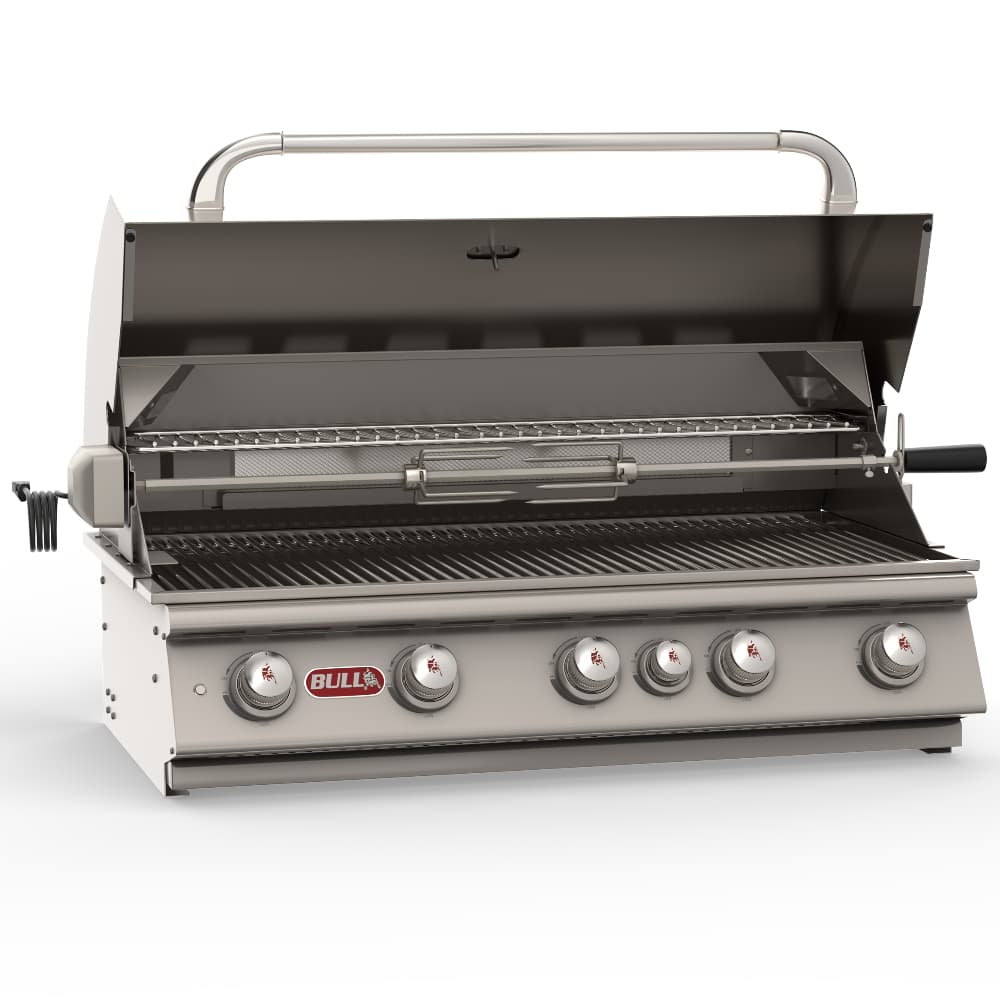
- 75,000 BTU main across 5 burners
- 10K rear infrared rotisserie burner
- 1,020 sq in cooking surface, 5 true zones
- Lifetime warranty, made in Chatsworth CA
The Brahma is Bull’s flagship residential built-in — the biggest, most-BTU’d head Bull ships before you step up to the outdoor-kitchen-scale Steer at 60 inches. It fits a standard 38-inch built-in cutout, runs five main burners at roughly 15,000 BTUs each for 75,000 BTUs across the primary grate, adds a 10,000 BTU rear infrared rotisserie burner for 85,000 total, and delivers approximately 1,020 square inches of cooking surface between the primary grate and the warming rack.
The buyer this grill is built for: someone cooking regularly for six or more people, hosting real dinners more than a few times a year, and wanting enough burner count to run multiple simultaneous temperature zones without compromise. It’s not the right grill for a couple cooking for themselves — the Angus 30-inch does that job at $950 less. It is the right grill for the family that hosts holidays, cooks for three-generation Sunday dinners, and would rather have burner headroom they don’t always use than run out of grate space when it matters.
Bull positions the Brahma as the flagship of the residential line, and after selling both extensively, I agree with the positioning. It’s the ceiling of what most homeowners actually need before you cross into commercial-scale outdoor kitchens.
Build Quality — Same 304 + 8mm Grates as the Angus
Here’s the thing buyers don’t always realize: the Brahma inherits the exact same build spec as the Angus. Same 304-grade stainless steel construction throughout — hood, burner box, structural panels. Same 8mm diameter round cooking grates. Same rust-resistant stainless main burners. Same piezo ignition with flash-tube backups. Same halogen interior lights. Same warming rack construction. Same Angus-tier lifetime warranty on stainless and burners.
The differences between Angus and Brahma are size and burner count, not materials. Bull doesn’t cheapen the flagship — they scale it up. That’s a philosophy call I respect, because plenty of brands downgrade the metallurgy on their bigger heads to hit a price point. Bull holds the spec constant and you pay for the extra size and burner count.
The 8mm round grates are worth calling out. Most grills at this price point ship 6mm or lighter grates that warp within a few seasons of hard use. Bull’s 8mm round bars hold heat, produce clean sear marks, and I’ve never replaced a set under warranty in this line. They’re heavier to handle when cleaning, but that’s the trade you want.
75,000 BTU Across 5 Burners — Real Performance Numbers
Brahma primary zone — clears the 100 BTU/sq-in bar that separates real gas grills from big-box specials, with more usable surface than the Angus.
The math that matters on any grill spec sheet is BTU per square inch of primary cooking surface. The Brahma runs 75,000 BTUs across roughly 700 square inches of primary grate — that works out to 107 BTU per square inch. Our target for a serious gas built-in is 90 to 100 BTU per square inch, so the Brahma sits comfortably above the threshold with headroom to spare.
What that translates to in practice: I’ve clocked primary-grate sear temperatures of 550 to 700F within 12 to 15 minutes of full preheat with all five main burners on high. Direct-heat recovery when you open the lid on a cool evening is fast — the burner load matches the cavity volume properly, so you’re not waiting for the grill to catch back up between batches.
The 5-burner layout also means five independent temperature zones, not just an on/off/on pattern across a smaller head. Every burner has its own control valve, and the zones are actually usable independently — I can hold 250F on the far-left burner for slow chicken, 400F on burners two and three for vegetables, and 650F on the two right burners for a hard sear. That’s multi-zone cooking as it’s supposed to work, not a marketing claim.
The 5-Zone Advantage Over 4
The jump from four burners to five sounds incremental. In practice, it changes what you can cook simultaneously in a way that matters more than the spec sheet suggests. On a 30-inch four-burner grill, when you dedicate two burners to a hard sear and one to a slow-cook zone, you have exactly one burner left for everything else — vegetables, warming, a second protein. It becomes a one-thing-at-a-time cooking flow.
On the Brahma’s five-burner layout, the same setup leaves you two flexible middle burners for parallel work. Four chickens on a slow zone plus four racks of ribs staged through the middle plus a hard sear on the far side is a Sunday cook I’ve done on a Brahma without the grill feeling crowded. That same cook forces you into serial batches on a four-burner head.
“Four chickens on a slow zone, four racks of ribs staged through the middle, and a hard sear on the far side — a Sunday cook the Brahma handles without the grill feeling crowded. A four-burner grill can’t.”
The ceremony cook this really shines on is reverse-sear. You get a true low-heat holding zone (one burner on low) and a true screaming-hot sear zone (two burners on high) with cool zones in between for staging. On a four-burner grill, the low zone and the sear zone are physically adjacent — heat bleeds from one to the other and your reverse-sear becomes a compromise. On five burners with a cool middle, the separation is real.
Infrared Rotisserie — Same 10K IR Bulb as the Angus
The Brahma’s rear infrared burner is the same 10,000 BTU unit that ships on the Angus, and the cast rotisserie kit is included in the box. Bull doesn’t make the rotisserie an upcharge — it’s standard equipment on this tier, and the cast motor is heavy-duty enough to handle whole-turkey and prime-rib loads without complaint.
Rear infrared plus rotisserie is Bull’s answer to Hestan’s trellis burner and Coyote’s ceramic sear — different geometry, same intent. The IR bulb radiates directly to the food from behind rather than heating air from below, which is what makes rotisserie chicken and prime rib genuinely great on this grill instead of just adequate. Skin crisps, drippings self-baste, and you don’t need to babysit temperature the way you would on convection alone.
If you know for certain you’ll never use the rotisserie, Bull sells a Brahma variant without the IR burner for roughly $400 less. My recommendation: keep the IR kit. Even if you use rotisserie twice a year, the ability to run a Thanksgiving turkey or an Easter prime rib on a rear IR burner instead of tying up the oven is worth the flexibility. It also drives resale value if you ever move the grill.
What the Brahma Is NOT
Honest dealer moment: the Brahma is not the biggest grill on the market, it’s not the most feature-loaded, and it’s not the right answer for every luxury outdoor kitchen. Some things the Brahma doesn’t do that buyers occasionally ask about:
It doesn’t have direct all-infrared main burners. If your primary use case is competition-style hard searing on every cook, an all-IR-main grill from a niche brand delivers a different experience. Bull is a conventional-plus-rear-IR philosophy; that’s a design choice, not a limitation, but know what you’re buying.
It doesn’t integrate smart temperature probes or Wi-Fi controls. If app-based temperature monitoring is a must-have, look at brands that build that in from the design phase. Bull is unapologetically analog, which most of our buyers actually prefer for reliability over 15-plus years.
It’s not the massive outdoor-kitchen-catcher a Bull Steer is at 60 inches. If you’re specifying a full outdoor kitchen with matching refrigeration, side burners, and pizza oven, the Steer is the anchor grill and the Brahma is a step down from that scale.
And it’s not a smoker. If low-and-slow smoke is your primary cooking style, pair the Brahma with a dedicated smoker — a Coyote Asado kamado is the natural companion in this price tier. The Brahma will hold 225F on one burner with a smoker box for occasional smoked ribs, but it’s not what the grill is built for.
Also worth naming honestly: the Brahma is fantastic, but it’s not restaurant-grade in the sense that Hestan Deluxe and DCS Series 9 are. Those grills sit a tier above the Brahma on gauge weight, welded construction, and warranty. They also cost twice as much. Bull’s value proposition is delivering 90 percent of that tier at roughly half the price, and the Brahma is where that math is most defensible.
Compared to Bull Angus
| Spec | Angus | Brahma | Outlaw |
|---|---|---|---|
| Burners | 4 | 5 | 4 |
| Main BTU | 60,000 | 75,000 | 60,000 |
| IR Rotisserie | Yes (10K) | Yes (10K) | No |
| Cook surface | ~810 sq in | ~1,020 sq in | ~810 sq in |
| Grate | 8mm 304 rod | 8mm 304 rod | Stainless rod |
| Warranty | Lifetime | Lifetime | Limited lifetime |
| From | $2,839 | $3,789 | $2,199 |
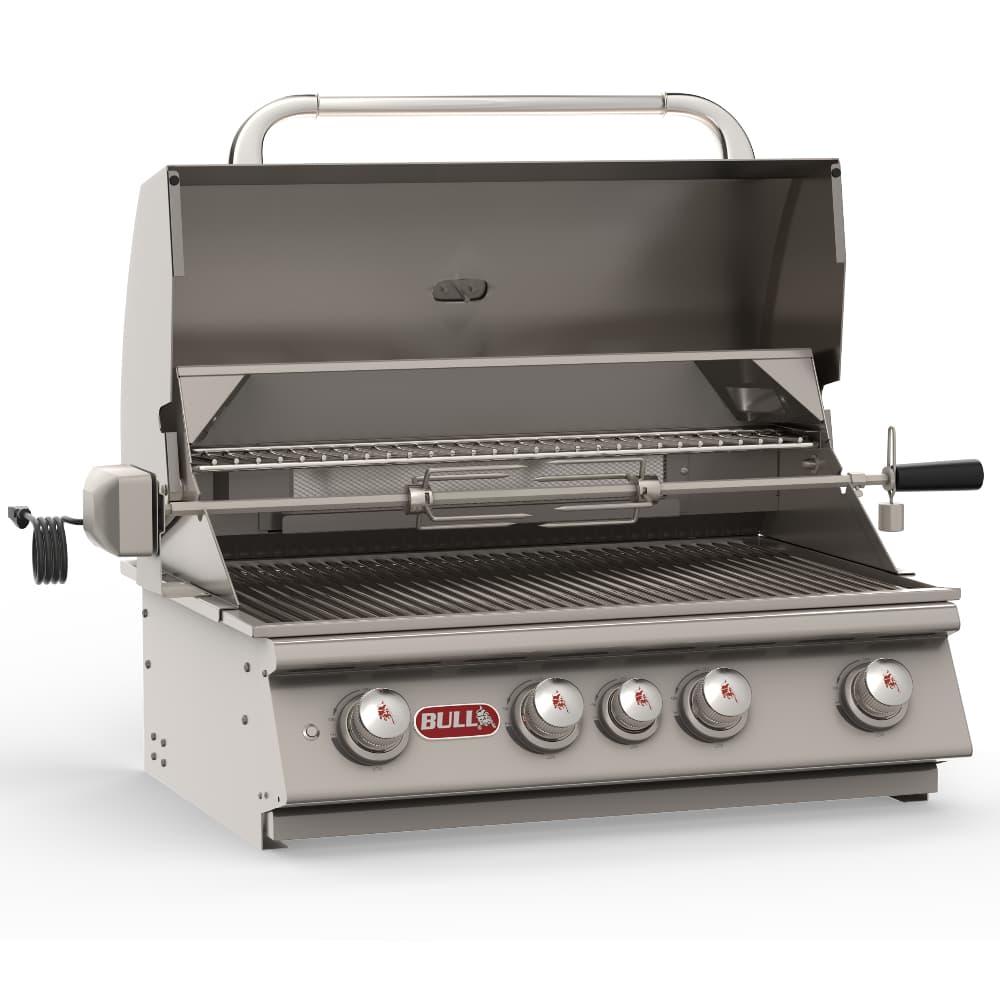
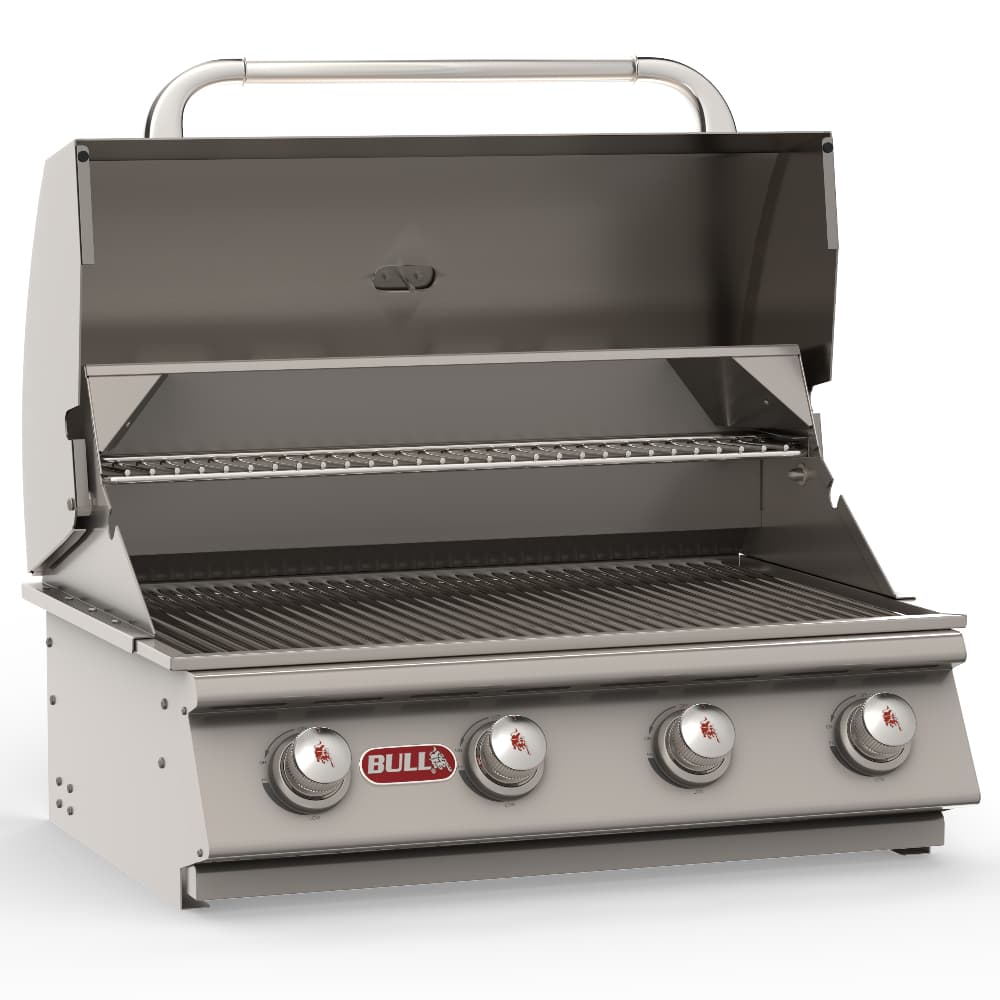
Direct spec comparison: Angus is 30 inches, four main burners, 60,000 BTUs main plus 10,000 rear IR, roughly 840 square inches total cooking surface, at $2,839. Brahma is 38 inches, five main burners, 75,000 BTUs main plus 10,000 rear IR, roughly 1,020 square inches total cooking surface, at $3,789.
The $950 upcharge buys you: eight more inches of width, one additional main burner, 15,000 more BTUs of main-burner headroom, roughly 180 more square inches of cooking surface, the ability to run a true five-zone cook, and the same lifetime warranty as the Angus. Same 304 stainless. Same 8mm grates. Same IR bulb. Same everything except size and burner count.
My recommendation gate: if you regularly cook for six or more people, the Brahma is worth it — the fifth burner and the extra grate area will get used enough to justify the upcharge, and you won’t regret the headroom on the days when you need it. If you’re cooking for two or three most of the time with occasional guests, the Angus is the smarter buy — you’ll never miss the extra burner and you’ll pocket a thousand dollars for the outdoor kitchen budget. Both are the right grill for the right buyer; neither is universally “better.”
Installation Notes
A few things to sort out with your contractor before the Brahma arrives on site. First: the built-in cutout is a standard 38-inch dimension, so any properly framed 38-inch chase will accept the head without modification. Confirm the cutout depth and rear clearance from the current Bull spec sheet — clearances have been consistent across recent Brahma production, but always verify before framing.
Second, gas line sizing. At 85,000 BTU total draw, we recommend a 1-inch gas line from the meter to the grill, especially on runs longer than 25 feet. Three-quarter-inch line will run the grill, but you’re sizing tight and can starve the burners in cold weather at full load. It’s cheaper to size correctly during install than to retrofit later — spend the extra fifty dollars on 1-inch pipe.
Third, ventilation. If the Brahma is going into an enclosed or semi-enclosed structure (covered outdoor kitchen, screened patio), a vent hood sized for the 85K BTU load is required — this is a code issue in most jurisdictions and a safety issue in all of them. Open-air installs on a back patio don’t need a hood. Confirm your install condition before ordering.
Fourth, electrical. The halogen interior lights need a nearby GFCI receptacle. Not a big load, but plan for it during rough-in so you’re not fishing wire through finished stone later.
Get those four items right during framing and rough-in, and the Brahma drops into place cleanly on install day. Bull’s dealer network is good about answering spec questions in advance — pull the current install manual before your contractor breaks ground, and there are no surprises.
Frequently Asked Questions
Is the Bull Brahma worth $1000 more than the Angus?+
How many people can the Bull Brahma cook for?+
Do you need a bigger gas line for the Brahma?+
What's the difference between Bull Brahma and Steer?+
How long does the Bull Brahma last?+
Can the Bull Brahma smoke meat?+
Products & brands in this guide
Related reading
Ash — Ash writes the buying guides at FirePits.com — years of specifying fire features on residential installs, from urban patios to mountain properties.