Firegear Outdoors Brand Guide: Burners, Media, and Fire Features
By Ash · Published October 2026
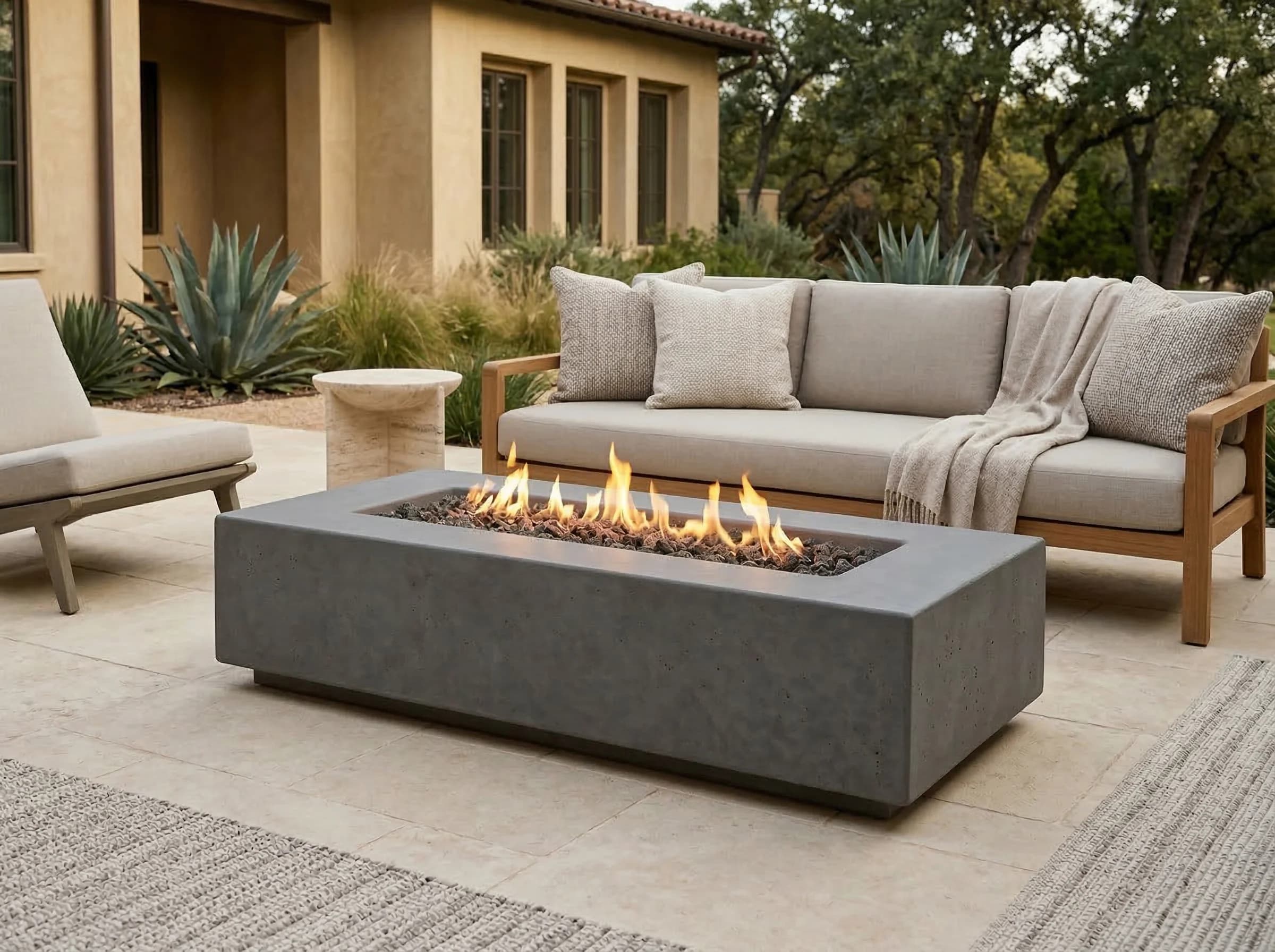
Firegear Outdoors engineers gas burner kits, fire-rated media, and complete fire-feature components for residential patios. The dealer-only distribution and the seven-color 10-pound fire glass format make them the right pick for most prefab-bowl installs where the shopper wants a clean kit without going full custom.
Updated October 2026. Firegear Outdoors has been engineering gas burner kits and fire-rated media since the mid-2000s. The brand shows up in a lot of installations where the shopper doesn’t even know it’s there — many premium fire-pit tables use Firegear burners under private label, which is why the install base is bigger than the brand recognition suggests.
We carry the full Firegear catalog on firepits.com — media, burners, and complete kits. This guide covers what Firegear makes, where each product fits, and how to pick between their lineup and HPC Fire or Warming Trends.
What Firegear makes
Firegear’s catalog splits three ways. Fire-rated media (fire glass, lava rock, lava stone) covers the burner and gives the flame something to pass through. Gas burners and pan kits are the ignition platform the media sits on top of. Complete fire-pit kits bundle burner, pan, media, and a key-valve regulator in one box so the install is turnkey.
The media catalog is where most shoppers meet Firegear first. Seven fire-glass colors in the 10-pound bag format sized for 24–36-inch bowls, plus 10-pound and 40-pound bags of 1–2-inch black lava rock, plus the 50-pound bag of 1½–2-inch dark gray lava stone. The stone is a denser pumice than standard lava rock and holds heat better — the right pick for permanent installs where every ounce of radiant warmth matters.
Fire glass — the seven colors and when to pick each
Crystal is clear tumbled glass that pulls light from the flame itself. On a wide-open patio where sunset light hits the pit, crystal reads brighter than any other color. Standard pick for coastal and modern-minimal installs.
Copper reads warmer under live flame than crystal — the orange-amber tone picks up the flame itself. Pairs beautifully with hammered copper bowls (The Outdoor Plus Cazo, Sedona) where the glass color matches the bowl patina as it develops.
Black Reflective is the color we spec most on installs where the pit sits in a lit outdoor room. The mirror coating on each piece bounces the flame back from the surface, so a flame that would read sparse on standard black fire glass reads full on reflective black. The visual payoff is biggest on hammered copper and corten steel bowls.
Standard Black is the matte-black counterpoint to reflective. Used when the install wants the bowl itself to be the focal point — the glass disappears and the flame reads as if it’s burning on a dark void.
Seabreeze (teal blue-green) is the design-forward pick for coastal and poolside installs. The color reads brighter underwater than it does in a bowl — if the install is poolside and the pit is visible from the waterline, seabreeze picks up the pool color and reads intentional.
Dark Blue + Light Blue round out the color range for installs that want a cooler accent to a warm bowl material. Light blue reads almost ice-white under live flame; dark blue reads cobalt. Both are more common as 30/70 accents over a copper or crystal base than as the full fill.
Lava rock vs lava stone
The 1–2-inch Black Lava Rock in 40-pound bags is the Firegear default for anything 36 inches and larger. Standard volcanic rock, consistent sizing, no complaints. Ships in 10-pound bags for topping off small bowls and 40-pound bags for the full fill.
The 1½–2-inch Dark Gray Lava Stone in 50-pound bags is the premium pick. More angular, denser pumice than lava rock. Three advantages: it holds heat better (so the pit radiates longer after you shut the gas off), it’s quieter on first ignition (less trapped moisture to pop), and the dark gray color reads more neutral in the bowl than the matte black of standard lava rock. For a permanent install where the pit will see repeated use, pay the premium for the stone.
Burners and complete kits
Firegear’s burner platform covers 18-inch through 36-inch round, linear trough burners, and square H-burners. Every burner ships matched to NG and LP variants, and all burners are compatible with Firegear’s pan and media catalog — the kit assembly is designed around a single ignition platform.
Complete fire-pit kits bundle burner, pan, media, and the key valve into one SKU, which is the right pick for a custom-built masonry pit where the installer wants a single part number instead of specifying every component separately. For prefab bowls like the Cazo, Sedona, or Prism Hardscapes Tavola, the bowl ships with its own burner and media is sold separately — a kit purchase would duplicate what’s already in the box.
Firegear vs HPC Fire vs Warming Trends
All three brands are legitimate premium burner picks. Here’s how we route shoppers between them.
Firegear wins on media selection and complete-kit convenience. Seven fire-glass colors is the deepest single-brand lineup, and the key-valve-included kits save a trip to the plumbing supply house. Right pick for 80 percent of residential installs.
HPC Fire wins on custom burner sizing and stainless-steel pan construction. If the install is a non-standard shape (long linear trough, oversized architectural feature, inset burner into stone), HPC Fire’s custom catalog covers specs Firegear doesn’t. Also the premium pick for salt-air installs where stainless steel pays off over powder-coated burners.
Warming Trends wins on flame height and shape. Their Crossfire brass burner throws a visibly taller, more organized flame than any other brand at the same BTU — the right pick when the shopper has specifically asked for a visible flame as the design priority. Costs more per burner but the visual payoff is real.
What we’d buy from Firegear right now
For a 30-inch bowl install: one 10-pound bag of Firegear 1/2″ Copper Fire Glass over the existing burner, or two bags for a deeper fill. Copper is the right default for most hammered-copper and corten bowls.
For a 36-inch propane bowl: 40 pounds of Firegear 1–2″ Black Lava Rock on the burner as a heat buffer, then 20 pounds of Firegear 1/2″ Black Reflective Fire Glass on top. The lava-under-reflective sandwich reads brightest on video and protects the glass from the propane heat spike.
For a permanent install where every ounce of radiant warmth matters: 50 pounds of Firegear 1½–2″ Dark Gray Lava Stone. Denser than lava rock, quieter on ignition, and holds heat meaningfully longer after you shut the gas off.
Frequently Asked Questions
Who is Firegear Outdoors?+
What makes Firegear fire glass different?+
What is Firegear lava rock vs lava stone?+
Firegear vs HPC Fire vs Warming Trends — who wins?+
Can I buy Firegear direct from the manufacturer?+
Does Firegear ship nationwide?+
Products & brands in this guide
Related reading
Ash — Ash writes the buying guides at FirePits.com — years of specifying fire features on residential installs, from urban patios to mountain properties.