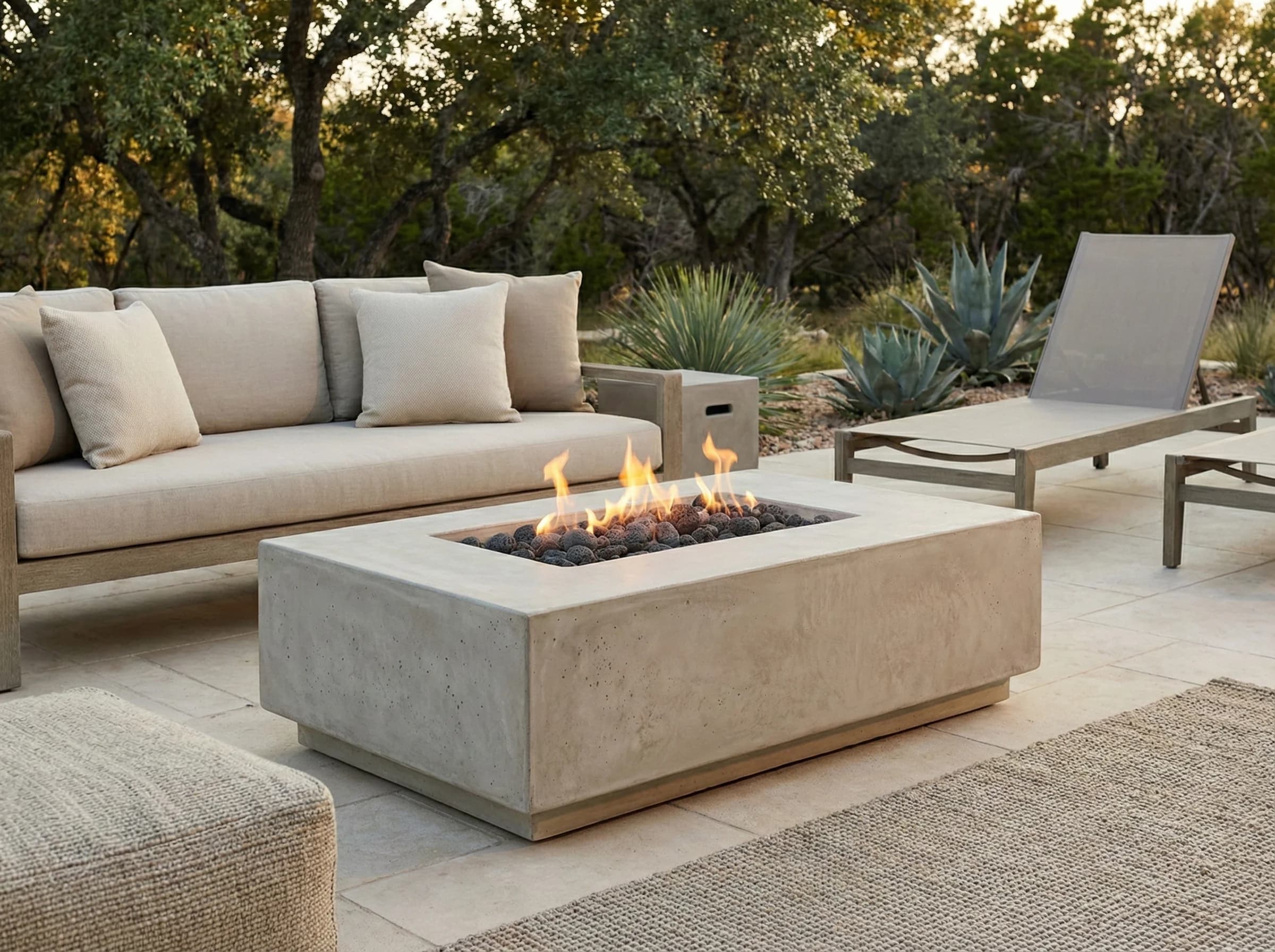
Best Charcoal Grills of 2026: Kamados, Kettles, and Ceramic Cookers Worth Buying
By Ash · Published August 2026

Charcoal is having a moment again, and not for nostalgic reasons. The people cooking on charcoal in 2026 are the ones who realized their pellet grill can’t sear a steak past 500°F, their gas grill tastes like a gas grill, and the meat they cook at friends’ houses on a kamado is just noticeably better. If you’re shopping for a charcoal grill this year, the answer really comes down to three formats: kettle, kamado, or ceramic cooker (which is really just a nicer kamado). Below is the honest breakdown of who each one is for, what you should actually spend, and the specific models we install in our own backyards — including the alternatives to Big Green Egg and Kamado Joe worth knowing about.
Why Charcoal Still Wins in 2026
Gas grills got convenient. Pellet grills got smart. Neither of them got better at the one thing charcoal has always done best: real high-heat sear and the flavor that comes from actual burning wood or lump. A charcoal grill hits 700°F at the grate without breaking a sweat, which is where a steak crust actually forms. Nothing running on propane at a residential regulator is going to touch that number without an infrared burner strapped to the side.
The other thing charcoal has going for it in 2026 is fuel independence. Lump charcoal is a bag of carbonized wood — that’s it. No pellets sourced from one of three factories, no propane exchange programs, no natural gas hookup, no controller board that voids the warranty when the firmware update fails. A quality charcoal grill built in 2026 will cook the same way in 2046, on the same fuel, using the same ash pan.
Flavor is the third pillar and honestly the one that pulls most people back. Charcoal, especially good lump, produces a smoke profile you cannot fake with a pellet grill’s smoke tube or a gas grill’s smoker box. If flavor is the reason you’re shopping, charcoal is the answer. Everything below is about picking the right format.
“A pellet grill is a convenience appliance. A kamado is a cooking instrument. If you actually like cooking, the kamado is what you’re missing.”
Kettle vs Kamado vs Offset — A Quick Primer
Kettle grills are the classic round Weber-style design. Thin steel walls, a domed lid, a single grate, and vents on the top and bottom. They sear well, they smoke acceptably with the two-zone method, and they’re the cheapest way into charcoal by a wide margin. Great as a first grill or a second grill for tailgates and camping. The downside is heat retention — a kettle burns through fuel and loses temperature the moment the outside temp drops below 50°F.
Kamados are the ceramic egg-shaped grills you’ve seen at every neighbor’s cookout for the last five years. Thick ceramic walls, cast iron top vent, and a firebox that concentrates heat. They excel at everything from a 12-hour brisket to a 900°F Neapolitan pizza. This is the format we recommend most often for anyone serious about charcoal, and it’s what the rest of this guide focuses on.
Offset smokers are a separate category — long horizontal barrels with a firebox off to one side. They’re built specifically for low-and-slow smoking of large cuts and aren’t really a general-purpose grill. If barbecue competition briskets are your primary goal, look at offsets separately. For a first charcoal grill that does everything, they’re not the pick.
The Kamado Tier We Recommend
Big Green Egg is the brand that built the American kamado market and it deserves the reputation. Kamado Joe is the feature-forward alternative with a divide-and-conquer cooking system and cart accessories that many owners swear by. Both are excellent. We don’t carry either.
What we do carry, and what we’d genuinely install in our own backyard, is the Bull kamado lineup. Bull is best known as a premium outdoor kitchen brand out of California, and when they entered the kamado market they built the grill the same way they build their gas grills — 304 stainless hardware, cast iron top and bottom vents, a 1-inch dense ceramic wall, and a warranty that actually covers the ceramic body against thermal cracking. The Bull Angus kamado sits right in the middle of the market on price and undercuts most imports on build quality.
The Bull Steer is the smaller sibling — 18-inch cooking surface, perfect for a family of four, and drops the price by a few hundred dollars. Both come with a solid steel cart, locking casters, and side shelves standard. That’s not always true at this price point; a lot of competing kamados sell the cart as a separate $300 accessory.
A quality ceramic kamado holds 225°F for 12 to 18 hours on one firebox of lump — long enough for a full brisket with fuel to spare.
When a Kettle Wins
If you cook charcoal five or six times a summer, a kamado is overkill and honestly a waste of money. A 22-inch Weber kettle costs around $250, will last 15 years, and does 90 percent of what a kamado does for burgers, chicken, and steaks. The two-zone method (charcoal piled on one side, empty space on the other) turns it into a passable smoker for smaller cuts like ribs and chicken thighs.
The other case for a kettle is portability. Kamados weigh 150 to 300 pounds and aren’t going anywhere once they’re set. A kettle folds down, throws in the back of a truck, and shows up at a tailgate. If your charcoal cooking is more mobile than backyard, buy the kettle.
What a kettle can’t do: hold a steady 225°F for 12 hours without you fussing with it, hit 900°F for pizza, or handle a full brisket in one uninterrupted cook. If any of those are on your list, you’ll outgrow the kettle inside a season.
Ceramic Cookers Explained (Thermal Mass Matters)
The reason kamados cook so differently from any other grill comes down to one word: thermal mass. That 1-inch ceramic wall stores enormous amounts of heat. Once the grill is up to temperature, the ceramic radiates heat inward from every direction — top, bottom, sides — which means food cooks from all angles simultaneously, the way food cooks in a wood-fired oven or a Dutch oven.
That thermal mass also stabilizes temperature. Open the lid on a gas grill and you lose 100°F instantly and it takes 5 minutes to recover. Open the lid on a kamado and the ceramic wall radiates the heat right back the moment you close it. Temperature drops maybe 20°F and recovers in under a minute. That’s why a kamado can hold a smoker temperature for 12 straight hours without babysitting — the ceramic is doing the heavy lifting, not the fuel.
The downside is preheat. A cold kamado takes 25 to 30 minutes to reach cooking temperature because you’re heating up 60 pounds of ceramic, not just the air inside. Plan for that. This is a grill you commit to, not one you spin up in ten minutes for a quick weeknight cook.
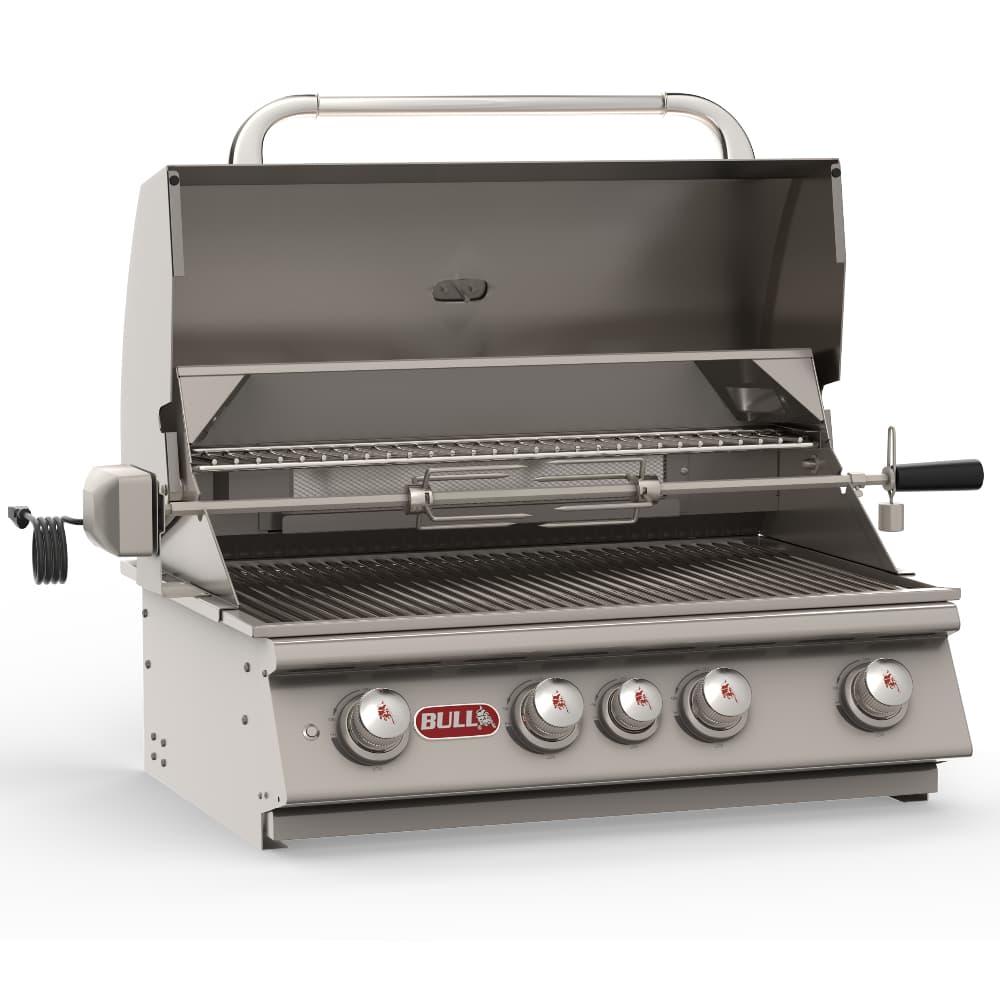
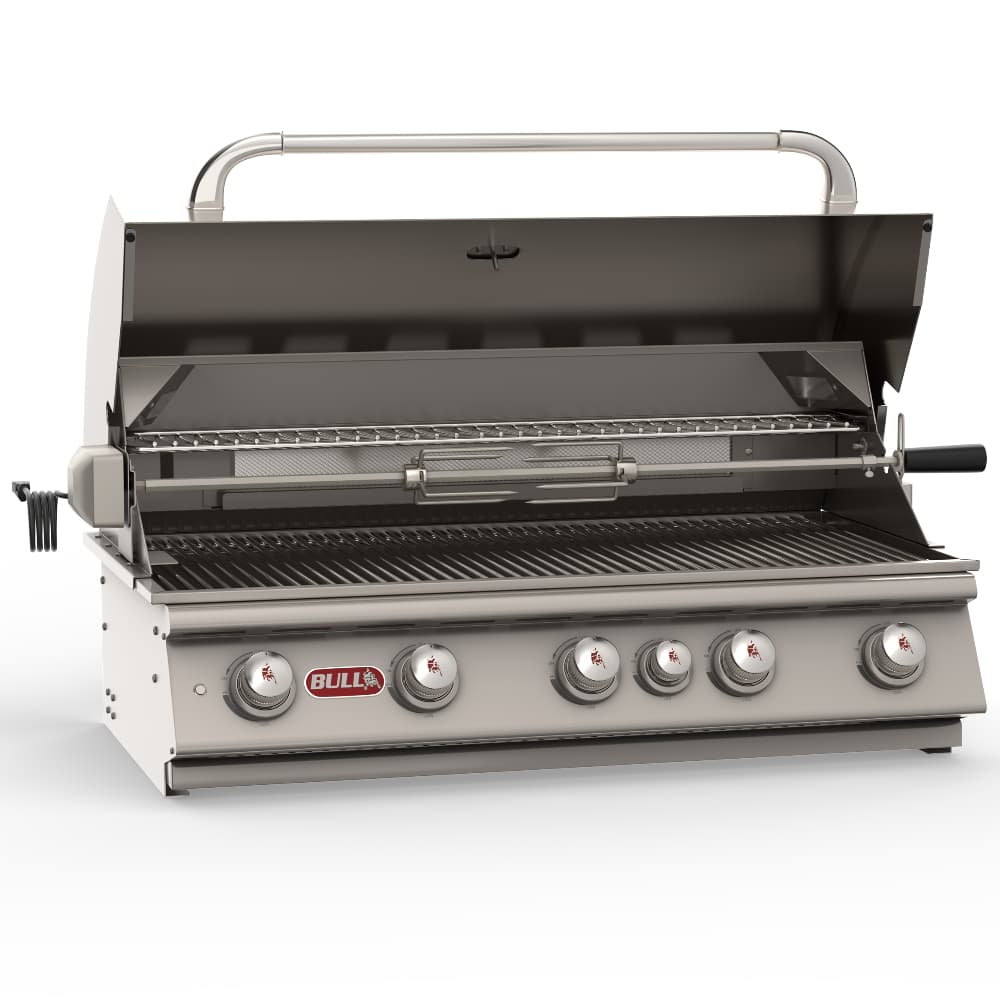
If you’re building an outdoor kitchen and want the kamado alongside a serious gas grill, these are the Bull built-ins we pair with the kamado line most often.
Sizing Guide — How Big Do You Actually Need?
Kamado sizes are usually described by cooking-surface diameter. The math is simple and worth committing to memory before you spend the money.
15 to 16 inches (small): One or two people, apartment patios, camping. Cooks two steaks or four burgers. Not enough surface for a spatchcocked chicken or a full rack of ribs.
18 inches (medium): Family of four, most common size, best price-to-capability ratio. Cooks a whole chicken, six burgers, or a 10-pound pork butt with room to breathe. This is what we recommend for most first-time kamado buyers.
21 to 24 inches (large): Entertaining, briskets, whole ribs, pizza for a group. If you regularly cook for 6 to 10 people or plan to smoke competition cuts, size up. The fuel penalty is minor because ceramic efficiency scales — you burn about 15 percent more lump for double the cooking surface.
Skip the extra-large 29-inch models unless you’re catering. They’re impressive at trade shows and impractical in most backyards.
Setup and Your First Fire
A brand-new kamado needs a break-in fire before you cook on it. Fill the firebox about halfway with quality lump, light a single starter cube in the middle, open both vents fully, and let the grill climb slowly to 400°F. Hold it there for an hour with the lid closed. This drives moisture out of the ceramic and cures the felt gasket around the lid.
Never light a kamado with lighter fluid or match-light briquettes. The ceramic will absorb the petroleum chemicals and taint every cook for the next month. Use natural starter cubes, a chimney starter, or a butane torch. All three work, all three cost under $30 up front, all three are the correct answer.
Vent control is the only real learning curve. Bottom vent controls how much air feeds the fire; top vent fine-tunes exhaust. For 225°F smoking, both vents open about the width of a dime. For 500°F searing, both wide open. For 900°F pizza, remove the top cap entirely and let it breathe. It takes maybe three cooks to develop the muscle memory. After that it’s automatic.
Common Misconceptions
Three myths cost people money in this category.
Myth one: all kamados are the same because they’re all ceramic. False. Ceramic density, wall thickness, hardware quality, and firebox design vary enormously between the $300 import and the $1,500 name brand. Thin ceramic cracks. Cheap hinges sag and let the lid seal fail, which means your temperature control disappears. Pay attention to warranty length on the ceramic body specifically — that number tells you what the manufacturer actually believes about their build.
Myth two: kamados are only for smoking. Also false, and this is the myth that keeps a lot of people from buying one. A kamado is a better direct-heat grill than a kettle, a better smoker than an offset for cuts under 15 pounds, and the closest thing you’ll get to a wood-fired pizza oven without buying a wood-fired pizza oven. The versatility is the point.
Myth three: you have to use expensive lump. You don’t. Big box store lump like Cowboy or Royal Oak works fine for weeknight cooks. Premium lump like Fogo or Jealous Devil is worth the money for low-and-slow cooks where you want zero off-flavors and a burn time you can bet an 18-hour brisket on. Both have a place; neither is required.
The Verdict — How to Choose
If you cook charcoal occasionally, buy a 22-inch kettle. Under $300, does what it does well, lasts forever, no regrets.
If charcoal is your primary grill and you actually enjoy the ritual of cooking, buy a kamado. Big Green Egg and Kamado Joe are the household names for a reason and either will serve you well if you already know a dealer. If you’re shopping fresh, the Bull kamado line is what we install for our own families — same ceramic quality, better hardware, honest warranty, and it slots into a Bull outdoor kitchen if you’re going that direction eventually.
Whatever you buy, buy it once, buy it right, and give yourself a season to learn the vent control. Charcoal cooking rewards patience more than any other format, and the best charcoal grill is the one you cook on every weekend, not the one you regret at 3 AM during a brisket cook.
Frequently Asked Questions
Is a kamado worth it over a kettle?+
How long does charcoal last on a kamado?+
Can I use lump charcoal on any grill?+
Do kamados work in winter?+
Kettle vs kamado for a family of 4?+
What kamado do you recommend?+
Are ceramic grills fragile?+
How much should I spend on a first charcoal grill?+
Products & brands in this guide
Related reading
Ash — Ash writes the buying guides at FirePits.com — years of specifying fire features on residential installs, from urban patios to mountain properties.