HPC Fire Brand Guide: Match-Lit vs Hi-Lo vs Electronic Ignition
By Ash · Published October 2026
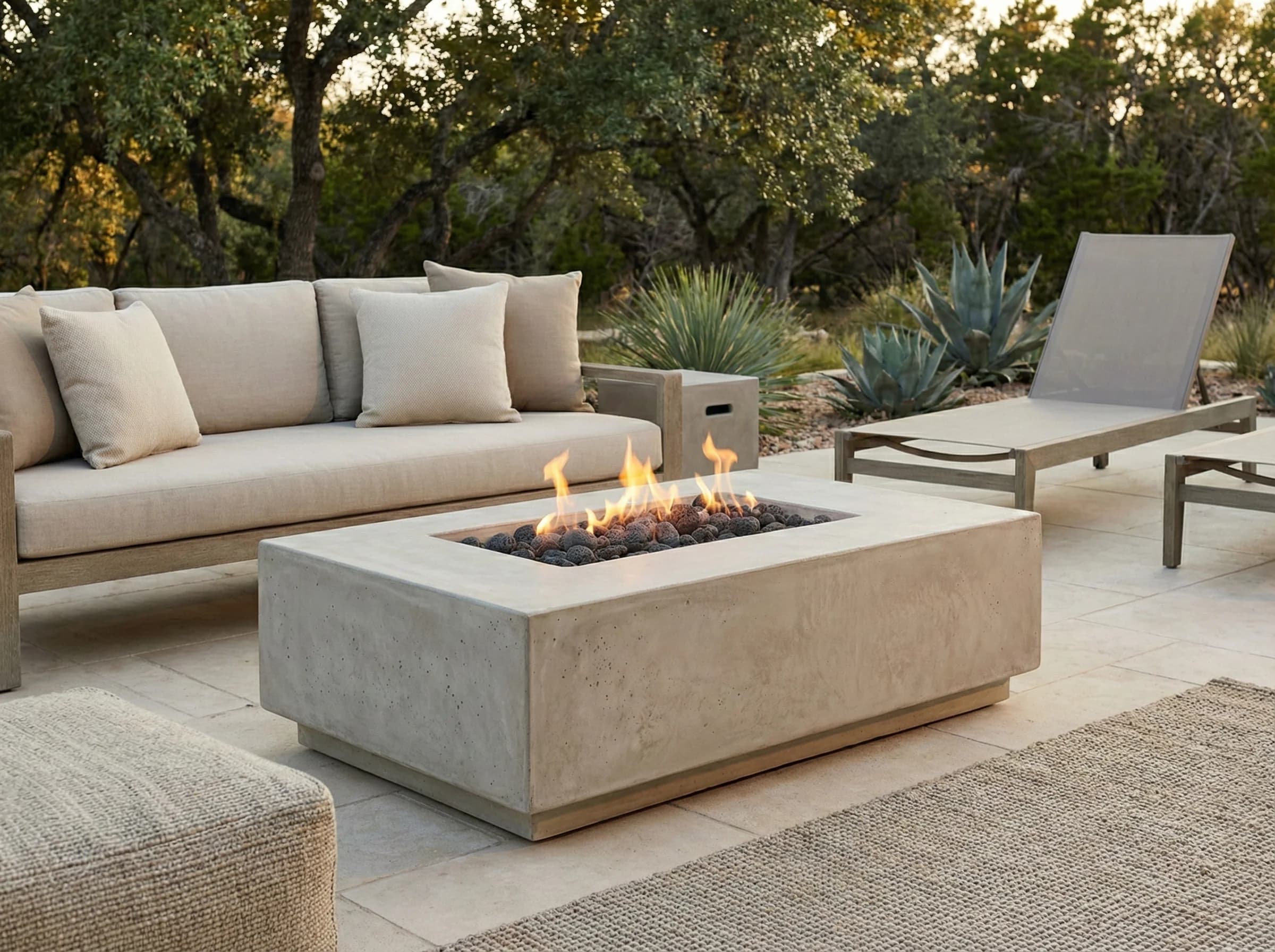
HPC Fire engineers stainless-steel gas burner platforms used in a lot of premium custom fire-feature builds. Match-Lit for the simplest install, Hi-Lo Flame for a dimmer-style flame height valve, and AWEIS Electronic Ignition for the full push-button-start sealed system. Dealer-only distribution; authorized pricing applies.
Updated October 2026. HPC Fire (Hearth Products Controls) has been engineering stainless-steel gas burner platforms out of Dayton, Ohio since 1979. The brand is the quiet backbone of a lot of premium fire-feature installations — many high-end custom masonry pits run HPC burners under the lava rock whether the shopper knows it or not.
We carry the full HPC Fire catalog on firepits.com with authorized-dealer pricing. This guide covers the three ignition platforms, where HPC fits versus Firegear and Warming Trends, and the right pick for a custom build versus a prefab bowl.
What HPC Fire makes
The catalog splits into four product groups. Burner rings and linear trough burners (the actual flame platform). Stainless pans (the base of the fire chamber). Ignition systems (Match-Lit key valves, Hi-Lo Flame flame-height controllers, AWEIS Electronic Ignition). Complete fire-pit kits that bundle burner + pan + ignition + regulator in one box for turnkey custom builds.
HPC’s core differentiator is stainless-steel construction everywhere — the burner, the pan, the gas lines inside the fire chamber. On a long-horizon install (10 years in the backyard, salt air near the coast, pool chemistry) stainless wins over powder-coated or galvanized burners because the corrosion resistance pays off visibly. The premium shows up on year five.
Match-Lit — the simplest platform
Match-Lit is a key-valve setup. The shopper turns a key valve (usually mounted a few feet away from the pit for safety), gas flows to the burner, and a long-nose match or igniter lights the fire. No electronics, no battery, no WiFi. The valve itself has an auto-shutoff in case of pressure drop but that’s it for safety features.
When Match-Lit wins: permanent installs where the shopper is comfortable with a lighter in the fire-pit drawer, custom builds where the budget is going into the pit materials, and masonry pits in off-grid or seasonal homes where electronics would be a reliability liability. Simplest system to maintain long-term.
Hi-Lo Flame — the dimmer-style upgrade
Hi-Lo Flame replaces the on/off key valve with a flame-height controller that works like a stove-top burner knob. The shopper lights the fire manually (same as Match-Lit) but then dials the flame height anywhere from a low ambient flicker to full roar. The flame-height adjustment is the headline feature — on a chilly fall night a low ambient is all the shopper wants, and on a cold winter night they turn it up.
When Hi-Lo Flame wins: residential installs where the pit sees mixed use (ambient conversation, serious heat, both in one evening) and the shopper wants control without going to full Electronic Ignition. Mid-tier price point — the valve adds maybe $250 over Match-Lit on a comparable kit.
AWEIS Electronic Ignition — the push-button sealed system
AWEIS stands for Automatic Weatherproof Electronic Ignition System. It’s HPC’s premium platform — a sealed gas train, a push-button or remote ignition, a hot-surface or spark igniter, a thermocouple flame-sensor safety, and a wall switch mounted inside the house (or near the pit, depending on local code).
The platform is weatherproof — rated for direct rain and snow exposure, with condensation-resistant electronics. The safety features auto-shut the gas off if the thermocouple doesn’t detect flame within 90 seconds, which prevents the unsafe-ignition risk Match-Lit systems can have in high wind.
When AWEIS wins: permanent residential installs where the shopper wants the ease of a wall-switch ignition, salt-air coastal installs where the sealed system protects the gas valve from corrosion, and any install where the fire pit is visible from indoors (push a button on the kitchen counter, flame lights outside). Premium pricing — the AWEIS upgrade over Match-Lit is typically $800–$1,200 depending on burner size.
Burner sizes and shapes
HPC’s burner catalog is deeper than most competitors on the shape side. Round burners cover 18″ through 36″ in 2-inch increments. Square H-burners cover 24″ through 36″. Linear trough burners cover 24″ through 72″ in 6-inch increments — the right pick for linear fire features on long dining tables or along a seat wall.
For custom masonry builds this is where HPC separates from Firegear and Warming Trends. The 72″ linear trough is a spec the other two brands either don’t make or make only as a multi-piece assembly. HPC ships it as a single welded burner with one gas line in and even flame distribution across the full length.
HPC vs Firegear vs Warming Trends
HPC Fire wins on custom sizing, stainless construction, and the deepest linear/square burner catalog. Right pick for custom masonry builds and specialty retrofit installs. Mid-to-premium pricing.
Firegear wins on complete-kit convenience and fire-glass selection. Right pick for prefab bowl top-ups and standard-shape custom builds. The seven-color 10-pound bag format is the deepest single-brand media lineup. See the full Firegear brand guide for the color breakdown.
Warming Trends wins on flame height. Their Crossfire brass burner throws visibly taller, more organized flame than any other brand at the same BTU. Right pick when the design brief specifically calls for visible flame as the focal point.
What we’d buy from HPC right now
For a 36″ round custom masonry pit: HPC’s 24″ round Penta burner on a stainless pan with the Hi-Lo Flame platform. The Penta burner (five-point star geometry) distributes flame more evenly than a straight ring and the Hi-Lo valve covers ambient-to-roar without going to full Electronic Ignition.
For a long linear fire feature (seat wall or dining table): HPC’s 60″ linear trough burner with AWEIS Electronic Ignition. One welded burner, even flame across six feet, push-button start. The premium platform earns its price on a feature this visible.
For a coastal custom pit with full-time salt-air exposure: HPC’s stainless-steel pan + burner combo + AWEIS Electronic Ignition. The sealed gas train and stainless construction together are the only platform spec that will stay clean past year five in direct ocean exposure.
Frequently Asked Questions
Who is HPC Fire?+
What’s the difference between Match-Lit, Hi-Lo Flame, and Electronic Ignition?+
Do I need HPC Fire’s pan with their burner?+
HPC Fire vs Firegear vs Warming Trends — pick for me+
Can HPC burners run natural gas and propane?+
What’s HPC Fire’s warranty?+
Products & brands in this guide
Related reading
Ash — Ash writes the buying guides at FirePits.com — years of specifying fire features on residential installs, from urban patios to mountain properties.