What Is a Hibachi Grill (And Should You Get One)
By Ash · Published August 2026
A hibachi grill, in the strict Japanese sense, is a small cast-iron or clay fire bowl filled with lump charcoal — the word literally translates to fire bowl. In American usage, hibachi means one of two very different things: that traditional charcoal box, or the flat-top griddle cooking most people see at a teppanyaki restaurant. Both belong under the same search term, and both have real places on a patio, but they solve different problems and cost very different money. Here is the dealer version of the answer, without the marketing gloss.
What a Hibachi Grill Actually Is
The Japanese word hibachi (火鉢) translates directly to fire bowl. For most of its history it was a household heating device — a rounded ceramic or cast-iron vessel filled with lump charcoal, sat in the middle of a room to warm hands and boil tea water. Cooking over one was incidental, not the point. When American GIs came home from Japan in the late 1940s and started using the word to mean any small portable charcoal grill, the definition drifted a long way from its origin.
Today the word covers two distinct products. The first is the traditional Japanese charcoal box — small, portable, unlidded, meant for high-heat small-batch cooking over glowing coals. The second is the American flat-top griddle experience marketed as hibachi in restaurants and by big-box retailers. Both are legitimate, both sell well, and both are what someone might mean when they type hibachi grill into a search bar. We’ll take them one at a time.
Traditional Japanese Hibachi
A real Japanese hibachi is closer to a candle than a grill. It’s typically 12 to 18 inches long, 6 to 10 inches wide, no lid, cast iron or clay body, and a stainless or nickel-plated grate sitting an inch or two above a shallow bed of charcoal. You light a handful of lump — traditionally binchotan, the dense white-oak charcoal that burns for hours without smoke — and cook directly over the coals.
The two purpose-built cooking cousins to the household hibachi are the konro grill (rectangular, ceramic-lined, engineered specifically for yakitori) and the shichirin (round or oval, portable, tabletop). Both are what serious Japanese cooking sends you toward when you outgrow the household fire bowl. All three run around 150 to 250 square inches of cooking area — a fraction of a full-size grill — and cook small skewered items at very high heat for very short times.
If you’ve seen a chef in Tokyo turning yakitori sticks over glowing white coals in a narrow ceramic box, that’s a konro. If you’ve seen a small cast-iron pot with a wire grate serving grilled shrimp at a Japanese izakaya table, that’s a shichirin. Both get called hibachi in casual English. Neither is technically wrong.
American Hibachi and Teppanyaki Style
The Benihana experience — chef in front of you, big flat steel surface, gas flame under it, onion volcano — is teppanyaki, not hibachi. Teppan means iron plate; yaki means grilled. The confusion goes back to the 1960s when the first teppanyaki chains in the US marketed themselves as hibachi because the word was already familiar to American diners from post-war culture. By the 1980s the two words were interchangeable in American English, even though they describe completely different cooking hardware.
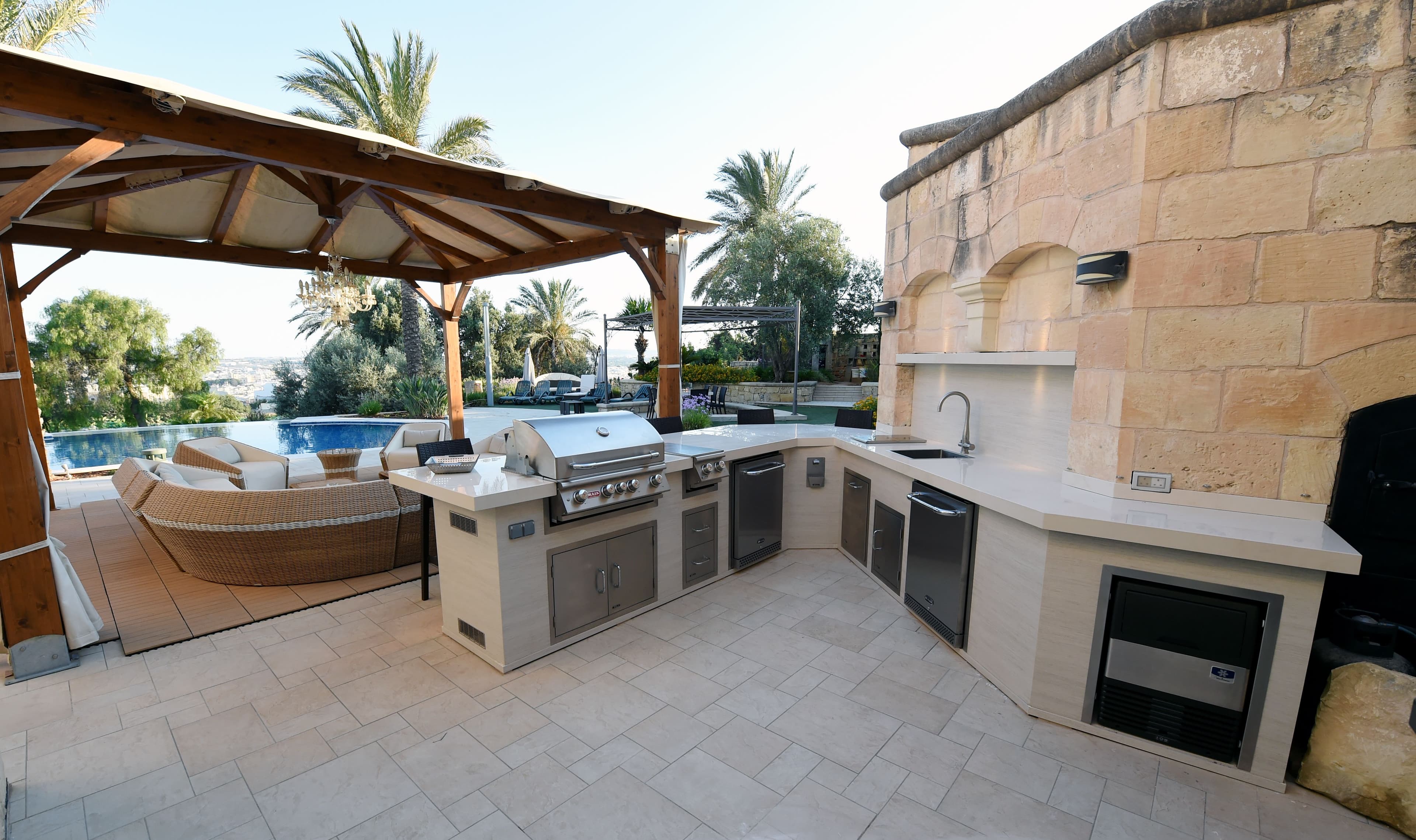
When someone today says they want a hibachi grill for the backyard and they’re thinking about fried rice, hibachi shrimp, and eggs cooked side-by-side on a flat surface, they want a teppanyaki-style flat-top griddle. Freestanding versions are dominated by Blackstone in the American market. Built-in versions come from Bull, Hestan, Coyote, Twin Eagles, and several other premium brands as either a full griddle head or a griddle-plate insert that drops onto the grates of a regular gas grill.
Hibachi vs Grill vs Griddle vs Kamado
A traditional konro hibachi gives you enough surface for skewers and single-serving proteins. A 36-inch built-in gives you roughly 4x that.
The four cookers get compared constantly and each solves a different problem. A traditional charcoal hibachi is small, portable, unlidded, and runs 700F-plus at grate level from lump charcoal — best for skewers and quick-sear proteins. A conventional gas grill runs 350 to 700F under a closed lid across roughly 400 to 600 square inches — best for burgers, chicken, ribs, and general backyard cooking with indirect zones available.
A flat-top griddle — teppanyaki style — is a solid steel surface with no grate gaps, typically 500 to 700 square inches, running gas heat evenly across the plate. Best for anything that would fall through grates: fried rice, hash browns, smashburgers, eggs, pancakes, and every hibachi-restaurant dish. A kamado is the fourth animal: heavy ceramic egg-shape, lidded, holds temperature for 8 to 20 hours on a single load of lump charcoal, and does low-and-slow smoking better than any other backyard cooker.
The four are not substitutes for each other. Serious cooks often own two of them. The mismatch we see most often is a buyer picking a small hibachi expecting it to replace a full grill — it can’t. It cooks four skewers at a time, brilliantly, and that’s the whole job.
Best Uses for a Traditional Hibachi
A charcoal hibachi or konro earns its keep on small-batch high-heat cooking: yakitori chicken thigh skewers over binchotan, small cuts of wagyu or hanger steak seared for 90 seconds a side, thick-cut vegetables like shishito peppers or shiitake caps, single-serving proteins for one or two people. The lack of a lid is the point — you’re cooking over radiant coal heat, not roasting in trapped hot air.
Portability is the other real advantage. A 15-pound cast-iron konro fits on a balcony table, packs into a car trunk for a campsite, and stores in a small closet. Anyone in an apartment or condo where a full-size grill is impossible has a good reason to own a hibachi. It cooks food nothing else in that footprint can cook.
Best Uses for a Flat-Top or Teppanyaki Style
A flat-top is a completely different tool and does completely different things well. Fried rice, hibachi chicken and shrimp, breakfast for eight (eggs, bacon, pancakes, hash browns simultaneously), and smashburgers are the killer applications. The solid surface conducts heat evenly, retains grease as a cooking medium, and lets you push a spatula across the whole surface without dropping anything through grates.
A 36-inch Blackstone runs about 720 square inches of griddle surface — enough to feed 12 to 15 people breakfast in one round. A 30-inch built-in griddle head from Bull or Coyote lands closer to 450 square inches and integrates into a full outdoor kitchen. A griddle plate insert — the roughly $150 to $300 accessory that drops onto the grate of an existing gas grill — turns a 30-inch grill into a hybrid grill/griddle in about 90 seconds and is where we’d start most buyers before they commit to a dedicated flat-top head.
Should You Buy a Hibachi (or Something Else)
“A hibachi is unmatched for balcony or apartment portability, but it’s a bad primary grill for a suburban patio.”
Here’s the honest dealer version. For most patios, a proper built-in or freestanding gas grill plus an optional griddle plate covers 95 percent of the cooking a hibachi would do — with more capacity, better temperature control, and a lid for the days you want indirect roasting. If you already have or plan to have a full-size grill, adding a small charcoal hibachi as a second cooker for yakitori nights makes sense. Making the hibachi your primary grill does not, unless you cook for one or two people almost exclusively.
The buyer for whom a traditional hibachi is unambiguously the right answer: apartment or condo dweller with a small balcony, a rooftop patio, or an HOA that forbids permanent grill installations. In those situations nothing else works as well, and a $200 to $400 konro will cook better yakitori than any $2,000 gas grill on the market. For the suburban backyard, though, a hibachi is a supplement, not a solution.
What We’d Recommend Instead For Most Shoppers
For 95 percent of the people who type hibachi grill into a search bar and land on a page like this, the honest recommendation is a real built-in gas grill or a Bull cart-mounted freestanding grill in the $1,500 to $3,500 range, plus a griddle plate insert for the flat-top cooking they thought they wanted a hibachi for. That combination covers everything from smashburgers and hibachi chicken to indirect ribs and brisket — cooking a hibachi structurally cannot do.
If you got here searching for a hibachi and you have a real patio, this is what we'd steer you toward — a proper built-in that handles hibachi-style cooks plus everything else.
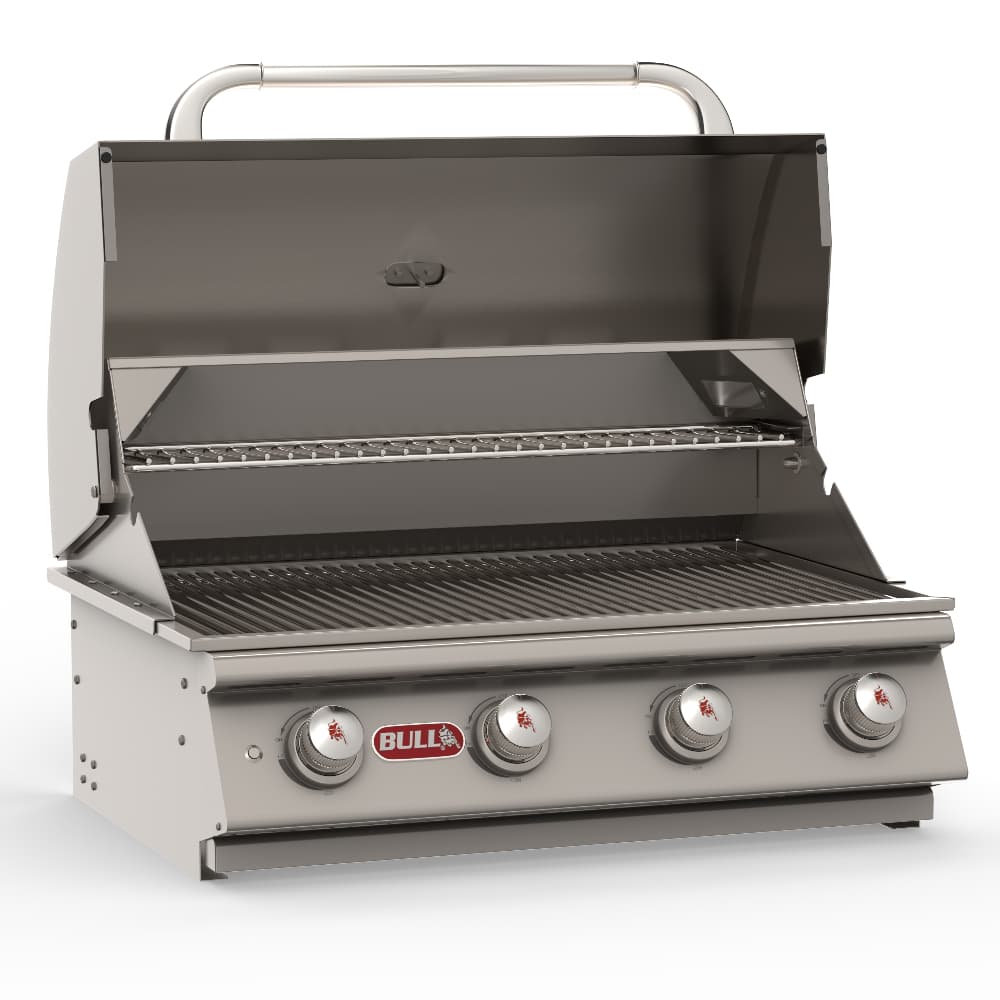
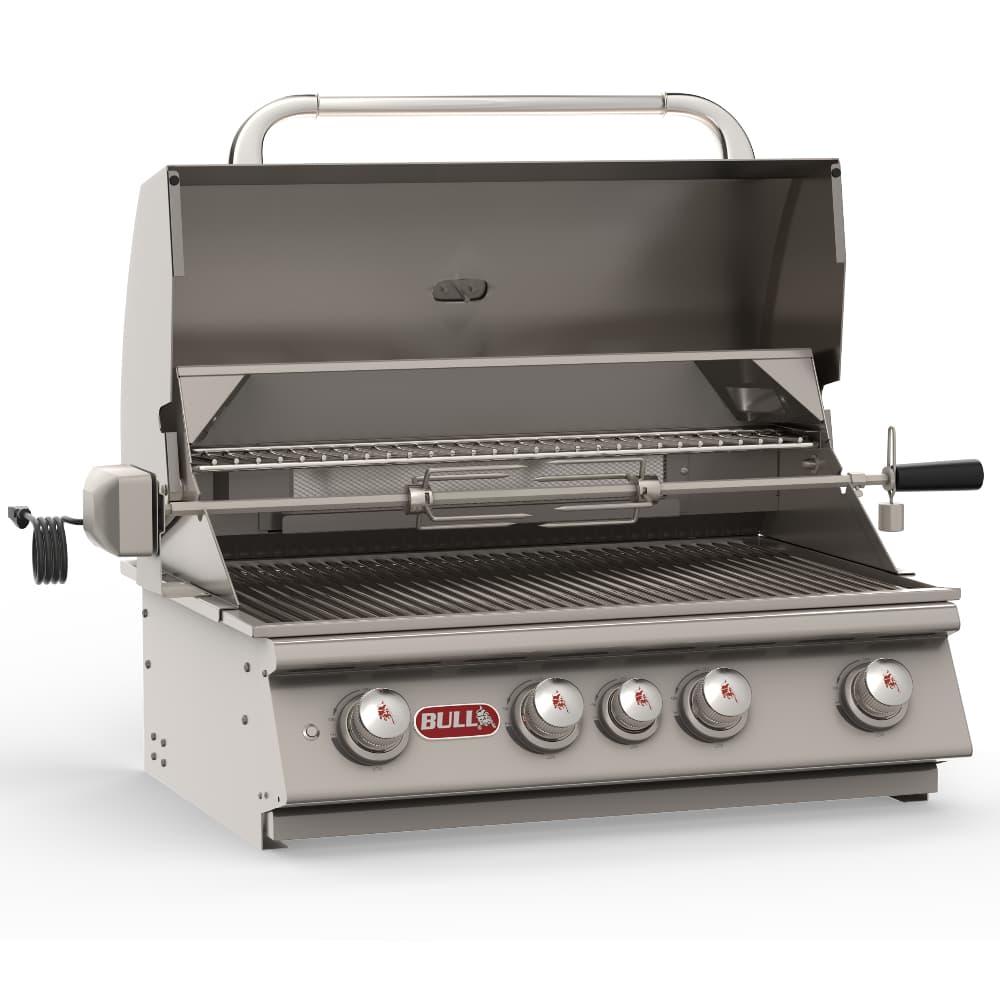
The Bull Steer or Angus cart grills at 24 and 30 inches respectively are our default starting points — same burner engineering as their built-in counterparts, on a cart with side shelves and a propane tank storage. Add a cast-iron griddle plate ($150 to $250 depending on size) and you have the flat-top surface without giving up the grill. If the buyer genuinely wants only the yakitori-and-skewers use case, then a Japanese-made konro is a beautiful, permanent purchase. But most of the search intent here is really for a versatile outdoor cooker, and that’s a grill, not a hibachi.
Frequently Asked Questions
Is a hibachi grill the same as a Japanese grill?+
What's the difference between hibachi and teppanyaki?+
Can you use a hibachi grill indoors?+
What kind of charcoal is best for a hibachi?+
Are hibachi grills worth it?+
What's the best hibachi grill brand?+
Products & brands in this guide
Related reading
Ash — Ash writes the buying guides at FirePits.com — years of specifying fire features on residential installs, from urban patios to mountain properties.