How to Size a Fire Pit for Your Patio: Dimensions, Clearance, and Seating Math
By Ash · Published October 2026
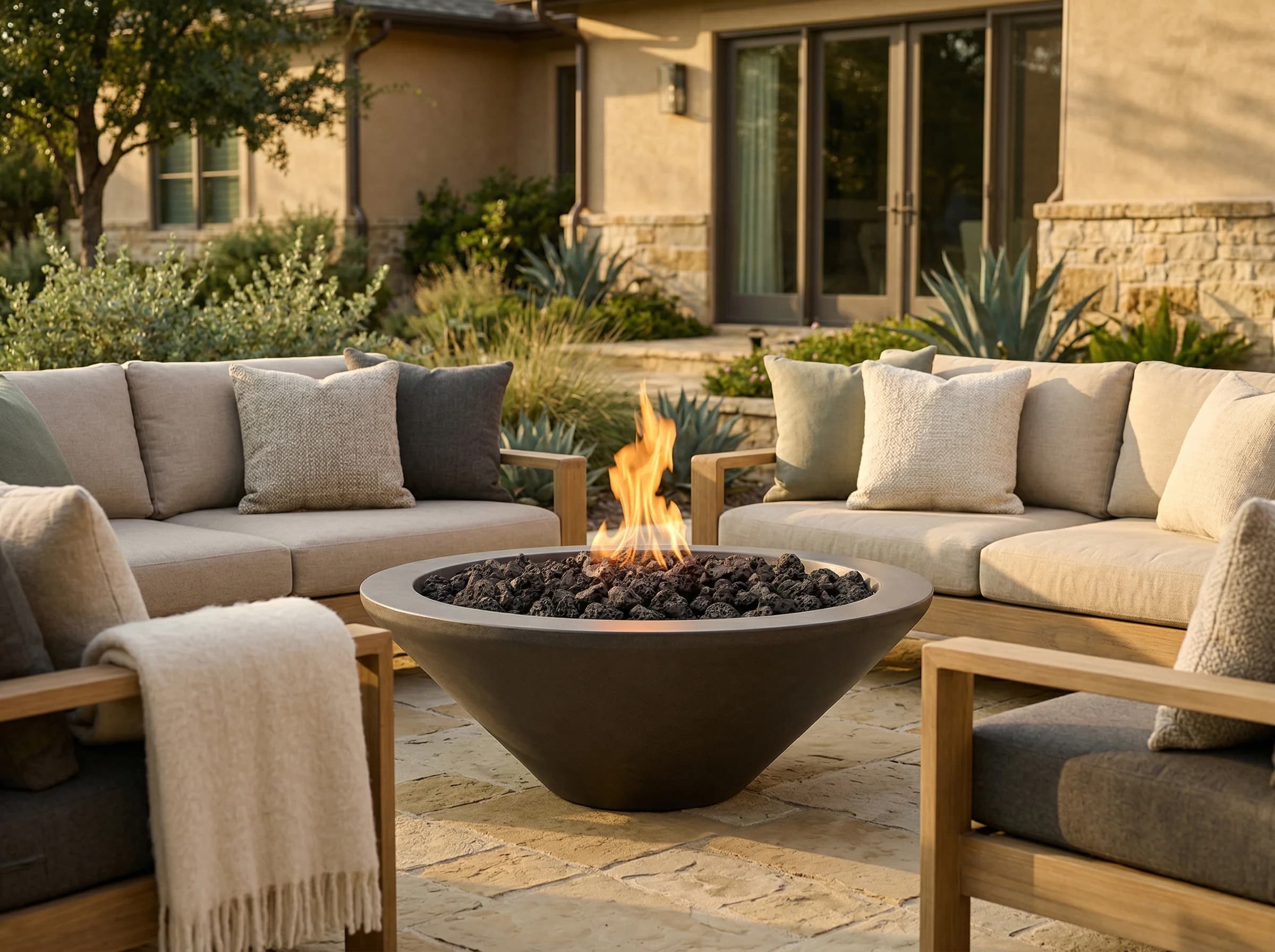
Updated October 2026. For most patios, a 36-inch round fire pit is the sweet spot — it fits 4 to 6 chairs at a 3-foot setback on a 10 by 10 patio. Drop to 24 inches on a balcony, push to 48 inches above a 15 by 15 patio. Keep 3 feet to seating, 10 feet to any wall.
Why Clearance Comes Before Diameter
Most sizing conversations start with the wrong question. Shoppers measure a patio, picture a bowl in the middle, and shop by diameter alone. The right first question is clearance — how far the flame has to sit from anything that can burn, scorch, or deform. Pick diameter second, after the clearance ring tells you the ceiling.
The number almost every manufacturer prints in its install sheet is 36 inches of clearance from the pit edge to the nearest combustible. That means chairs, umbrella fabric, pergola posts, cushions, planters, and vinyl siding. The clearance rule is not a suggestion — it is what every homeowner-insurance policy and every warranty we have ever processed assumes.
Larger clearances kick in once you move from “things near the pit” to “walls and structures.” The practical defaults we counsel at the counter, drawn from NFPA 54 and the manufacturer install sheets we stock:
| What the clearance protects | Minimum distance | Source |
|---|---|---|
| Chairs, umbrellas, cushions, planters | 3 feet (36 inches) in every direction | Manufacturer install specs |
| House wall, siding, pergola post (gas pit) | 10 feet | NFPA 54 outdoor gas appliance guidance + manufacturer specs |
| House wall or combustible structure (wood pit) | 15 to 25 feet, varies by jurisdiction | Municipal fire codes; wildfire counties enforce 25 feet |
| Overhead cover (covered patio ceiling) | 8 feet of vertical headroom | NFPA 54; most manufacturer specs for gas pits |
| Low-hanging branches and foliage | 10 feet overhead, 3 feet lateral | Common fire-code overlay |
Local overlays matter more than they used to. California Title 24 and most Pacific Northwest counties have adopted stricter wildfire clearance rules — 60 inches to deck furniture, 25 feet to any structure for wood-burning, no exceptions during red-flag advisories. If your zip code is anywhere west of Denver, call your fire marshal before you buy. The retailer answer is not a legal opinion.
The Patio-Dimension Decision Table
Here is the table nobody else publishes with real dimensions instead of vague “small / medium / large” buckets. Pit diameter plus the 3-foot clearance ring on every side has to fit inside your patio footprint. Chairs sit on the perimeter line. The “max diameter” column assumes chairs pulled 36 inches back; the “sweet spot” column leaves a few inches of buffer for a side table or an ottoman.
| Patio dimensions | Clearance zone needed | Max pit diameter | Sweet-spot pit | Chairs |
|---|---|---|---|---|
| 8 ft x 8 ft balcony or small deck | 96 in | 24 in | 24 in | 2 chairs |
| 10 ft x 10 ft standard patio | 120 in | 48 in | 36 in | 4 chairs |
| 10 ft x 12 ft rectangle | 120 x 144 in | 48 in | 36 in | 4-5 chairs |
| 12 ft x 12 ft patio | 144 in | 72 in | 42 in | 5-6 chairs |
| 12 ft x 14 ft patio | 144 x 168 in | 72 in | 48 in | 6-7 chairs |
| 14 ft x 14 ft patio | 168 in | 96 in | 48 in | 6-8 chairs |
| 15 ft x 15 ft and up / poolside | 180 in | No practical cap | 60 in rectangular | 8-10 chairs |
Two patterns fall out of this table. First, the “sweet spot” climbs in 6-inch steps while the patio grows in 24-inch steps — the clearance ring eats patio square footage faster than the pit does. Second, the 36-inch size answers every patio from 10 by 10 up to 12 by 12, which is why it is the single most-ordered diameter at FirePits.com. The BTU-driven sizing guide is the companion read if you also want the heat-output math; this guide handles the geometry side.
“The clearance ring eats patio square footage faster than the pit does. A 48-inch pit on a 10 by 12 patio looks fine on paper, until you realize two chairs end up on grass.”
Seating Math — How Many Chairs Really Fit Around Each Size
Chair-count math is where most online sizing guides hand-wave. Here is the real version. A lounge chair with cushion needs 32 to 36 linear inches of perimeter along the clearance ring. A standard dining-style chair needs 24 to 28 inches. Count perimeter inches of the ring, divide by chair-footprint, and you have your real seat count — not the aspirational one.
| Pit diameter | Clearance-ring perimeter | Lounge chairs (32-36 in) | Dining chairs (24-28 in) |
|---|---|---|---|
| 24 inch | ~25 ft (300 in) | 2 chairs + ottoman | 2-3 chairs |
| 30 inch | ~27 ft (328 in) | 3 chairs | 3-4 chairs |
| 36 inch | ~28 ft (339 in) | 4 chairs | 4-5 chairs |
| 42 inch | ~30 ft (358 in) | 4-5 chairs | 5-6 chairs |
| 48 inch | ~31 ft (377 in) | 5-6 chairs | 6-7 chairs |
| 60 inch rectangular | ~29 ft (348 in) | 6 chairs (long sides) | 7-8 chairs |
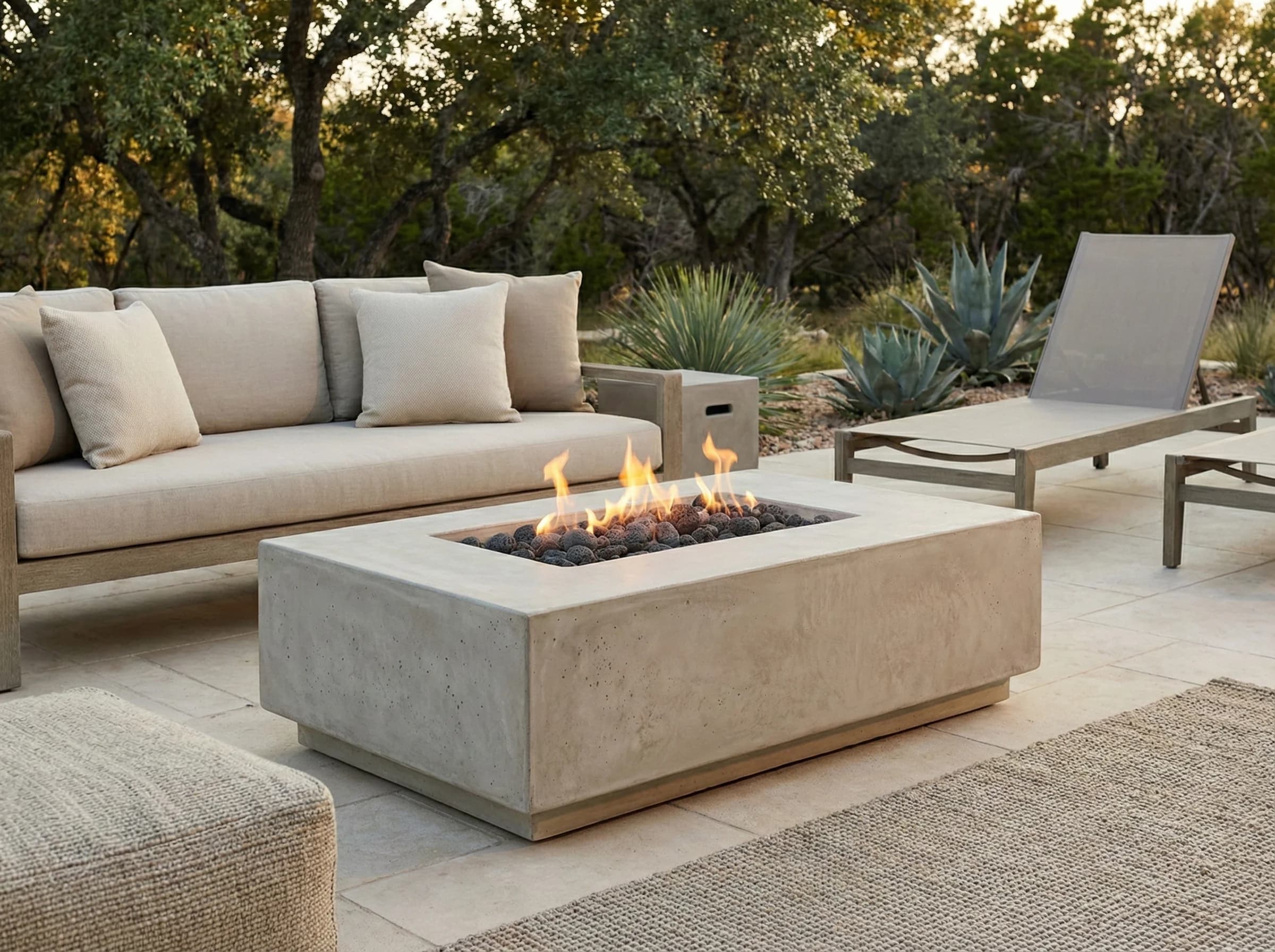
Round and rectangular shapes end up at roughly the same seat count once you add the clearance ring — but they feel different. Round pits read as a centerpiece and work with chairs on all sides. Rectangular pits create a natural social axis along the long edge, which is what a sectional-plus-two-chairs patio arrangement wants. If you have a sectional, buy a rectangle. If you have four matching chairs, buy a round.
One honest caveat: these numbers assume chairs sit perfectly on the clearance ring. Most people run chairs 42 to 48 inches back from the pit, which raises the real-world seat count by one on a 36-inch and larger. That is a feature, not a bug — more buffer means hotter feet on cold nights and happier shins when the flame kicks up in the wind.
Picks by Size — the Ones We Actually Stock
Every size tier below is anchored on products we carry today, with handles verified against our catalog in October 2026. Prices are the entry-level color or finish for each; options climb from there.
24-Inch — the Balcony and Small-Deck Pick
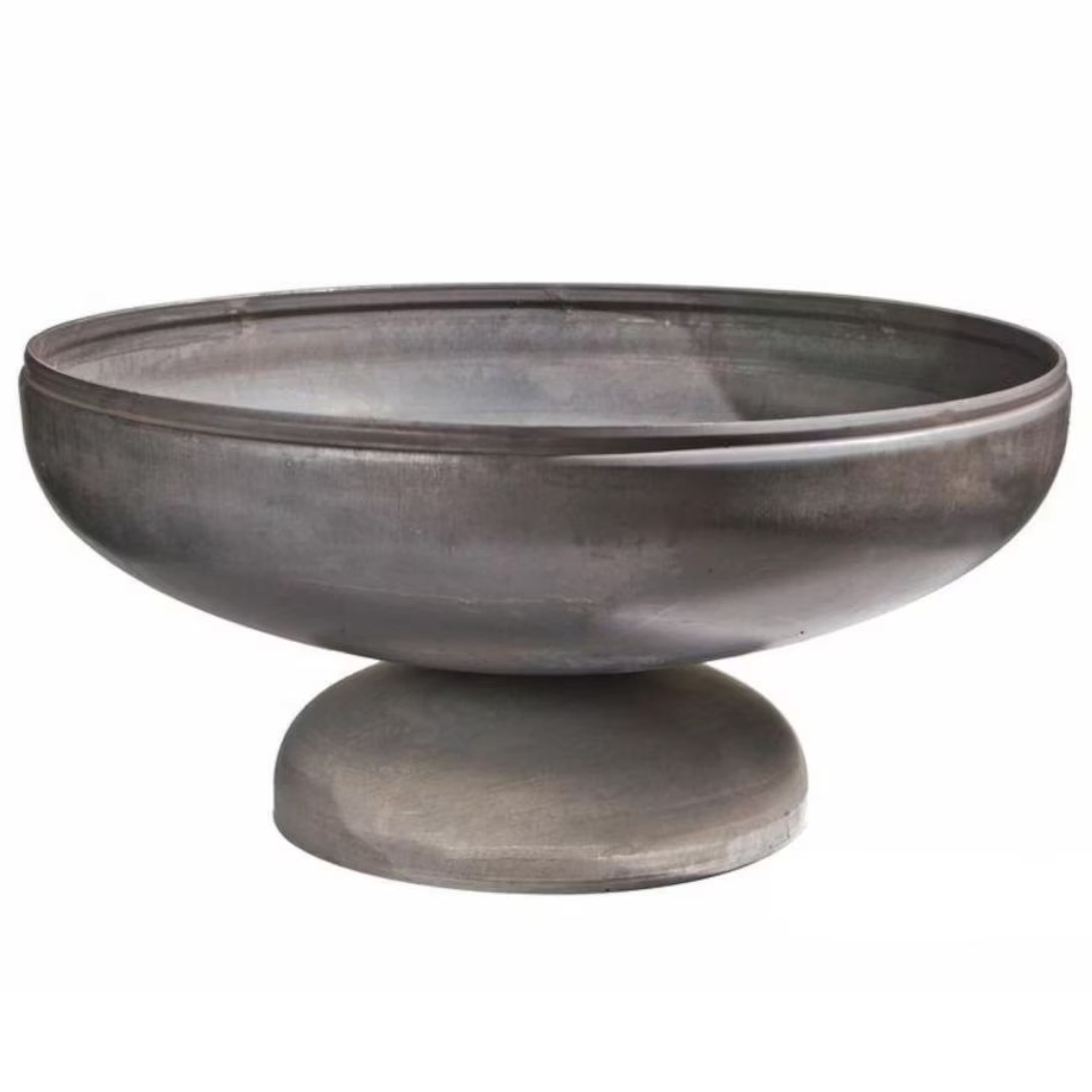
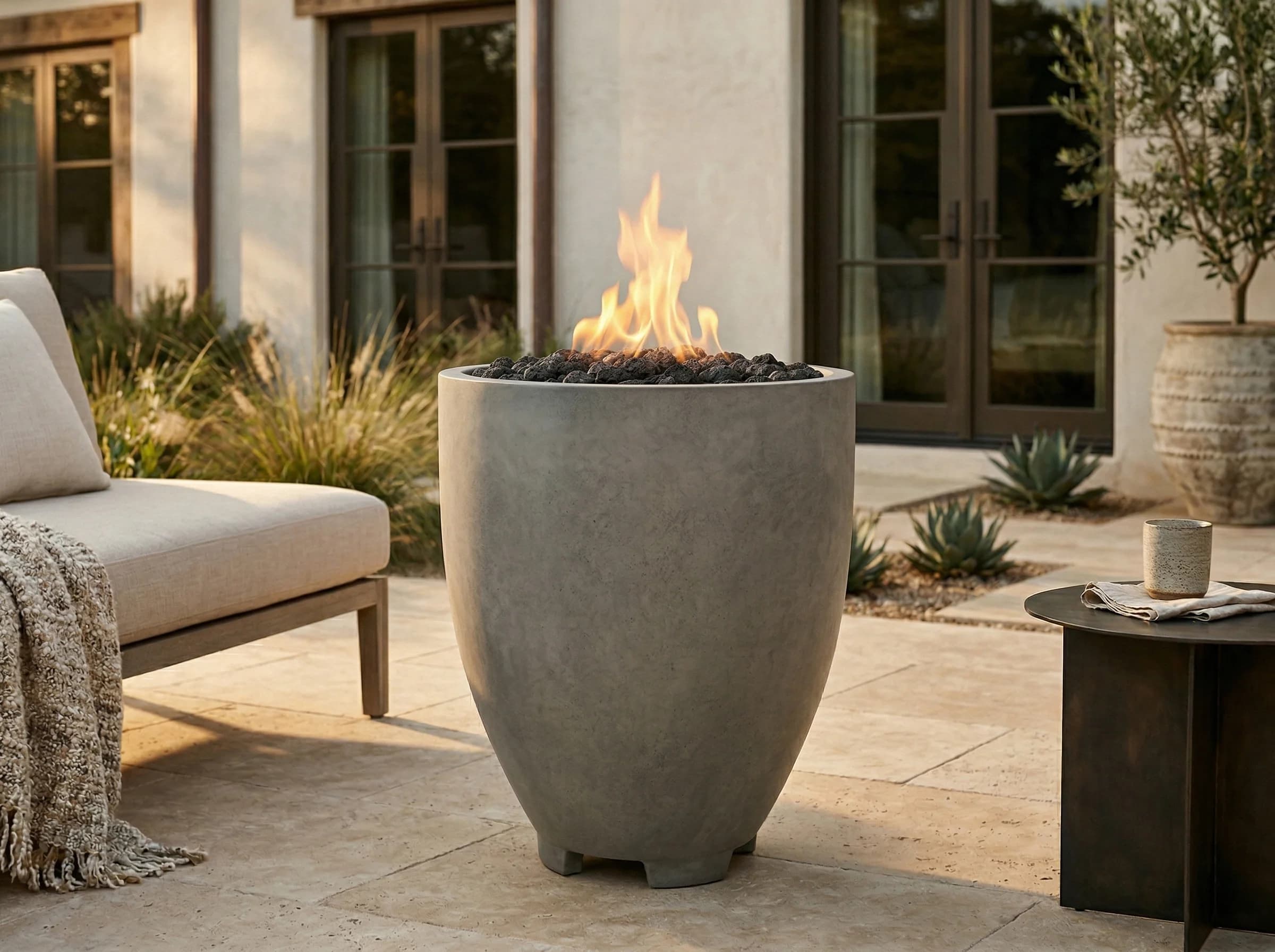
The 24-inch class is for an 8 by 8 to 8 by 10 patio or a condo balcony with hard-surface decking. Two chairs max. Not meant to warm a crowd — meant to signal fire, run ambience, and not get you a letter from the HOA. For wood-burning, the 24-inch Patriot from Ohio Flame ($325) is the honest pick in carbon steel. For gas, the Prism Hardscapes Pentola 1 ($1,182) is a 65,000 BTU concrete bowl built for exactly this constraint.
Two 24-inch picks that actually fit on an apartment-sized hard surface.
30-Inch — the Starter Backyard Size
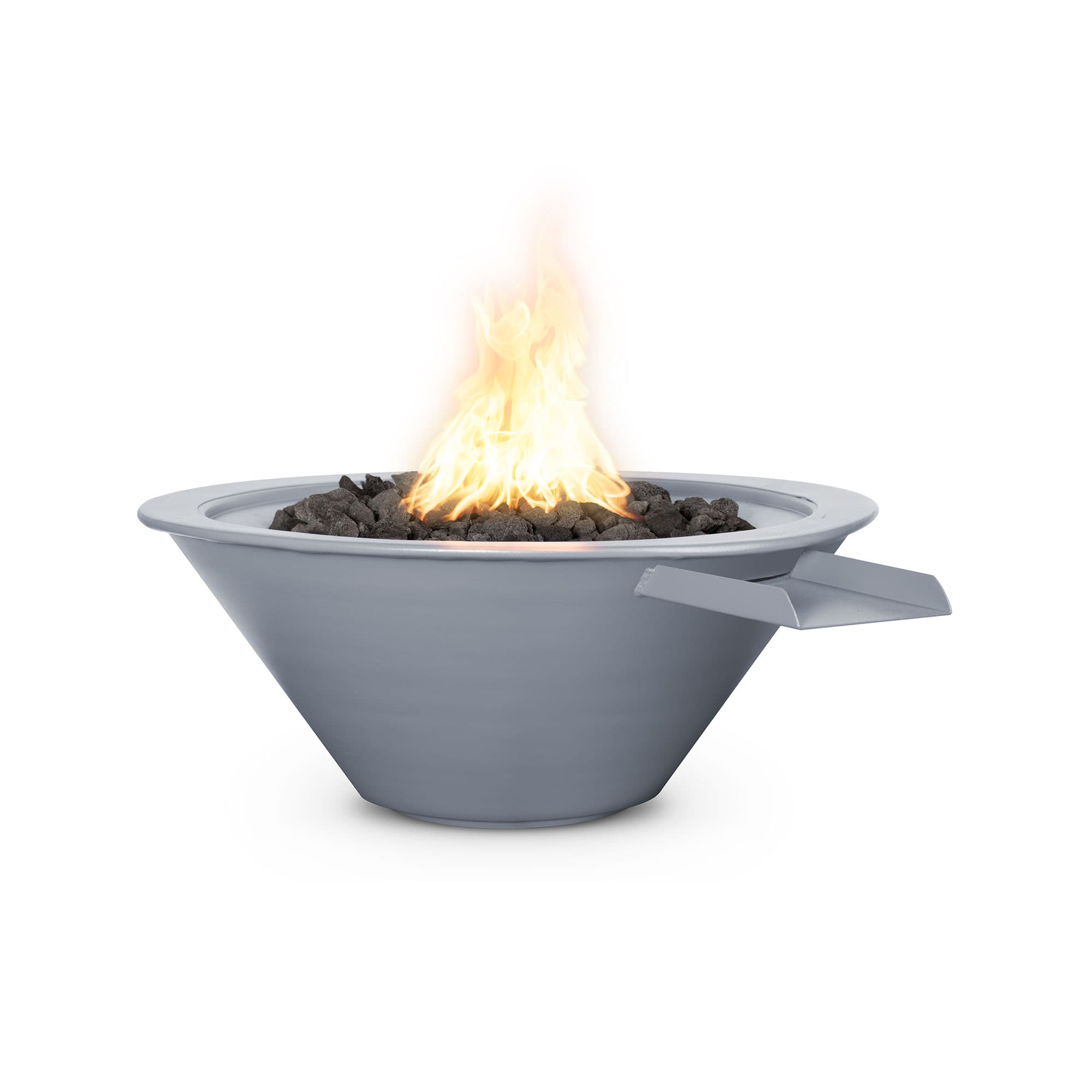
The 30-inch class is the honest starter for a real backyard. Fits a 10 by 10 patio with buffer, warms three to four chairs, and does not read as oversized when the patio sits empty on a Tuesday. For a concrete bowl, the Prism Hardscapes Moderno 3 ($1,338) is the one we sell most at this diameter. For a powder-coated steel bowl with a convertible water spillway, The Outdoor Plus Cazo 30-inch gray at $2,608 is the all-season pick.
Two 30-inch picks for a standard 10x10 patio.

36-Inch — the Honest Sweet Spot
Everything about the 36-inch class fits. Four to six chairs. 10 by 10 to 12 by 12 patios. The Prism Hardscapes Moderno 5 ($1,822) is our best-selling gas bowl at this diameter, and the Patriot 36-inch from Ohio Flame ($845) is the matching wood-burning answer. If you only read one size section, read this one — 36 is where most patios land.
Three 36-inch picks spanning wood, concrete bowl, and concrete drum silhouettes.

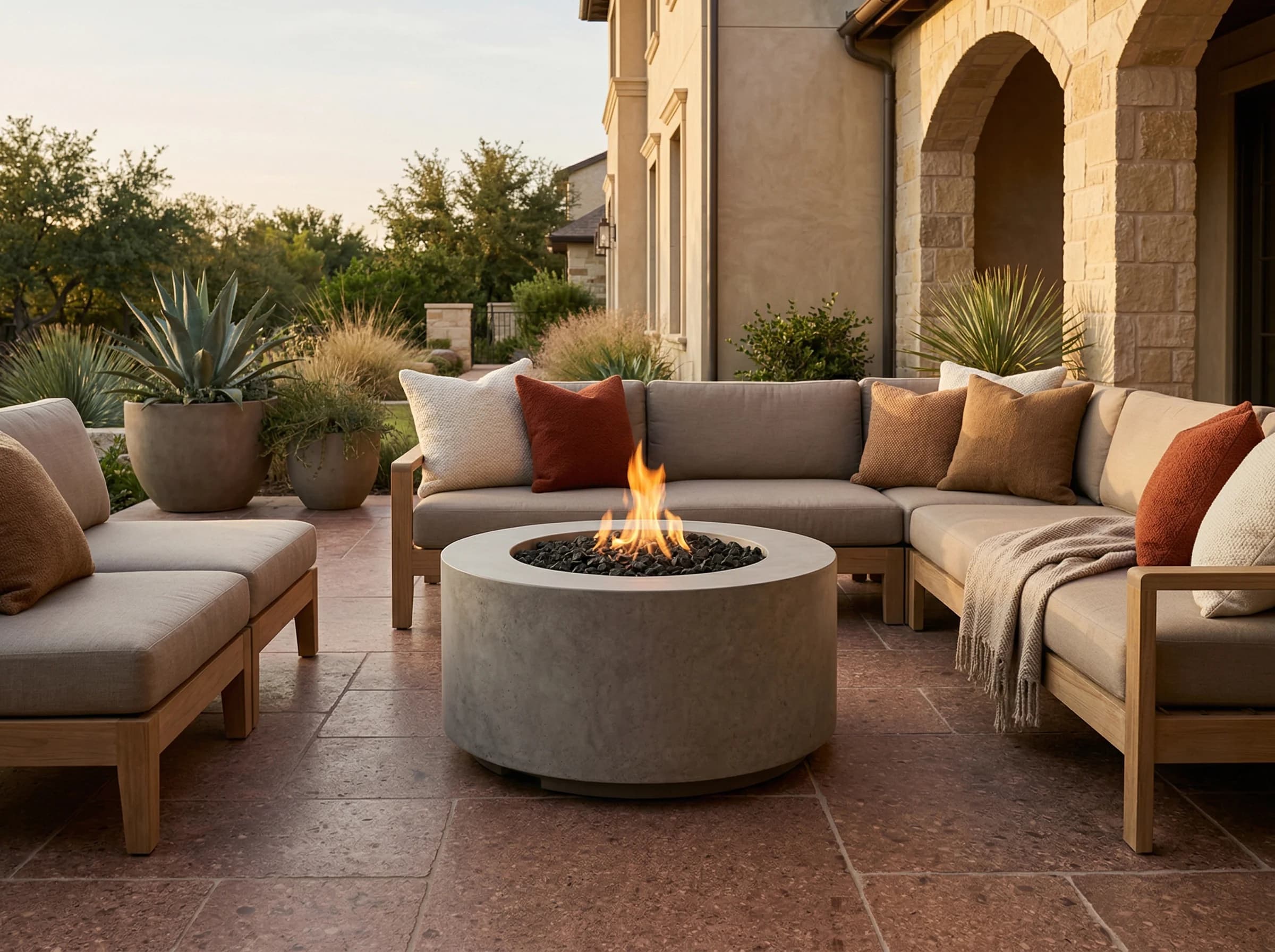
Every manufacturer spec sheet we stock prints the same number: 36 inches from the pit edge to any combustible. Diameter + 72 inches is the clear zone your patio has to accommodate.
42 and 48-Inch — Entertaining-Scale, 12x12 Minimum
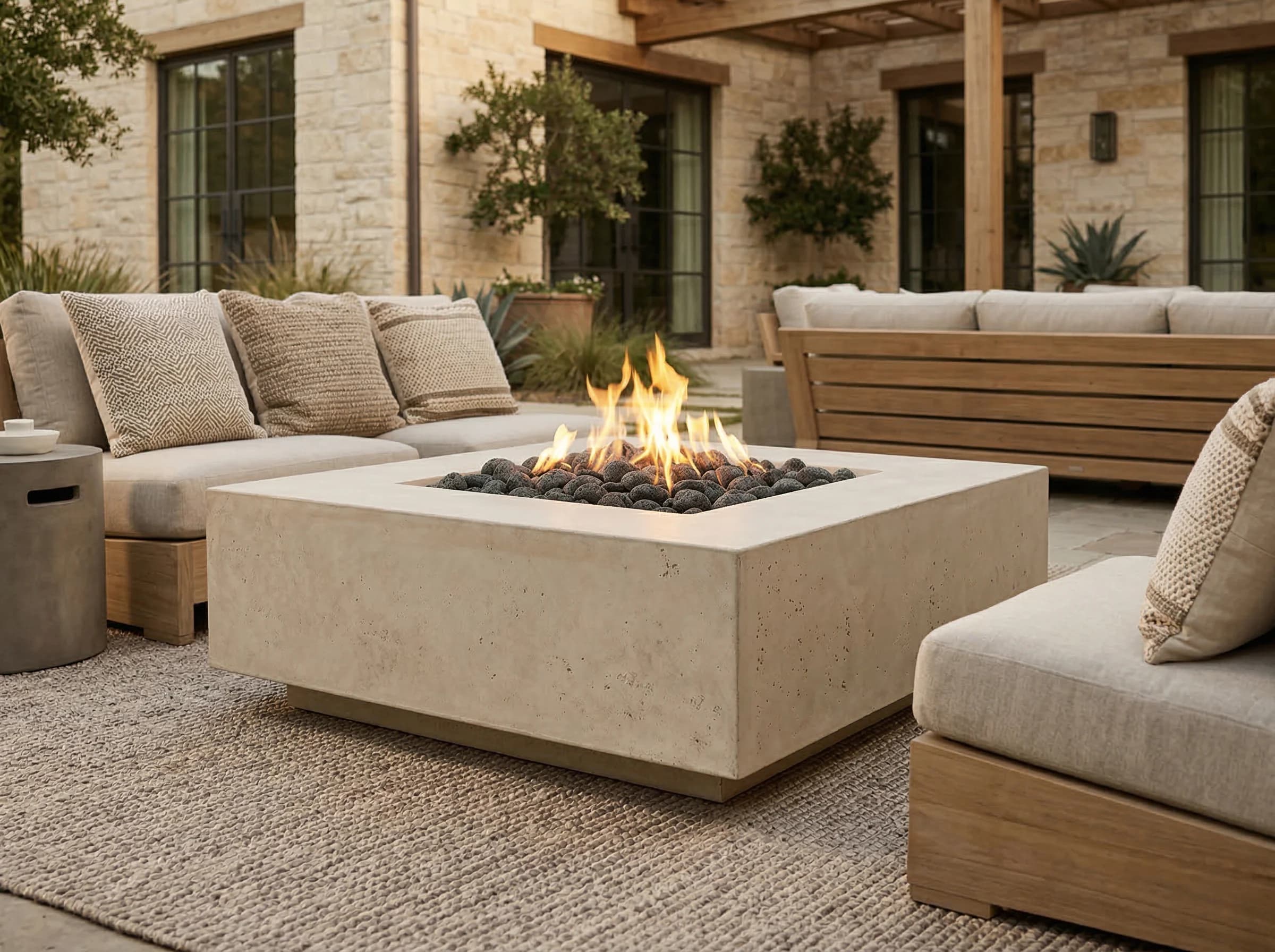
The 42 and 48-inch sizes earn their space when the patio is 12 by 12 or larger and the host actually runs weekend groups. Below 12 by 12, these diameters push seating past the clearance ring and the warranty goes with it. For a modern low-slung concrete bowl, the Prism Hardscapes Dune 42 ($3,686) is a design-forward pick. The Tavola 42-inch square table ($2,844) swaps the bowl for a flat-top surface people can set drinks on.
Two 42-inch picks for a 12x12 patio that actually hosts.

When 48 Inches and 60 Inches Earn Their Space
The 48-inch bowl needs a 14 by 14 patio minimum. The 60-inch rectangular table needs 15 by 15 or an open lawn install with a fire-safe pad. These sizes are entertaining-scale — they anchor outdoor rooms, poolside lounges, and backyard events where ten people stand around the fire at once. Below those patio sizes the pit looks oversized and the clearance ring pushes seating off the hard surface.
For a 15 by 15 patio or a backyard open to the lawn, The Outdoor Plus Regal 60-inch Corten natural gas pit at $3,206 is our most-asked-about entertaining-scale pick. Corten weathers to a stable patina that reads as intentional rather than rusted, the 65,000 BTU rectangular burner heats a long axis of seating, and the match-lit ignition is forgiving if the gas line is slightly undersized.
If a fire table rather than a bowl is the plan at this size, the large fire tables buying guide covers the 60 to 96-inch class in full.
Round, Square, Rectangle — Match Shape to the Patio
Shape matters less than most people think, and more than most retailers admit. Round pits feel like a centerpiece and work with chairs on all four sides, which fits a square patio with no existing furniture. Square pits read as architectural — they pair with square or L-shaped patios and are the right call when the pit has to double as a side table. Rectangular pits create a long social axis that fits an existing sectional, which is what most furnished residential patios already have.
The clearance math is identical across shapes. A 48-inch round, a 48-inch square, and a 48 by 24-inch rectangle all need 36 inches of clearance in every direction. The only variable is what shape of chair arrangement the pit encourages.
Common Patio-Sizing Mistakes We See
Measuring the patio but not the clearance ring. Patio dimensions are the input; clear zone is the output. A 10 by 12 patio sounds like plenty of room for a 48-inch pit, until you add 72 inches of ring to the diameter and realize two chairs end up on grass.
Buying for peak hosting rather than Tuesday evenings. Most pits get used by two to three people at a time. Size for that reality and the pit still handles a 6-person weekend. Size for peak and the pit reads as oversized every weeknight.
Ignoring the wall clearance. The 36-inch ring handles chairs. The 10-foot (gas) or 15 to 25-foot (wood) rule handles the house. Both have to clear or the install fails inspection and the insurance clause activates. Read our deck safety guide for the composite-vs-wood decking math and the covered patio clearance guide for ceiling-height rules.
Picking fuel before picking size. Gas and wood size differently. A 36-inch wood pit heats a wider ring than a 36-inch gas pit at the same diameter, but it needs the bigger wall clearance. The natural gas vs propane guide and the BTU sizing guide cover the fuel-and-heat side; this one is strictly geometry.
After You Have Measured — Buy With Confidence
Measure the patio, add 72 inches to your target pit diameter, confirm the clearance ring fits inside the hard surface, and verify the nearest wall is 10 feet away for gas or 15 to 25 feet for wood. If every number clears, you have your size. Shop the full fire pit collection filtered by diameter, or jump straight into the 36-inch picks above — that is the diameter most of our customers end up buying, because it works on most of the patios we see.
If you want the BTU-driven version of this conversation — how much heat per square foot for your climate, how long a 20-pound propane tank runs, how burner-inch math works — the sizing guide companion is the next read. This one answered geometry. That one answers heat.
Frequently Asked Questions
How do I know what size fire pit fits my patio?+
What size fire pit do I need for a 10x10 patio?+
How far does a fire pit need to be from a house or wall?+
What size fire pit for 4 chairs?+
Can a fire pit be too big for a patio?+
What is the minimum clearance for a fire pit?+
Products & brands in this guide
Related reading
Ash — Ash writes the buying guides at FirePits.com — years of specifying fire features on residential installs, from urban patios to mountain properties.